
Punctum snail
Punctum
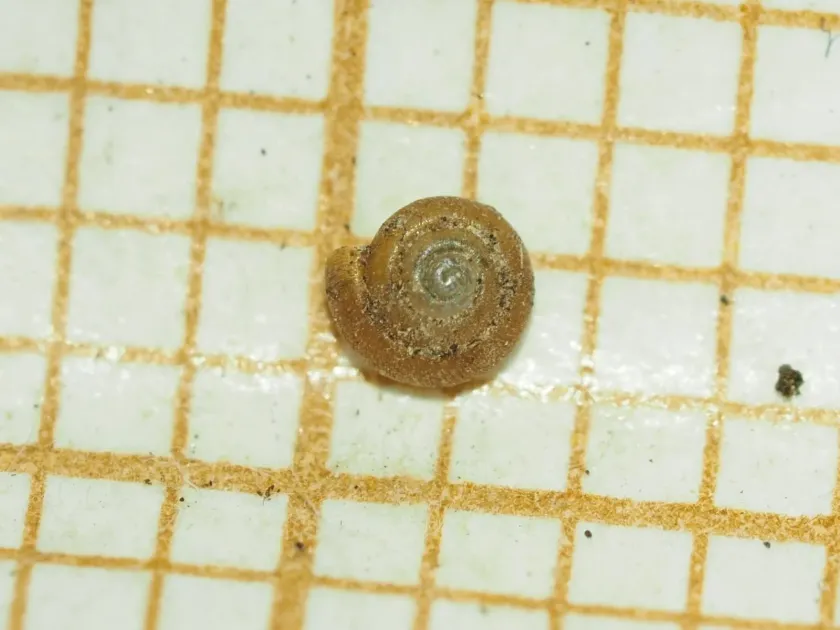
Description
How to identify
The Punctum snail, scientifically known as Punctum pygmaeum, belongs to the Punctidae family. It is one of the smallest terrestrial mollusks, with a shell diameter of only 1.5 to 2 millimeters, making it extremely difficult to detect during standard garden inspections.
The shell is typically conical or flattened with delicate spiral striations. Its coloration ranges from horn-colored to reddish-brown, providing perfect camouflage against decaying organic matter, leaf litter, and moist soil surfaces where these snails reside.
These mollusks are highly dependent on moisture. They thrive in damp, shaded environments, such as leaf mulch, under rocks, or within dense vegetation where the microclimate remains consistently humid and cool.
The life cycle involves laying eggs in moist soil or organic substrates. Breeding is highly synchronized with rainfall patterns and temperature, allowing the population to grow rapidly under optimal conditions where food and water are abundant.
Due to their minute size, these snails are often overlooked by gardeners. They remain hidden during the day and only become active at night or during overcast, rainy periods, which contributes to their status as an insidious garden pest.
What it damages
The Punctum snail primarily damages young seedlings and tender plant tissues. While they do not consume entire plants, their constant scraping of the leaf epidermis causes significant stress to vulnerable growth stages.
In greenhouses and nurseries, these snails can cause extensive damage to lettuce, herbs, and decorative flower seedlings. They feed on the tender stems and newly emerged leaves, causing small, irregular holes that impede proper photosynthesis.
The damage often creates entry points for various plant pathogens. By scraping the protective layer of the leaf, the snail allows bacteria and fungal spores to penetrate deep into the plant tissue, leading to rot and disease development.
Seedlings are especially susceptible during the first few days after germination. The snails often target the emerging cotyledons, which can lead to complete plant failure and uneven crop emergence that is frequently misidentified as poor seed quality.
While an individual snail's impact is negligible, a high population density can significantly stunt growth and decrease the overall marketability of produce, particularly in high-moisture agricultural systems like indoor vertical farms or greenhouses.
Signs of infestation
The most reliable sign of a Punctum snail infestation is the presence of dried, silvery mucus trails on the leaves or soil surface. These trails are visible under morning light after a night of snail activity.
Leaf damage appears as small, scattered holes with jagged or scalloped edges. Unlike caterpillar damage, which often follows the leaf veins, snail-induced damage looks like random, irregular abrasions on the leaf surface.
High levels of organic debris and lack of soil surface aeration are strong indicators of potential infestation. Examining the underside of wooden boards, rocks, or heavy layers of wet mulch usually reveals the presence of these small mollusks.
Wilting of young plants without apparent cause may indicate that the snail has been feeding on the root collar or stem base, compromising the plant's vascular integrity and water uptake capacity.
If you observe missing sections on very young, newly sprouted seedlings, and there are no signs of larger insect pests like beetles or caterpillars, the tiny Punctum snail is a prime suspect in your garden.
Control measures
Cultural control is the most effective approach. Regularly clearing away garden debris, excess mulch, and decaying vegetation reduces the snail's habitat and moisture levels, forcing them to relocate or perish.
Physical barriers such as copper tape, wood ash, or diatomaceous earth can be placed around the base of valuable plants. These materials create an inhospitable surface for mollusks, effectively preventing them from reaching the stems.
Biological control involves maintaining a diverse garden environment that attracts natural predators like toads, frogs, and ground beetles. These animals significantly help in naturally regulating the populations of small garden mollusks.
Trap crops or beer traps can be used to monitor and reduce populations. By placing a shallow container filled with bait at ground level, you can attract and manually remove the snails that gather during the night.
For chemical intervention, iron phosphate-based baits are recommended. These are safer for domestic pets and wildlife than traditional pesticides and are highly effective against small snails, leaving no harmful residues in the soil.
Taxonomy
- Latin name
- Punctum
- Order
- Molluscs
- Family
- Punctidae
- EPPO code
- PNCTSP
Discussion
No discussions yet — be the first.