
Black-horned sawfly
Pteronidea nigricornis
Description
How to identify
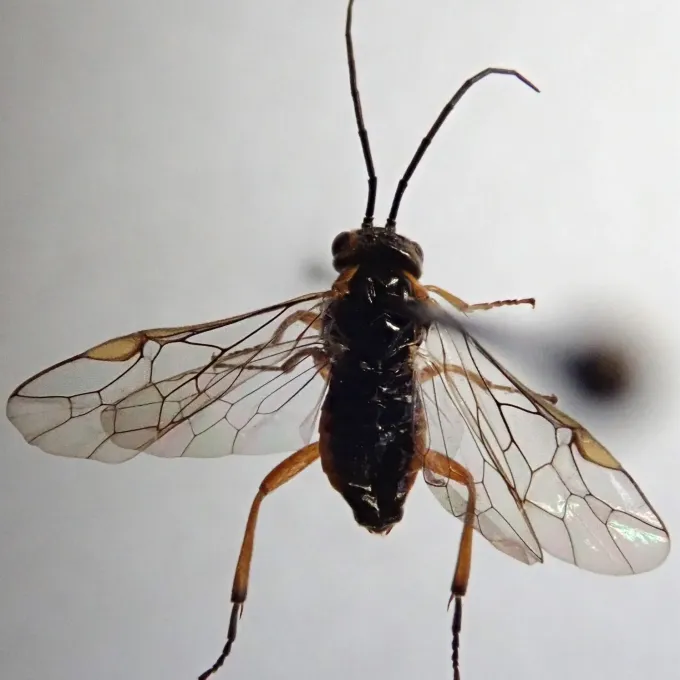
The black-horned sawfly (lat. Pteronidea nigricornis) is a member of the Hymenoptera order, specifically the family Tenthredinidae. Adult insects are characterized by their distinct black antennae and small, wasp-like appearance.
The larvae, often referred to as false caterpillars, are visually similar to butterfly larvae but possess a higher count of abdominal prolegs, which is a key identification feature for entomologists.
They typically display a green or yellowish-green color, allowing them to remain camouflaged while feeding on the foliage of their host plants.
The life cycle undergoes complete metamorphosis, including egg, larval stages, pupation (often in the soil), and the adult stage.
Adult females use a specialized ovipositor to insert eggs into leaf tissues, ensuring the emerging larvae have immediate access to food sources.
What it damages
This pest primarily infests plants in the Grossulariaceae family, most notably gooseberries and various species of currants.
The larvae are voracious feeders that consume leaf tissue, often beginning at the leaf margins and proceeding to skeletonize the entire leaf.
Heavy infestations result in severe defoliation, which severely limits the plant's ability to photosynthesize and store essential energy reserves.
Weakened plants show reduced vigor, stunted growth, and significantly lower yields, as the plant directs its energy toward leaf recovery rather than fruit production.
In cases of repeated or severe attacks, the structural integrity of the bush can be compromised, leaving it vulnerable to environmental stress and secondary diseases.
When it appears
Adult emergence typically aligns with the spring flush of leaf development, making new growth immediately available to the first generation of larvae.
The peak period of larval activity generally occurs from late spring through mid-summer, depending on regional temperature patterns.
As a multi-generational pest, the sawfly can pose a continuous threat to foliage throughout the entire growing season if conditions remain favorable.
The overwintering stage consists of pupae enclosed in cocoons, safely tucked away in the top layer of soil or under leaf litter beneath the host shrub.
Warmer spring temperatures accelerate soil warming, which triggers the emergence of adults and initiates the cycle for the upcoming season.
Signs of infestation
The most prominent sign is the presence of irregular holes in leaves, which rapidly evolve into complete skeletonization as the larvae grow larger.
Frass (larval excrement) found on leaves or at the base of the plant serves as a clear indication of a currently active infestation.
Direct observation of larvae on the underside of leaves or along the edges, especially those that curl into a spiral when disturbed, confirms their presence.
Premature leaf drop and yellowing foliage during the height of the summer are critical indicators that the plant has sustained significant damage.
Gardeners may also notice groups of larvae feeding in unison, which is a common behavior that can lead to rapid destruction of individual branches.
Control measures
Cultural control is highly effective and involves tilling the soil around the base of bushes in autumn or spring to destroy overwintering cocoons.
Removing and composting or disposing of leaf litter helps eliminate pupation sites and reduces the overwintering population of the pest.
Manual removal of larvae is a practical method for smaller gardens; checking the bushes in the early morning helps locate the insects before they become more active.
- Applying biological controls, such as beneficial nematodes or microbial insecticides.
- Using targeted chemical insecticides only when damage thresholds are exceeded.
- Encouraging natural predators like birds and parasitic wasps that feed on sawfly larvae.
Maintaining strong plant health through balanced fertilization and adequate hydration enables bushes to recover more efficiently from larval feeding damage.
Taxonomy
- Latin name
- Pteronidea nigricornis
- Order
- Hymenoptera
- Family
- Tenthredinidae
- EPPO code
- PTRDNI
Discussion
No discussions yet — be the first.