
Giant stonefly
Pteronarcys california
Description
How to identify
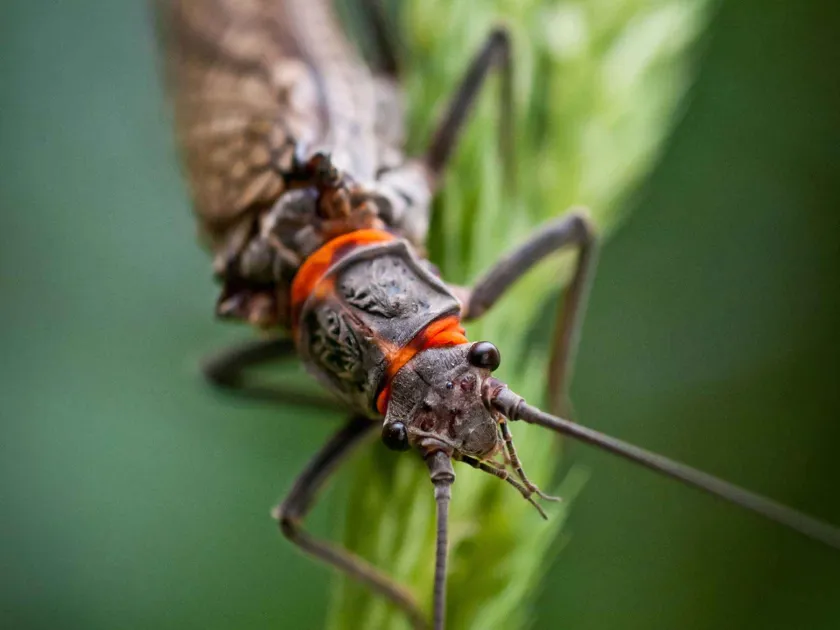
The giant stonefly (Pteronarcys californica) is a prominent member of the order Plecoptera and the family Pteronarcyidae. Adults are large, robust insects characterized by two pairs of net-veined wings that rest flat against their bodies.
Nymphs are easily recognizable by their large size and visible branched tracheal gills located along the sides of the thorax segments. Their body color is typically dark brown or nearly black, providing camouflage in riverbed sediments.
Adult stoneflies can reach lengths of up to 7 centimeters, making them one of the most recognizable and largest stonefly species in North America.
The lifecycle of this insect is remarkably long, spanning three to four years, with the majority of this time spent as an aquatic nymph in flowing water.
This species serves as a biological indicator of water quality, as it requires highly oxygenated and cold water to survive the long developmental stages.
What it damages
While the nymphs are primarily detritivores in aquatic environments, the adult stage can cause physical damage to riparian vegetation.
Large swarms of emerging adults may feed on the young leaves, buds, and delicate bark of trees and shrubs near the water's edge.
This feeding activity can lead to noticeable defoliation of plants, especially in nursery settings or areas with high concentrations of emerging adults.
Mechanical damage to young shoots provides entry points for secondary pathogens, such as fungi and bacteria, which can further weaken the host plant.
Although they are not traditional agricultural pests, their occasional high-density emergence can cause significant localized stress to riparian flora.
When it appears
The emergence of adult giant stoneflies typically occurs during late spring or early summer, depending on water temperatures and environmental conditions.
The emergence period is usually concentrated, with adults present in large numbers for several weeks before they complete their life cycle.
During the remainder of the year, the insect remains in its aquatic nymph stage, hidden under stones or within debris in cold, moving streams.
Seasonal weather patterns, such as early spring warmth, can accelerate the emergence date, while cold fronts may temporarily delay their activity.
Adults are most active during early morning or evening hours, often resting on riparian vegetation to harden their exoskeletons after emerging from the water.
Signs of infestation
A primary indicator of presence is the discovery of shed nymphal skins (exuviae) left on rocks, bridge pilings, and tree trunks along riverbanks.
Visible swarms of large, dark-bodied insects on branches are a clear sign of an active emergence event in the surrounding area.
Evidence of foliage consumption, such as shredded leaf margins or damaged buds on trees near the water, suggests recent adult feeding activity.
The sound of fluttering wings near riparian vegetation during the emergence season can alert landowners to the presence of large stonefly populations.
Small, shallow gouges on the bark of young twigs may also serve as an indicator of feeding damage caused by adult stoneflies.
Control measures
Effective management begins with monitoring riparian zones for emerging adults to assess potential risk to sensitive horticultural plants.
Physical protection, such as netting or lightweight covers, can be employed to shield vulnerable young trees from adult stonefly feeding.
Maintaining strong, healthy plants through proper fertilization and watering helps them better withstand mechanical injury from adult stoneflies.
In nursery environments, biological insecticides applied to foliage can reduce damage, provided they are safe for the surrounding aquatic ecosystem.
Since this species is part of the local ecosystem, control measures should be localized and used only when significant damage to valuable vegetation is observed.
Taxonomy
- Latin name
- Pteronarcys california
- Family
- Pteronarcidae
- EPPO code
- PTENCA
Discussion
No discussions yet — be the first.