
Giant stonefly
Pteronarcys
Description
How to identify
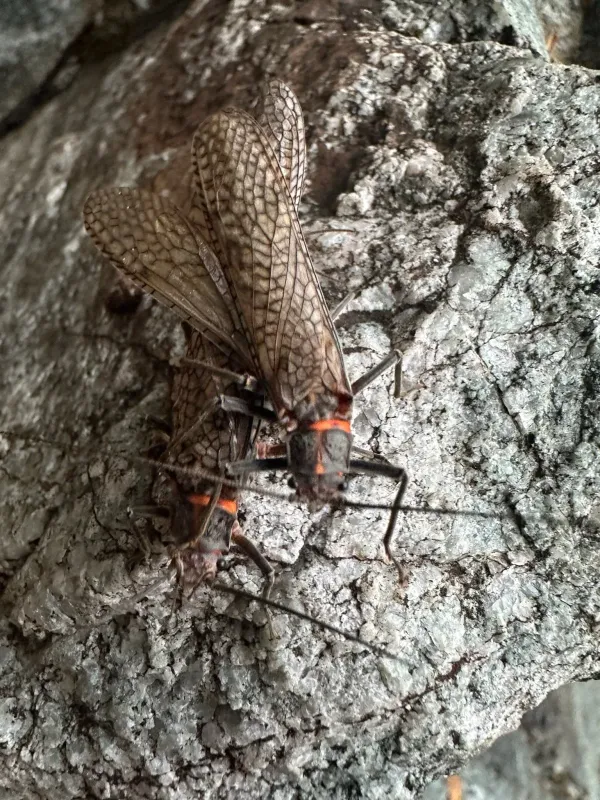
The Pteronarcys genus, commonly known as giant stoneflies, belongs to the order Plecoptera. These are large insects characterized by an incomplete metamorphosis and wings that lay flat over their abdomen.
Adults are typically dark, brownish, or black, which provides effective camouflage on tree bark or rocks near water bodies. Some species can reach lengths of up to 8 centimeters, making them giants among aquatic insects.
Nymphs live entirely in flowing water, requiring high oxygen levels. They have a robust chewing mouthpart and well-developed legs with claws, allowing them to cling to substrates in fast-moving streams.
Their life cycle is exceptionally long, with the nymphal stage lasting between one to four years depending on water temperature and species, while the adult stage is relatively brief.
Giant stoneflies are highly sensitive to pollution and are often used as indicators of healthy, clean water ecosystems. Their presence on an farm indicates a lack of chemical runoff into nearby streams.
What it damages
While adult stoneflies are not primary agricultural pests, their nymphs can occasionally cause damage to crops in low-lying or flooded fields near their aquatic habitats.
Damage usually occurs when nymphs migrate to the shoreline or soil after flooding, where they may feed on the tender roots or stems of young seedlings growing in saturated soil.
In floodplain agriculture, these nymphs have been known to feed on vegetable transplants or the root systems of small grain crops if the moisture level remains high enough to sustain them outside the water.
Direct damage to roots can weaken the plant, making it more susceptible to secondary soil-borne pathogens, which often causes more harm to the harvest than the insect feeding itself.
The severity of the damage is generally low, but in intensive agricultural zones near irrigation canals, nymphs may cause localized thinning of crop stands.
When it appears
The adult flight period generally occurs in the spring, which is the origin of the common name "stonefly." Depending on the latitude, the emergence happens from April to June.
Nymphs remain active throughout the year in their aquatic environments, but their proximity to the soil increases during the spring emergence phase as they crawl onto land to molt.
Warm spring temperatures accelerate the final stage of nymphal development, leading to a concentrated emergence period that coincides with the critical early growth stages of many crops.
Once adults emerge, they live for only a few weeks, focusing primarily on mating and laying eggs in the water to begin the next multi-year generation.
Field monitoring should be prioritized following heavy spring rains or floods, when nymphs are most likely to be displaced from their aquatic homes into the crop fields.
Signs of infestation
The most visible sign of giant stonefly presence is the discovery of exuviae (cast-off skins) left behind on plant stems, rocks, or soil surfaces near the water’s edge.
Damage to plants typically manifests as irregular notches or chewing marks on the root collar or root tissue, specifically on plants located in persistently damp soil.
If you suspect an infestation, inspect the debris and mulch near the field margins; nymphs can often be found hiding in moist plant matter after a flood has receded.
Wilting of seedlings in low-lying areas of the field without signs of airborne pests often suggests root feeding from soil-dwelling or semi-aquatic organisms like stonefly nymphs.
The appearance of clean-cut, irregular wounds on the roots, distinct from the tunnels caused by wireworms, points toward the activity of these large aquatic-originated nymphs.
Control measures
Control measures are primarily focused on site management and water regulation to reduce the contact between nymphs and the crops.
- Improve field drainage systems to prevent long-term soil saturation that allows nymphs to survive outside water.
- Tilling the soil near field margins in early spring to disturb nymphal habitats and reduce their population.
- Creating buffer zones of non-attractive plants between the edge of the crop field and nearby streams or canals.
- Removing debris and saturated organic matter from the field edges after flooding events to eliminate hiding spots.
- Utilizing crop rotation to avoid planting sensitive vegetables in areas prone to seasonal flooding or high water tables.
Taxonomy
- Latin name
- Pteronarcys
- Family
- Pteronarcidae
- EPPO code
- PTENSP
Discussion
No discussions yet — be the first.