
Stonefly
Pteronarcella
Description
How to identify
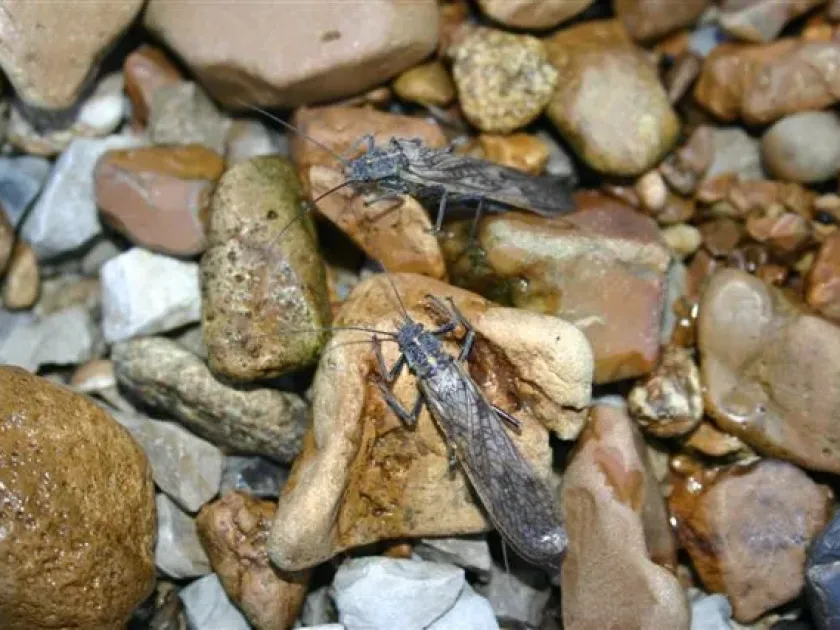
Stoneflies of the genus Pteronarcella belong to the order Plecoptera. These insects are easily recognized by their flattened bodies and long, thread-like antennae.
Adults possess two pairs of wings that are folded flat over their abdomens. Their coloration is usually dull, ranging from brown to grey, which provides camouflage.
Nymphs are strictly aquatic, living in well-oxygenated streams. They feature external gills and are often found under rocks and debris in the water.
Unlike many other insects, stoneflies undergo hemimetabolous development, meaning they have no pupal stage between the nymph and adult forms.
The taxonomic family Pteronarcyidae, which includes this genus, is known for including some of the largest and most robust stoneflies in North America.
What it damages
Pteronarcella is generally not considered a significant agricultural pest. Damage to commercial crops is rare and usually incidental.
In certain scenarios, adults might nibble on the developing buds of fruit trees or young leaves, especially if vegetation is located near riverbanks.
The primary ecological role of these insects is in the aquatic environment, where they contribute to the breakdown of organic matter as shredders.
Heavy infestations of adults near crops can lead to minor physical damage, but they do not typically cause economic yield loss in broadacre farming.
Farmers should distinguish between stoneflies and true agricultural pests like beetles or caterpillars to avoid unnecessary application of pesticides.
When it appears
The emergence of adults typically occurs in the spring, which is reflected in their common name. They are most active when temperatures begin to rise.
The life cycle is largely governed by water temperature. Warmer spring days trigger the nymphs to crawl out of the water to undergo their final molt.
Most of the stonefly's life, lasting one to three years, is spent in the nymph stage underwater, making them highly dependent on stream health.
Adult activity is short-lived, often lasting only a few weeks during which the primary objective is mating and laying eggs in the water.
By late spring or early summer, the adult population declines significantly as they finish their reproductive cycle and die off.
Signs of infestation
The most visible sign of stonefly activity is the presence of exuviae—the discarded exoskeletons—left on rocks, bridge pilings, or riverside vegetation.
Seeing numerous adults near lights during night hours in early spring is a clear indicator of their emergence from local aquatic habitats.
Small, irregular chewing patterns on the edges of buds or young leaves near water sources may suggest their presence during high activity periods.
The observation of large, robust insects with flattened bodies resting on foliage is a standard way to confirm their presence in the field.
If large numbers are observed, it usually indicates that the adjacent waterway is clean and well-oxygenated, serving as a healthy nursery for them.
Control measures
Control measures are rarely necessary for Pteronarcella as they do not threaten crop health in most agricultural systems.
If they become a nuisance near farm buildings, light traps can be used to attract and divert them away from specific sensitive areas.
Maintaining a clean buffer zone around fields can help, though stoneflies are natural components of local ecosystems and do not require eradication.
Chemical control is strongly discouraged, as broad-spectrum insecticides will harm beneficial insects and disrupt the aquatic life in nearby streams.
Integrated Pest Management (IPM) practices prioritize monitoring over intervention, ensuring that action is taken only if the pest population reaches damaging levels.
Taxonomy
- Latin name
- Pteronarcella
- Family
- Pteronarcidae
- EPPO code
- PTEASP
Discussion
No discussions yet — be the first.