
Pseudophilothrips
Pseudophilothrips
Description
How to identify
Pseudophilothrips is a genus of insects within the order Thysanoptera, specifically belonging to the family Phlaeothripidae. These insects are easily identified by their tube-like abdominal apex.
Adult insects are typically dark brown or black in color. Like other thrips, they possess slender wings fringed with long hairs, which help them remain airborne during dispersal.
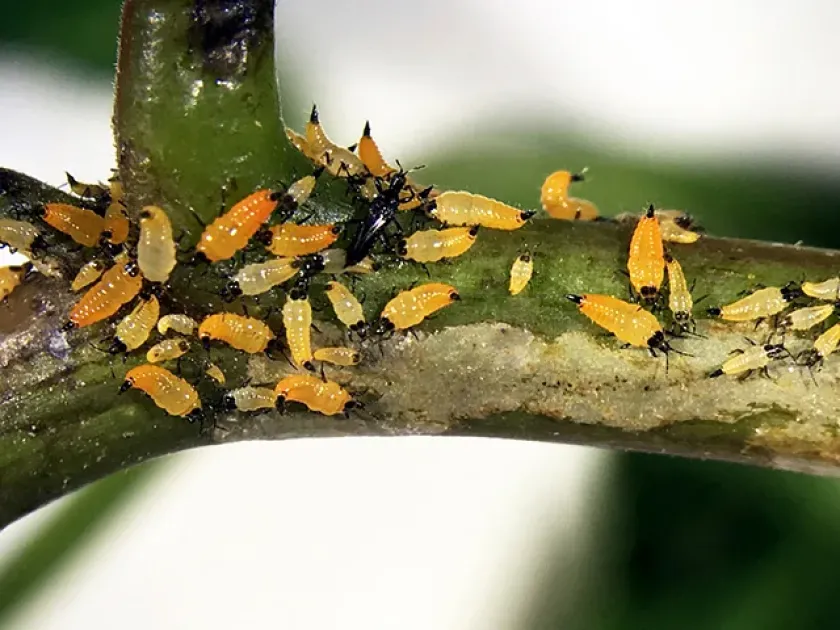
The larval stages are smaller than adults and often show lighter coloration, ranging from pale yellow to orange. They are typically found on the undersides of leaves.
The life cycle consists of egg, larva, propupa, pupa, and adult stages. The pupal stages frequently occur in the soil or protected crevices of host plants.
Accurate identification to the species level often requires microscopic examination of antennal segments and body bristles, as morphological features between species are quite subtle.
What it damages
This pest mainly affects various ornamental plants, especially in greenhouse conditions. Some species may also cause significant stress to shrubs and tropical plants.
The insects feed by piercing plant cells and sucking out the contents. This process disrupts the plant's photosynthetic capability and causes a general decline in vigor.
Feeding damage typically presents as necrotic spots or silvery streaks on the leaves. Severe infestations often lead to leaf curling, deformation, and stunted growth of shoots.
Pseudophilothrips can act as a vector for various plant viruses, which makes them a serious threat even when insect population densities are relatively low.
Persistent feeding leads to chlorosis, premature leaf abscission, and significant aesthetic damage to ornamental crops, resulting in economic losses for commercial growers.
When it appears
In greenhouses or indoor environments, Pseudophilothrips can reproduce throughout the year, with overlapping generations, provided the temperature remains favorable.
In outdoor settings, they become active during late spring and summer, thriving in warm, dry weather conditions that allow for rapid population development.
Hot, arid conditions are known to shorten the developmental cycle, allowing multiple generations to occur within a single growing season, often leading to outbreaks.
As temperatures drop in the autumn, the pests move to overwintering sites, including soil, bark crevices, or within plant debris to survive the cold months.
Monitoring the seasonal activity is crucial for timing preventive measures, particularly in nurseries where early detection can prevent widespread infestation.
Signs of infestation
The earliest signs of infestation are tiny, light-colored stippling or silvery markings on the upper leaf surface, resulting from the insect feeding underneath.
The presence of dark, shiny droplets of frass (excrement) on the underside of leaves is a diagnostic feature that helps distinguish thrips from other sucking pests.
Affected plants may show distorted growth, particularly in the terminal shoots, where the most succulent tissue is targeted by the insects.
Sooty mold may develop on the plant's surface as a secondary consequence of the sticky secretions or honeydew-like residues associated with the infestation.
Tapping foliage over a piece of white paper will often dislodge adults and larvae, making them easily visible for rapid on-site assessment of population levels.
Control measures
Management of Pseudophilothrips requires an integrated pest management (IPM) approach that combines cultural practices with targeted chemical or biological treatments.
- Maintaining good hygiene by removing and destroying infested plant material to reduce local population reservoirs.
- Using blue sticky traps for monitoring populations and capturing adult thrips in greenhouses.
- Increasing relative humidity, as thrips generally prefer dry, warm environments which facilitate their rapid reproduction.
- Applying systemic insecticides when threshold levels are reached, ensuring thorough coverage of all leaf surfaces.
- Introducing biological control agents, such as predatory mites (e.g., Amblyseius species), which can suppress larval populations effectively.
Taxonomy
- Latin name
- Pseudophilothrips
- Order
- Thrips
- Family
- Phlaeothripidae
- EPPO code
- PSPTSP
Discussion
No discussions yet — be the first.