
Pseudophacopteron
Pseudophacopteron
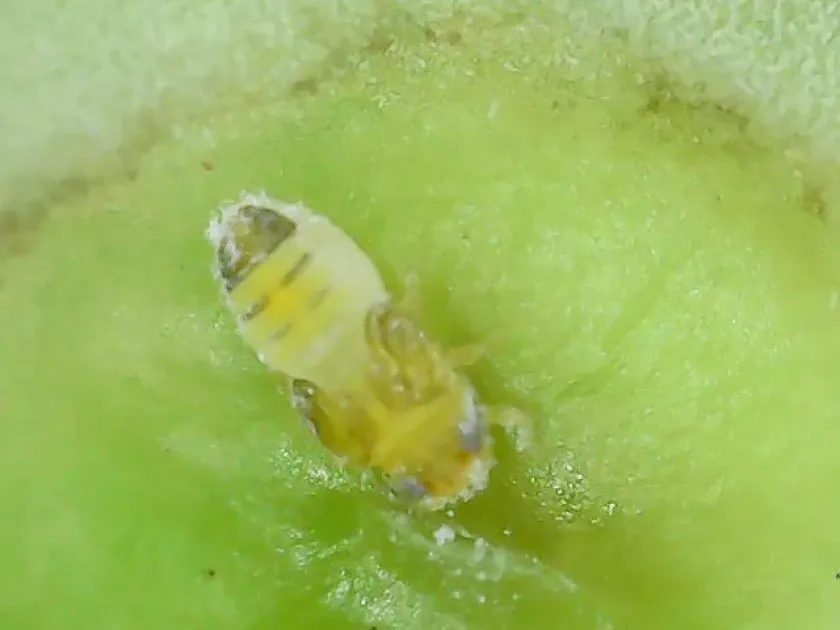
Description
How to identify
Pseudophacopteron is a genus of insects belonging to the family Phacopteronidae, within the superfamily Psylloidea. These tiny insects are commonly referred to as jumping plant lice due to their ability to leap when threatened.
Adults typically measure between 2 and 4 millimeters in length, featuring a morphology adapted to their host plants, often mimicking the colors of bark or leaf tissue.
The life cycle consists of the egg, five nymphal stages, and the adult stage. The nymphal stages are the most specialized, often living protected within plant structures.
These insects are highly host-specific, primarily targeting plants within the Anacardiaceae family, such as various species of Pistacia.
Their distribution is closely linked to the availability of their specific host trees, which often dictates the geographical range of the pest species.
What it damages
The primary damage caused by Pseudophacopteron is the formation of galls on the leaves and sometimes the stems of host plants, which significantly disrupts normal plant growth.
By feeding on plant sap, the nymphs deprive the host of vital nutrients, leading to stunted development of new shoots and weakened branches.
The physiological stress caused by heavy infestations results in reduced photosynthetic capacity, which directly translates to lower yield and poor fruit quality.
Chronic infestation weakens the structural integrity of the trees, making them more susceptible to drought, frost, and secondary wood-boring pests.
Furthermore, the physical wounds caused by feeding allow opportunistic pathogens to enter the plant, leading to necrotic spots and limb dieback.
Signs of infestation
The most visible signs of an infestation are the characteristic leaf galls, which can vary in shape and size depending on the specific species of Pseudophacopteron involved.
Leaves often become distorted, curled, or chlorotic, creating a patchy appearance throughout the canopy of the affected tree.
The presence of honeydew secreted by the nymphs often attracts sooty mold, appearing as a black, velvety coating on the leaf surfaces.
In cases of severe infestation, premature defoliation is common, leaving the tree bare well before the natural end of the growing season.
During the mating season, adult psyllids can be observed jumping or flying short distances when disturbed, indicating their active presence in the garden.
Control measures
Effective management of Pseudophacopteron requires a combination of cultural practices and targeted chemical interventions to break the pest's life cycle.
- Pruning and destroying heavily infested branches to reduce the source of new infestations.
- Applying systemic insecticides during the peak of nymph emergence to ensure the chemical reaches the feeding site.
- Encouraging natural predators such as ladybugs and lacewings that feed on psyllid populations.
- Using horticultural oils during the dormant season to suffocate overwintering eggs.
- Implementing regular orchard monitoring to determine the optimal timing for intervention before galls harden.
Integrated Pest Management (IPM) strategies are recommended to minimize environmental impact while maintaining the health of the commercial plantations.
Taxonomy
- Latin name
- Pseudophacopteron
- Order
- Hemiptera (bugs, aphids, leafhoppers)
- Family
- Phacopteronidae
- EPPO code
- PPCPSP
Discussion
No discussions yet — be the first.