
Phacopteron
Phacopteron
Description
How to identify
Phacopteron is a genus of insects belonging to the order Hemiptera and the family Psyllidae, commonly known as jumping plant lice.
Adult specimens are characterized by powerful hind legs, which enable them to jump efficiently when disturbed, a typical trait of the family Psyllidae.
The insect possesses a coloration that functions as camouflage, allowing it to blend seamlessly with the foliage of its host plants during the growing season.
Adults are capable of flight, which facilitates their spread across agricultural lands and gardens, leading to rapid infestations if left unmanaged.
The nymphs of this genus are generally sessile, often remaining attached to specific parts of the leaf tissue throughout their developmental stages.
What it damages
Phacopteron primarily targets plants within the Anacardiaceae family, including several species of trees and woody shrubs utilized in forestry and landscaping.
The pest feeds by piercing the plant tissue and sucking sap, specifically targeting younger, tender leaves and developing shoots.
Heavy infestations can lead to significant physiological stress in the host plant, as the insect siphons off essential nutrients and moisture.
The feeding process is accompanied by the injection of salivary enzymes, which alter plant metabolism and trigger localized tissue reactions.
Over time, the cumulative impact of these feeding sites reduces the overall vigor of the plant, potentially leading to stunted growth and branch dieback.
Signs of infestation
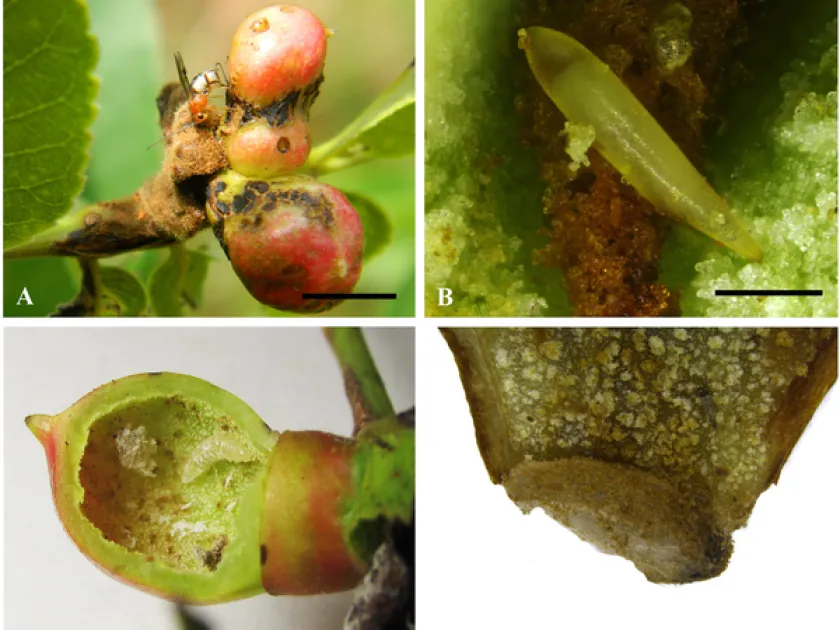
The most diagnostic sign of a Phacopteron infestation is the formation of distinct galls or leaf rolls on the foliage of the host plant.
These galls serve as protective structures for the developing nymphs, creating a micro-environment that shields them from predators and pesticides.
Affected leaves often show visible signs of curling, distortion, chlorosis, or necrotic spotting where the insect has disrupted the tissue.
Presence of honeydew on the leaves is a common indicator, which may lead to the secondary growth of sooty mold, further impeding photosynthesis.
Severe cases often result in premature leaf drop, which can significantly weaken the plant's structural integrity and aesthetic value.
Control measures
The primary management strategy involves cultural practices, specifically the removal and disposal of infested branches that show significant gall development.
Systemic insecticides are generally the most effective chemical intervention, as they are absorbed by the plant and reach the nymphs sheltered inside the galls.
Encouraging biological control agents, such as lacewings and ladybeetles, can help suppress the Phacopteron population in natural garden ecosystems.
Early season monitoring is critical to identify the arrival of adults and the onset of egg-laying, allowing for timely preventative measures.
Application of horticultural oils or neem-based products can provide non-toxic alternatives for managing minor infestations while protecting beneficial insects.
Taxonomy
- Latin name
- Phacopteron
- Order
- Hemiptera (bugs, aphids, leafhoppers)
- Family
- Phacopteronidae
- EPPO code
- PHCPSP
Discussion
No discussions yet — be the first.