
Turbot
Psetta maxima
Description
How to identify
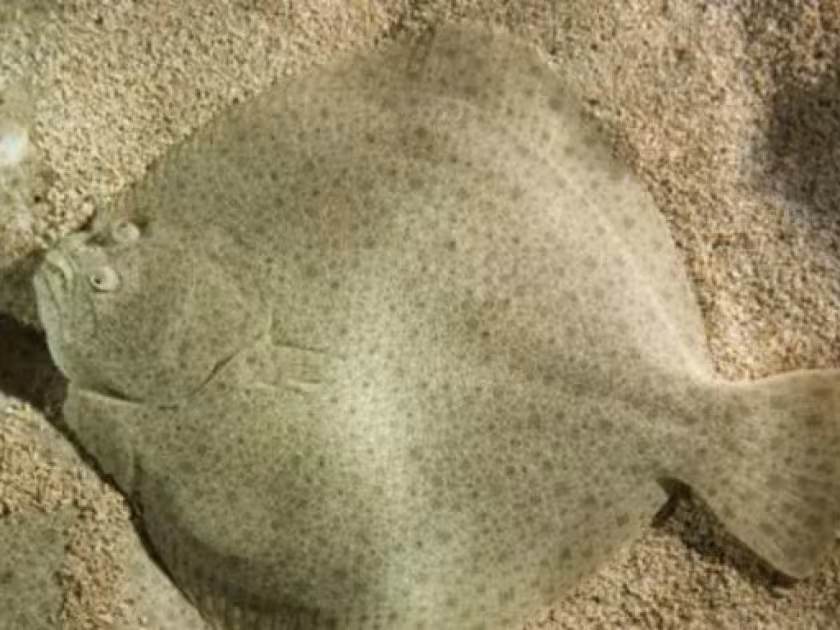
Turbot (Latin Psetta maxima) is a flatfish belonging to the Scophthalmidae family. It is vital to clarify that it is not an agricultural pest but a marine species.
The fish is characterized by a diamond-shaped body with bony tubercles instead of scales. Its physiological adaptations are designed for deep-sea environments.
In the context of agronomy, the classification of Psetta maxima as a plant pest is biologically incorrect and lacks scientific evidence.
Turbot primarily feeds on other small fish and benthic organisms, making it completely harmless to terrestrial or greenhouse agricultural crops.
Identifying this species requires ichthyological knowledge, which is distinct from identifying phytophagous pests or diseases affecting crops.
What it damages
There is no record of Psetta maxima causing damage to crops. It lacks the biological traits required to feed on or interact with plant tissues.
Any perceived damage in an agricultural context would likely stem from improper application of organic soil additives derived from marine waste.
High salt concentration in unprocessed marine-based fertilizers can adversely affect soil osmotic pressure and root health.
Direct damage, such as leaf consumption or stem tunneling, is impossible for this species, as it belongs to the marine ecosystem.
The misconception regarding its harmfulness may arise from improper waste management where untreated marine by-products are applied to soil.
Control measures
No pest control strategies are necessary for Psetta maxima, as it does not constitute a threat to agricultural productivity.
Agricultural safety protocols suggest that all organic fertilizers must be fully composted to avoid nutritional imbalances in the soil.
Proper soil management and adherence to recommended fertilization rates are sufficient to prevent issues linked to any organic amendments.
Agronomists should rely on approved organic fertilizers and avoid using raw marine processing residues directly on cultivated fields.
Regular soil analysis and monitoring help to ensure that the chosen amendments are safe for the specific crop variety being grown.
Taxonomy
- Latin name
- Psetta maxima
- Family
- Scophtalmidae
- EPPO code
- PSTTMA
Discussion
No discussions yet — be the first.