
Topknot
Phrynorhombus regius
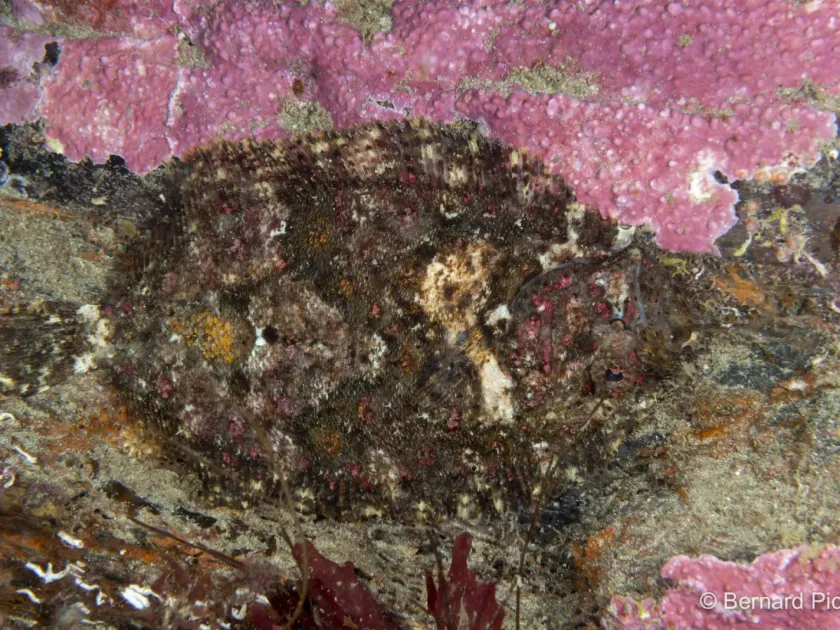
Description
How to identify
The Topknot (Phrynorhombus regius) is a species of small marine fish belonging to the family Scophthalmidae within the order Pleuronectiformes.
Like other members of the flatfish order, the Topknot possesses a distinctive asymmetrical body structure with both eyes positioned on the left side.
This species is specifically adapted for bottom-dwelling, featuring a cryptic coloration that allows it to camouflage seamlessly against sand or gravel substrates.
The body is relatively small, oval-shaped, and covered in small scales, which distinguishes it from larger commercial turbot or brill species.
Morphologically, Phrynorhombus regius is identified by the specific arrangement of its fin rays and the small, rounded shape of its pectoral and pelvic fins.
What it damages
The Topknot is a marine fish and does not cause any damage to terrestrial plants, crops, or greenhouse ecosystems.
The term "pest" in an agricultural context is entirely inapplicable to this species, as it is a predator of small benthic invertebrates.
It occupies a niche in marine food webs, consuming organisms that reside on the seafloor, and does not compete with land-based cultivation.
There are no recorded instances of this fish interacting with agricultural land, hydroponics, or any other type of crop production.
Its ecological impact is limited to the marine environment, where it plays a role in sustaining the balance of local bottom-dwelling communities.
When it appears
The seasonal activity of Phrynorhombus regius is dictated by water temperature fluctuations and spawning cycles in the North Atlantic and Mediterranean regions.
During the warmer spring months, the fish move closer to shallow coastal waters to facilitate reproductive success and larval growth.
Summer provides optimal conditions for feeding, as the warmer water encourages the proliferation of the micro-crustaceans they consume.
Autumn triggers a return to deeper waters, as the surface temperatures begin to drop and the fish seek stable thermal environments.
Throughout the winter, the Topknot remains in deeper, more consistent zones where it enters a period of reduced biological activity.
Signs of infestation
Detecting the presence of the Topknot in its natural habitat requires specialized knowledge of marine survey techniques, such as benthic trawling.
Visual identification is possible for researchers using underwater cameras or during scuba surveys in clear coastal waters where they are native.
Signs of their presence include distinctive, slight depressions in the sandy bottom where the fish have buried themselves to hide.
Since the species is not related to agriculture, there are no plant-based symptoms, lesions, or biological indicators associated with this fish.
Any monitoring of this species is conducted by marine biologists and ecologists rather than agricultural specialists or farmers.
Control measures
No agricultural control measures, such as insecticides or herbicides, are required, as the Topknot poses no threat to vegetation.
Management of the species, if necessary for environmental conservation or sustainable fishing, falls under maritime and fisheries jurisdiction.
There is no economic or practical basis for "controlling" the population of this fish within agricultural or gardening settings.
Strategies involving crop rotation, soil management, or bio-protection are completely irrelevant and ineffective against this species.
The conservation of the Topknot is governed by marine environmental policies that protect the biodiversity of the seafloor.
Taxonomy
- Latin name
- Phrynorhombus regius
- Family
- Scophtalmidae
- EPPO code
- PYNRRE
Discussion
No discussions yet — be the first.