
Birch leafminer
Profenusa thomsoni
Description
How to identify
The birch leafminer (Profenusa thomsoni) is a small Hymenopteran insect belonging to the Tenthredinidae family. It is a specialized pest that specifically targets birch tree species.
The adult is a tiny, black sawfly that emerges in late spring. Despite their small size, they can be numerous, leading to significant egg-laying activity on the developing birch foliage.
The female sawfly uses her ovipositor to insert eggs into the leaf tissue. This placement provides the hatching larvae with direct access to food resources within the leaf.
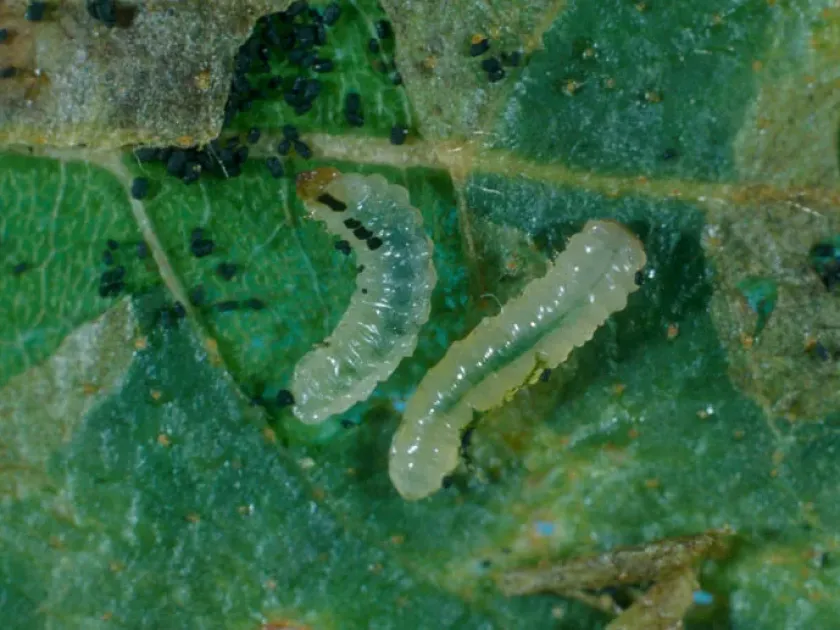
Larvae are flattened and legless, perfectly adapted to live and feed inside the leaf tissue between the upper and lower epidermis, which protects them from many external predators.
Upon completing their development, the larvae exit the leaf through small holes and drop into the soil to pupate, spending the winter in a dormant state underground.
What it damages
The primary hosts of this insect are various birch species, including both ornamental and wild varieties. It is a common pest in landscapes, parks, and forest plantations.
Larvae feed on the parenchyma, or the soft green tissue inside the leaf. This feeding creates visible tunnels or 'mines' that start as small dots and expand into large blotches.
Heavy infestations can lead to significant aesthetic damage, causing the leaves to brown, curl, and eventually drop prematurely during the growing season.
Reduced leaf surface area limits the tree's ability to photosynthesize, which can cause long-term stress and weaken the tree's overall vigor and resistance to diseases.
Persistent infestations over several years may result in stunted growth and increased susceptibility to secondary pests like wood-boring beetles or fungal pathogens.
Signs of infestation
The first symptoms are small, light-colored spots on the leaves. As the larvae consume more tissue, these spots grow into irregular brown blotches that affect large parts of the leaf.
By holding an affected leaf up to the light, one can often see the larvae moving inside the mine or detect the presence of dark frass, which is the insect's waste.
As the infestation progresses, the mined areas become papery and fragile. Often, the leaf tissue around the mines will eventually turn necrotic and collapse.
Small, neat holes appearing on the leaf surface indicate that the larvae have finished their feeding phase and have exited the mine to move into the soil for pupation.
Widespread premature yellowing and dropping of leaves in mid-summer is a clear indicator that the tree has experienced a severe population density of leafminers.
Control measures
Systemic insecticides are generally the most effective method for managing birch leafminer populations, as they are absorbed by the tree and poison the larvae within the leaves.
Timing the application is crucial; sprays should be applied shortly after the eggs hatch, which usually corresponds to the timing of the first appearance of small mines.
In landscape settings, maintaining tree health through proper irrigation and fertilization can help trees withstand leafminer damage and recover more quickly.
Removing and disposing of infested foliage can reduce the population if performed before the larvae exit, although this is often impractical for large, mature birch trees.
Biological control, including the protection of parasitic wasps that prey on the larvae, is an important component of an integrated pest management (IPM) strategy.
Taxonomy
- Latin name
- Profenusa thomsoni
- Order
- Hymenoptera
- Family
- Tenthredinidae
- EPPO code
- PRFETH
Discussion
No discussions yet — be the first.