
Violet gall midge
Prodiplosis violicola
Description
How to identify
The violet gall midge (Prodiplosis violicola) is a tiny insect belonging to the Cecidomyiidae family within the order Diptera. Adult midges are very small, mosquito-like insects about 1-2 mm in length, which are often overlooked by growers.
The primary damage is caused by the larvae, which are small, legless, worm-like creatures with a white or yellowish color, reaching approximately 1.5 mm in length.
The biological cycle is closely tied to the host plant's growth phase. It undergoes metamorphosis consisting of egg, larva, pupa, and adult, with most of the development occurring inside the plant tissues.
Females lay eggs directly into the soft, young tissues of the violet, typically focusing on the center of the crown. Upon hatching, the larvae start feeding on plant sap, triggering localized tissue reactions.
In favorable conditions, the entire development cycle from egg to adult can take just a few weeks, which leads to rapid infestations within indoor plant collections.
What it damages
This pest specifically targets plants of the Violaceae family, most commonly affecting Saintpaulia (African violets) in domestic environments.
The larvae primarily infest the growing tips and the youngest, tightly folded leaves located in the very center of the violet's crown.
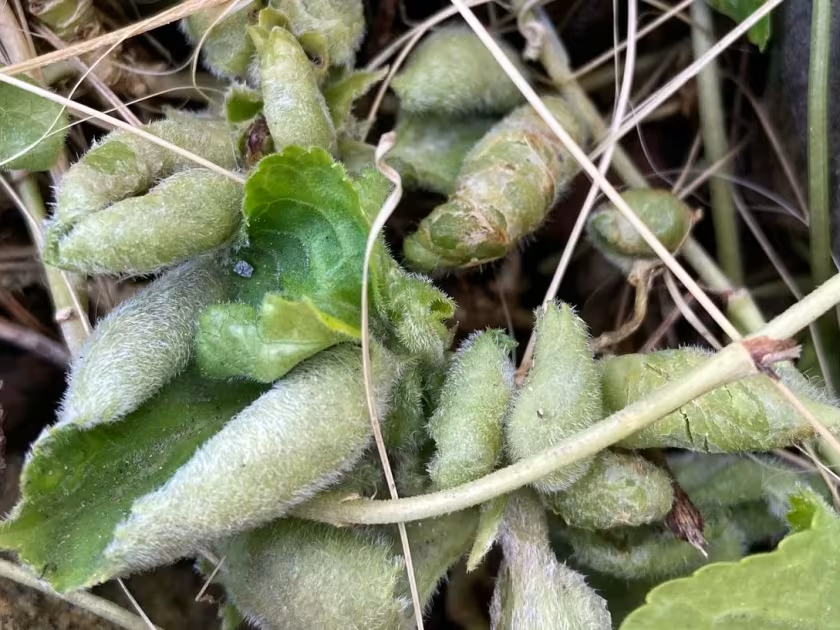
As they feed, the larvae secrete substances that disrupt normal tissue development, causing the formation of galls or severe morphological distortions.
Affected plant parts lose the ability to grow normally, resulting in the stunted development of the entire crown and a failure to produce flower buds.
Severe infestations can eventually destroy the crown's growing point, leading to the gradual decline and death of the entire plant due to impaired physiological functions.
Signs of infestation
The most prominent sign of an infestation is a characteristic change in the appearance of the plant's central growing point.
Young leaves in the center become thickened, firm, and curled or rolled inward, often forming a tight knot or a bud-like structure.
When inspecting these deformed leaves under magnification or by carefully unfolding them, one can find the larvae hiding within the distorted tissue.
The plant appears stressed and stunted: new growth is small, rigid, and severely deformed, often accompanied by chlorotic yellow spots in areas where the larvae have been feeding.
In advanced cases, plant growth stops completely, and while the root system may appear healthy initially, the crown eventually fails to thrive.
Control measures
An effective protection strategy combines rigorous cultural practices with the application of systemic insecticides.
Upon detecting any signs of infestation, all deformed leaves and the affected center crown must be immediately removed and destroyed to reduce the pest population.
The use of systemic insecticides is recommended, as these chemicals are absorbed into the plant's vascular system, making the tissues toxic to the sap-feeding larvae.
- Application of insecticides containing imidacloprid or abamectin.
- Strict quarantine protocols for all new plants introduced to the collection.
- Maintaining cleanliness and appropriate humidity levels in the growing area.
- Repeating treatments every 7–10 days to target successive generations of the pest.
It is crucial to prevent adult midges from entering the collection by using fine mesh screens, as they are capable of flying and moving with air currents.
Taxonomy
- Latin name
- Prodiplosis violicola
- Order
- Diptera (flies)
- Family
- Cecidomyiidae
- EPPO code
- CONTVI
Discussion
No discussions yet — be the first.