
Prodiplosis
Prodiplosis
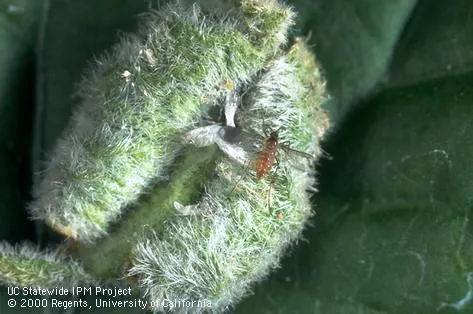
Description
How to identify
Prodiplosis is a genus of small flies belonging to the gall midge family (Cecidomyiidae) within the order Diptera. These insects are significant agricultural pests known for their ability to infest various economically important crops globally.
Adults are tiny, fragile-looking flies, usually no more than 1-2 mm long. Because of their minute size, they are extremely difficult to detect in a field or greenhouse setting until significant damage has already occurred.
The larval stage is the primary destructive phase. These larvae are typically yellowish or orange, legless, and very small. They spend their entire feeding life cycle hidden inside plant tissues, protected from the external environment.
The biological cycle is rapid, often completing a full generation in under three weeks under favorable temperature and humidity conditions. This high reproductive rate allows populations to explode in a very short time.
Prodiplosis species, particularly Prodiplosis longifila, have shown a remarkable ability to adapt to diverse agricultural environments, making them a recurring challenge for modern intensive farming systems.
What it damages
The host range of Prodiplosis includes several key crops such as tomatoes, peppers, citrus, and asparagus. In some regions, they have become a primary pest causing economic losses in both open fields and greenhouses.
Larvae feed on apical meristems, flower buds, and developing fruits. This feeding disrupts the plant's growth hormones, leading to stunted development, severe deformation of leaves, and failure of flower sets.
In infested citrus or tomato plants, the larvae cause damage to the pedicels and buds, resulting in widespread flower and young fruit drop. This can devastate yield expectations within a very short timeframe.
Direct damage to the fruit surface, such as scarring and tissue malformation, renders the produce unmarketable. Even low-level infestations can downgrade the quality of the harvested produce significantly.
Furthermore, the feeding sites create internal lesions that serve as entry points for various pathogenic fungi and bacteria, leading to secondary rot and tissue necrosis that often kills the damaged organs.
Signs of infestation
The earliest symptom of an infestation is the curling and thickening of terminal leaves at the plant's growing point. These leaves often appear crinkled and show abnormal discoloration.
Visible swelling or small galls on the stems and leaf petioles indicate that larvae are feeding internally. If the tissue is sliced open at these sites, the tiny larvae are usually visible under a hand lens.
A sudden, inexplicable drop of flower buds is a major red flag. When buds are inspected closely, one may find brown, necrotic internal tissues caused by larval feeding activity.
Yellow sticky traps used for monitoring in greenhouses will capture adult midges, providing an early warning system to signal the start of an active flight period.
Reduced apical dominance and the proliferation of side shoots are often observed after the main growing point has been severely damaged by larval infestation.
Control measures
Effective control requires an Integrated Pest Management (IPM) approach. Reliance on a single method is rarely sufficient due to the pest's rapid reproductive cycle and hidden life stage.
Sanitation is critical. Infested plant parts must be promptly removed and destroyed by burning or deep burial. Leaving crop debris in the field allows the larvae to complete their pupation cycle in the soil.
Biological control agents, such as predatory mites and specialized parasitic wasps, have shown promise in greenhouse environments. These natural enemies can significantly suppress larval populations when introduced early.
Chemical control should focus on systemic insecticides that can reach the larvae protected within plant tissues. Rotation of different chemical classes is essential to prevent the development of insecticide resistance.
- Regular monitoring with yellow sticky traps.
- Strict quarantine protocols for imported plant material.
- Prompt elimination of infested crop residues.
- Use of fine-mesh screening in greenhouses to exclude adults.
Taxonomy
- Latin name
- Prodiplosis
- Order
- Diptera (flies)
- Family
- Cecidomyiidae
- EPPO code
- PRDISP
Discussion
No discussions yet — be the first.