
Mango gall midge
Procontarinia pustulata
Description
How to identify
The mango gall midge (Procontarinia pustulata) belongs to the order Diptera and the family Cecidomyiidae. These are tiny insects, with adults measuring approximately 1–2 mm in length, resembling small midges or mosquitoes.
The primary damage is caused by the larvae, which live and feed within the plant tissues. By doing so, they induce the plant to form protective swellings known as galls, shielding the larvae from environmental stressors.
The lifecycle of this pest is closely synchronized with the phenology of mango tree growth, specifically coinciding with the emergence of new foliage flushes.
Females deposit eggs directly into the tender tissues of young leaves. Once the eggs hatch, the larvae begin to feed on the plant sap, triggering the formation of characteristic leaf galls.
The adult stage is brief, focused primarily on mating and locating suitable host leaves for the next generation of larvae to develop.
What it damages
The primary host for this pest is the mango tree (Mangifera indica). It is a specialized pest that targets young, developing leaves rather than mature foliage.
In regions where it is prevalent, heavy infestations can affect a large percentage of the leaf surface area, significantly reducing the tree's photosynthetic capacity.
Persistent infestation leads to leaf deformation, premature leaf drop, and overall physiological stress, which weakens the tree and reduces its vigor.
Substantial populations of the mango gall midge can cause economic losses by reducing fruit yield and increasing the tree's susceptibility to other biotic threats.
The damage caused by gall formation creates entry points for secondary fungal and bacterial pathogens, which can exacerbate the tree's poor health condition.
Signs of infestation
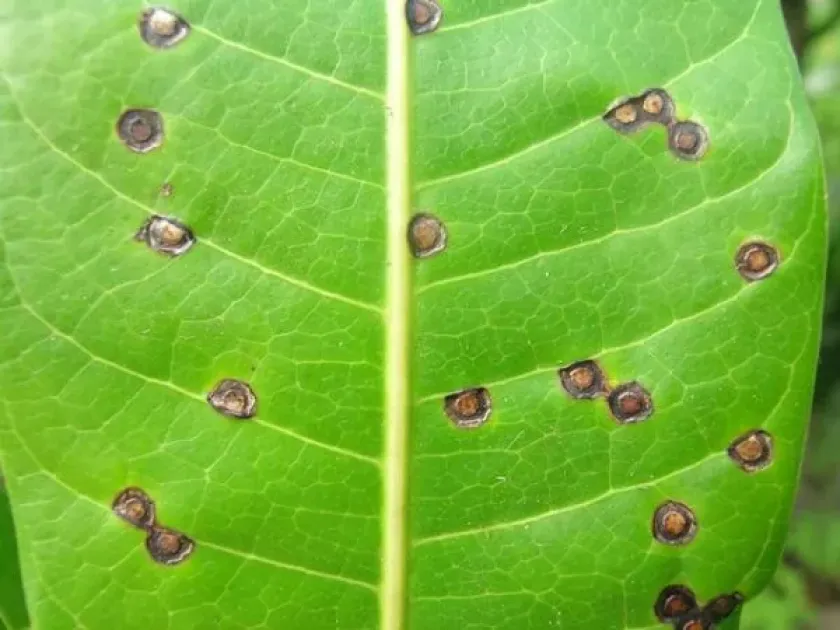
The most prominent sign of infestation is the appearance of numerous small pustules or bumps on the surface of young leaves, often scattered across the leaf blade.
As the larvae mature inside the galls, the color of these lesions may shift from light green to brown or yellow, making them easily distinguishable upon close inspection.
Severe infestations cause leaves to curl, twist, and lose their natural texture, eventually leading to chlorosis and early shedding of the affected foliage.
Inside an open gall, one can typically find one or more small, yellowish larvae that continue to feed on the interior tissues, damaging the vascular integrity of the leaf.
Small exit holes on the underside of the leaf indicate where adult midges have emerged after completing their development cycle inside the plant tissue.
Control measures
Cultural management is crucial: regular pruning of infested branches and the disposal of fallen leaves helps to break the lifecycle of the pest.
Biological control involves conserving and promoting natural enemies, such as parasitoid wasps, which are known to prey on or parasitize gall midge larvae.
Chemical intervention should be timed carefully to target adult midges before they lay eggs, utilizing systemic insecticides that are effective against internal feeders.
It is vital to monitor the tree for new leaf flushes, as these periods are critical for applying protective measures before the pest establishes itself in the young tissue.
- Implementing strict quarantine protocols for nursery stock.
- Applying systemic insecticides when new leaf growth is observed.
- Maintaining tree health through proper fertilization to improve resistance.
Taxonomy
- Latin name
- Procontarinia pustulata
- Order
- Diptera (flies)
- Family
- Cecidomyiidae
- EPPO code
- PRONPU
Discussion
No discussions yet — be the first.