
Common gooseberry sawfly
Pristiphora grossulariae
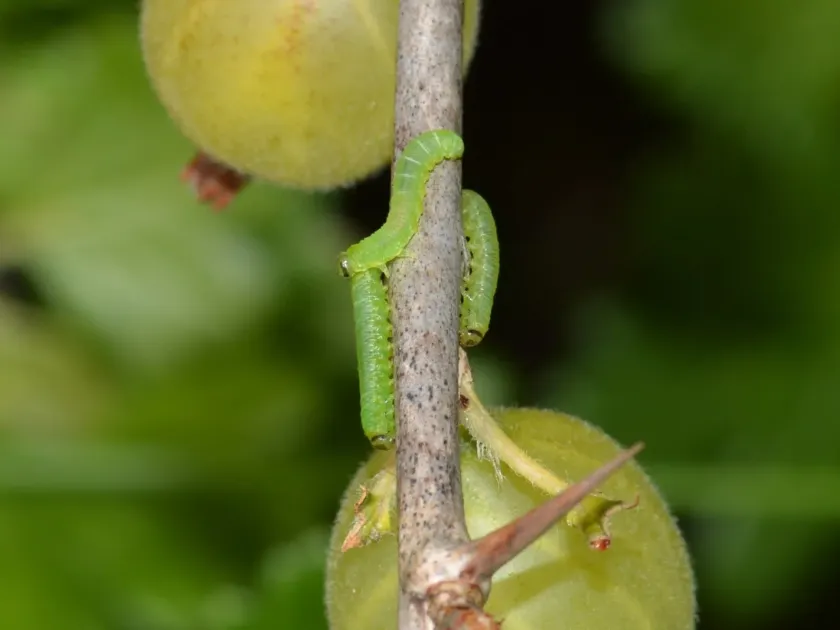
Description
How to identify
The common gooseberry sawfly, scientifically known as Pristiphora grossulariae, is a member of the Hymenoptera order, specifically the Tenthredinidae family.
Adult sawflies resemble small wasps or flies with yellowish bodies. They are typically seen flying around berry bushes in the early spring.
The larvae, often called false caterpillars, are the primary stage of the insect that causes damage to garden plants.
They are easily identified by their pale green or bluish-green bodies covered in distinctive black spots and their habit of curling up when disturbed.
The lifecycle begins with overwintering pupae in cocoons buried within the soil beneath the host plant, emerging as adults once temperatures rise.
What it damages
The pest primarily targets Grossulariaceae species, with a strong preference for gooseberries and various types of currants.
Larvae feed voraciously on leaves, often starting from the inner parts of the bush and moving outward, which is why infestations can go unnoticed initially.
Severe infestations can result in total defoliation, leaving the branches completely bare and exposing the fruit to excessive sunlight.
Continued damage significantly weakens the plant, resulting in reduced vigor, poor fruit set, and decreased hardiness for the following year.
In mature plants, heavy defoliation can even lead to stunted growth and a failure to produce flower buds for the next growing season.
When it appears
Adults typically emerge in late spring, usually coinciding with the flowering stage of gooseberries and currants.
The species usually completes two to three generations per year, creating a continuous pressure on the garden from May through August.
The timing of each generation is highly dependent on environmental temperature, with warmer springs accelerating the lifecycle significantly.
Larvae of the first generation are usually the most damaging, appearing right when the bush is developing its initial canopy of leaves.
As the season progresses, the final generation of larvae will drop to the ground to pupate and remain in the soil throughout the winter months.
Signs of infestation
The first sign of an infestation is the appearance of small, irregular holes scattered across the leaf surfaces.
As the larvae mature and grow, they consume larger portions of the leaf, eventually leaving nothing behind but the main veins (skeletonization).
- Small, translucent holes on leaves;
- Clusters of green larvae on the underside of leaves;
- Visible dark excrement pellets on foliage;
- Rapid thinning of the leaf canopy;
- Visible defoliation starting at the center of the bush.
Observing the bush early in the morning often reveals the larvae actively feeding along the edges of the foliage.
Control measures
Cultural control includes thorough cultivation of the soil around the bushes to disrupt the overwintering cocoons, effectively reducing the next spring's population.
Manual removal of larvae is highly effective in small gardens; simply inspect leaves and shake the bushes to dislodge the pests onto a sheet.
Biological control, such as using Bacillus thuringiensis, is an excellent option for targeting larvae while remaining safe for beneficial pollinators.
In cases of severe infestation, apply registered insecticides that are safe for food crops, ensuring all safety guidelines and harvest intervals are strictly followed.
Encouraging natural predators, such as birds or predatory beetles, can help keep sawfly numbers in check throughout the summer season.
Taxonomy
- Latin name
- Pristiphora grossulariae
- Order
- Hymenoptera
- Family
- Tenthredinidae
- EPPO code
- PRISGR
Discussion
No discussions yet — be the first.