
Alder sawfly
Pristiphora alnivora
Description
How to identify
The Alder sawfly, scientifically known as Pristiphora alnivora, belongs to the order Hymenoptera and the family Tenthredinidae. Adult insects resemble small flies but possess distinct physical features common to sawflies, particularly in the structure of the abdomen.
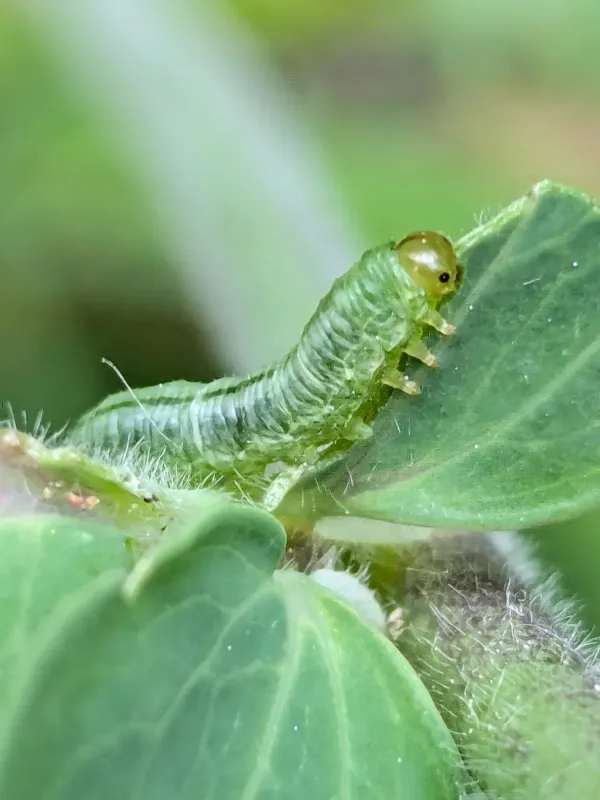
The larvae of this species look similar to butterfly caterpillars but differ in the number of abdominal prolegs. Typically, the larva's body is colored in shades of green or yellow, which provides excellent camouflage against the alder leaf surface.
The insect's life cycle is closely linked to the phenology of its host plant. Adult females possess a specialized ovipositor used to deposit eggs directly into the leaf tissue, ensuring protection and immediate food access for the hatching larvae.
The development progresses through stages: egg, larva, pupa, and imago. Pupation usually occurs in the soil or leaf litter under the tree, where the insects overwinter until favorable spring conditions trigger their emergence.
Identifying the species is often challenging due to the elusive nature of the adults. Experts identify them based on specific wing venation and genitalia structure, which requires the use of microscopic techniques and specialized entomological keys.
What it damages
The primary food source for this pest is the alder tree (Alnus). The larvae are specialized phytophages that feed exclusively on alder foliage, which can lead to severe defoliation of the tree.
In cases of mass outbreaks, the sawfly can completely strip the alder branches, significantly reducing the intensity of photosynthesis. This negatively affects wood growth and the overall immunity of the plant throughout the growing season.
Leaves weakened by frequent damage become vulnerable to secondary infections, including fungal diseases of the bark and leaves. In severe cases, multi-year defoliation of the crown can lead to the dieback of individual branches.
Damage is caused primarily at the larval stage when the insects actively chew the leaf blade, leaving behind either skeletonized veins or completely consumed leaf tissue.
While mature alder trees rarely die from sawfly activity, for young plantations and nurseries, this damage can be fatal, reducing the decorative value and viability of the saplings.
When it appears
The period of greatest activity for this insect coincides with the beginning of the alder growing season, usually late spring and the first half of summer. This is when adult emergence and egg-laying in young leaf tissues occur.
Larval development is rapid, and the most intense feeding occurs in June and July. During this time, the mass presence of pests can be observed on the underside or edges of the leaves.
The number of generations per year can vary depending on the climatic zone: in southern regions, two generations are possible, whereas in northern regions, only one generation typically develops.
The summer lull and the larvae moving into the soil for pupation mark the end of the main period of damage. In the fall, the species enters diapause as a cocoon within the soil layer.
Monitoring for the presence of the pest should begin at the moment of full leaf expansion, when larvae are most sensitive to environmental factors and chemical treatment measures.
Signs of infestation
The first sign of infestation is the appearance of small holes on young alder leaves. Larvae begin feeding from the edges, gradually transitioning to skeletonizing the entire leaf blade.
Upon closer inspection, one can find larval frass (excrement) accumulating on the underside of the leaf or in the forks of branches. The presence of the larvae themselves, often curled into a characteristic spiral, is a clear sign of pest infestation.
Gradual yellowing and premature leaf drop in the middle of summer indicate severe crown damage by the insects. The tree takes on a ragged, unhealthy appearance.
- Eaten leaf margins.
- Presence of green "caterpillars" on the leaf underside.
- Skeletonized veins remaining after larval feeding.
- Premature defoliation.
If the tree is subject to regular attacks, secondary signs may appear, such as delays in bud development and a general slowdown in shoot growth.
Control measures
To control the Alder sawfly, a comprehensive approach is used, combining agrotechnical, biological, and chemical protection methods. It is crucial to monitor pest populations from early spring.
Agrotechnical methods include cultivating the soil around the base of the tree in autumn or spring. This destroys the cocoons located in the soil, leading to their death due to weather conditions and natural predators.
Biological control involves attracting natural enemies of sawflies to the garden, such as predatory bugs, ground beetles, and specialized parasitoid wasps, which effectively keep the pest population in check.
In cases of high infestation, contact-stomach insecticides authorized for forestry and landscaping use are effective. Applications should be performed during the active feeding period of early-instar larvae.
Regular sanitary pruning of damaged and weakened branches helps reduce pest concentration and improves the overall health of the trees, increasing their natural resistance to future attacks.
Taxonomy
- Latin name
- Pristiphora alnivora
- Order
- Hymenoptera
- Family
- Tenthredinidae
- EPPO code
- PRISAL
Discussion
No discussions yet — be the first.