
Blue shark
Prionace
Description
How to identify
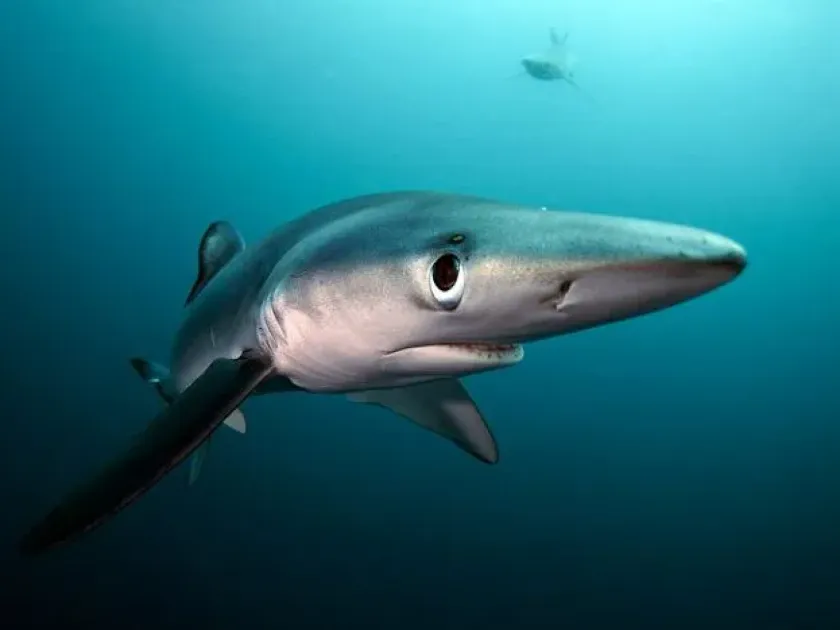
The blue shark, scientifically classified as Prionace glauca, is a species of requiem shark belonging to the family Carcharhinidae and the order Carcharhiniformes.
This shark is recognized by its slender body, elongated pectoral fins, and distinct deep blue coloration on the dorsal side of its body.
As a pelagic species, it is found in deep waters across temperate and tropical oceans throughout the world, often moving in long-distance migrations.
Biologically, it is a specialized predator that survives only in marine ecosystems, making it impossible for it to exist in terrestrial agricultural settings.
It is crucial for agronomists to distinguish between marine fauna and actual plant pests that impact farming operations.
What it damages
The blue shark does not cause any damage to agricultural crops, orchards, or greenhouse plants as it has no evolutionary link to herbivory.
Its diet consists strictly of cephalopods, fish, and other marine organisms, meaning it does not consume, chew, or transmit diseases to plants.
There are no documented instances in agricultural science where Prionace glauca has been cited as a pest of crops.
Labeling this species as a pest is scientifically inaccurate and contradicts established biological classification systems.
Agricultural efforts should be focused on recognized pests such as aphids, locusts, or fungal pathogens rather than oceanic species.
Control measures
No control measures are needed for the blue shark, as it poses zero risk to any form of vegetation or agricultural output.
Integrated pest management protocols do not include any guidance regarding this species, as it belongs to the marine environment.
If you encounter claims stating that blue sharks are harmful to plants, these should be discarded as misinformation or classification errors.
Effective crop protection relies on identifying specific threats to plant health rather than erroneous or unrelated animal listings.
Consult local agricultural extension services for accurate information regarding real pest populations and appropriate management strategies.
Taxonomy
- Latin name
- Prionace
- Family
- Carcharhinidae
- EPPO code
- PRNASP
Discussion
No discussions yet — be the first.