
Bull shark
Carcharhinus leucas
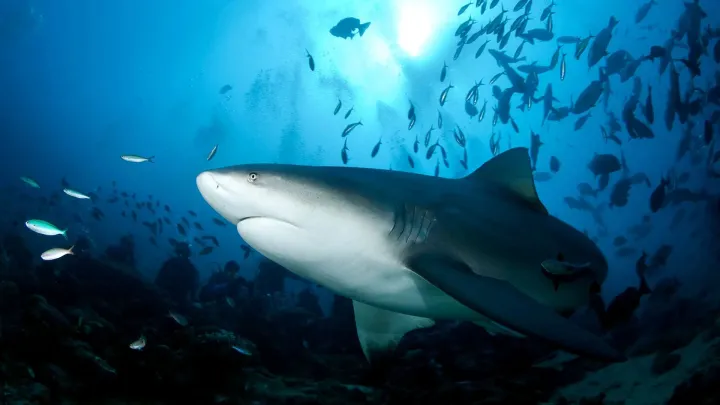
Description
How to identify
The bull shark, scientifically known as Carcharhinus leucas, belongs to the order Carcharhiniformes and the family Carcharhinidae. It is widely recognized for its ability to tolerate freshwater environments.
The physical appearance of the bull shark is characterized by a stocky body and a blunt, broad snout. These features allow it to navigate through turbid river waters where agricultural drainage systems are often located.
Unlike most sharks, this species is capable of osmoregulation, allowing it to transition from saline coastal waters into freshwater river systems with ease.
The biology of the bull shark is linked to seasonal precipitation and flooding events. High water levels often provide pathways for these sharks to enter inland waterways near crop fields.
In an agricultural context, identifying the presence of this species is crucial for maintaining the safety of field operations in regions near estuaries and delta zones.
What it damages
The bull shark does not consume plants, meaning it does not cause direct damage to crops like traditional pests. Instead, its agricultural impact is entirely indirect.
The main issue arises when sharks enter irrigation systems and canals. Their presence can clog water intakes, damage mechanical pumps, and disrupt the distribution of water to crops.
Agricultural workers are often forced to halt operations in flooded fields or irrigation canals to ensure their safety, leading to significant delays in harvest or maintenance.
Farmers who combine rice cultivation with integrated fish farming suffer economic losses as bull sharks prey on the fish stocks within the system.
Livestock safety is also compromised when animals graze near riverbanks in areas where bull sharks are known to frequent, posing risks to the farming operations.
Control measures
The primary control strategy involves the installation of robust physical barriers, such as steel gratings, at the entry points of irrigation and drainage canals.
Routine inspections and the use of underwater monitoring cameras at pump stations can help detect and mitigate the impact of shark presence in irrigation water.
Acoustic deterrent systems have been tested to keep sharks away from specific areas, providing a potential non-lethal solution for protecting critical water infrastructure.
Managing the timing of agricultural activities is essential; avoiding manual labor in water during peak flood seasons minimizes the risk of human-shark encounters.
Agricultural training programs should emphasize safety protocols for field workers in river-adjacent areas to ensure that farming can continue safely and effectively.
Taxonomy
- Latin name
- Carcharhinus leucas
- Family
- Carcharhinidae
- EPPO code
- KARCLE
Discussion
No discussions yet — be the first.