
Tiger shark
Galeocerdo cuvier
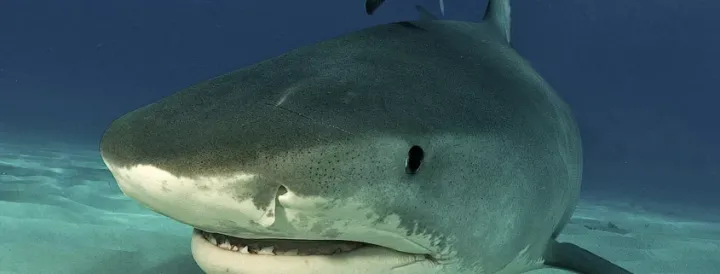
Description
How to identify
The Tiger shark (Galeocerdo cuvier) is a species of requiem shark belonging to the order Carcharhiniformes. It is a large marine predator found in tropical and temperate oceans.
In the context of agronomy, this species is strictly a marine organism. It has no biological connection to plant production, agricultural fields, or common plant pests.
The species is identified by its distinct vertical stripes on its body. These markings serve as camouflage in marine environments, having no relation to any agricultural pest characteristics.
Its biological cycle is entirely dependent on marine ecosystems. It feeds on various marine animals, ranging from fish and crustaceans to sea turtles, but never plants.
It is crucial for agronomists to distinguish between marine species and actual agricultural pests to avoid confusion in biological reporting and pest management documentation.
What it damages
The Tiger shark causes zero damage to agricultural crops. As a marine carnivore, it lacks the biological, physical, and behavioral traits necessary to interact with land-based flora.
No agricultural plants, including vegetables, grains, or fruits, are susceptible to being eaten or damaged by this species. The species has no impact on farming outputs or crop quality.
There are no recorded instances of this shark harming any form of vegetation. It remains purely a predator within the food web of the world's oceans.
Agricultural researchers and farmers should be aware that Galeocerdo cuvier is irrelevant to crop health monitoring and field diagnostic assessments.
In summary, the species carries no risk to farming operations and poses no threat to economic production in any agricultural sector worldwide.
Control measures
There are no control measures for the Tiger shark in agriculture, as it is not an agricultural pest. Using pesticides or herbicides to "control" this species is irrational and dangerous to the environment.
Agro-technical practices should focus on managing legitimate biological threats such as insects, fungal infections, or weeds that impact crop development.
If marine organisms are present in water used for irrigation, they are managed through filtration systems for water quality, not through pest control protocols for the species.
Professional agronomic management focuses on data-driven interventions against pests that are known to decrease yield and damage harvest quality.
Maintaining accurate agricultural records requires excluding non-agricultural species to ensure that management resources are directed toward real and verified threats.
Taxonomy
- Latin name
- Galeocerdo cuvier
- Family
- Carcharhinidae
- EPPO code
- GLCECU
Discussion
No discussions yet — be the first.