
Andean potato weevil
Premnotrypes sanfordi
Description
How to identify
The Andean potato weevil (Premnotrypes sanfordi) is a significant pest belonging to the Curculionidae family, known for causing extensive damage to potato production in the Andean region.
Adult weevils are small, dark-colored beetles characterized by an elongated snout. Their cryptic coloration allows them to blend in perfectly with the soil surface.
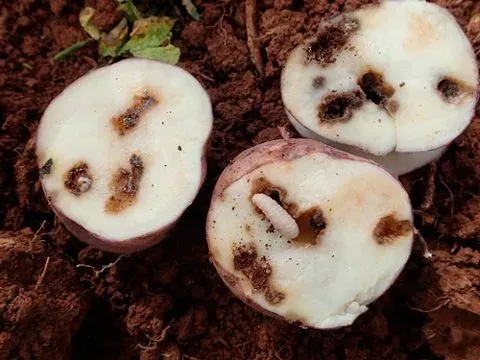
Larvae are legless, C-shaped grubs with a white body and a distinct brown head. They are primarily found burrowing within potato tubers, which serves as their main source of nutrition.
The life cycle involves an egg-laying stage in the soil near the base of the plant, followed by the larvae burrowing into the tubers to complete their development.
These insects are highly specialized, thriving in the cool, high-altitude conditions where potatoes are traditionally cultivated.
What it damages
The primary damage is caused by larvae that bore into the potato tubers, creating intricate tunnels and galleries filled with frass, which compromises the quality and quantity of the harvest.
Adult weevils feed on the margins of the potato leaves, creating jagged edges. While this reduces the leaf area, it is generally considered secondary to the subterranean tuber damage.
Infected tubers lose their commercial value and cannot be stored for long periods, as the feeding tunnels act as entry points for bacterial and fungal rot pathogens.
Severe infestations can lead to significant yield losses, often ranging from 30% to 80% depending on environmental conditions and the timing of control efforts.
The pest poses a high risk to food security in regions where potato cultivation is the main source of income for smallholder farmers.
When it appears
Adult weevils emerge from the soil in early spring or at the beginning of the rainy season, aligning with the emergence of new potato shoots.
During the peak growing season, the insects are most active at night, mating and laying eggs near the base of the plants.
Larval activity intensifies as tubers begin to expand; the larvae migrate from the soil into the developing potato tubers, where they feed until reaching maturity.
As the harvest season approaches, the mature larvae exit the tubers and return to the soil to pupate, preparing for the next season's cycle.
Understanding these seasonal patterns is critical for timing the application of insecticides and cultural management practices effectively.
Signs of infestation
Look for notched or scalloped edges on the potato leaves, which are the visible signs of adult weevil feeding activity.
Small, inconspicuous entry holes on the skin of harvested tubers are the most reliable indicator of larval infestation.
Internal examination of a potato will reveal irregular tunnels and galleries carved out by the developing larvae, making the tissue spongy or hollow.
The presence of empty pupal cells in the soil around the plant base is a strong indicator of successful pest development.
Stunted growth or premature yellowing of the foliage can sometimes be attributed to high levels of tuber damage beneath the soil surface.
Control measures
Quarantine measures are the first line of defense, preventing the movement of infested tubers from endemic areas to unaffected regions.
Cultural practices like deep plowing after harvest expose pupae to harsh surface conditions, significantly reducing the survival rate for the next generation.
Crop rotation with non-host crops is essential to break the insect life cycle and decrease the local population density in the field.
Systemic insecticides can be applied during the adult emergence phase to stop the cycle before the eggs are laid on the plant.
- Using clean, certified seed potatoes to prevent initial outbreaks.
- Removing volunteer potato plants that can harbor pests.
- Implementing monitoring traps to track weevil migration patterns.
Taxonomy
- Latin name
- Premnotrypes sanfordi
- Order
- Coleoptera (beetles)
- Family
- Curculionidae
- EPPO code
- PREMSA
Discussion
No discussions yet — be the first.