
Popillia hilaris
Popillia hilaris
Description
How to identify
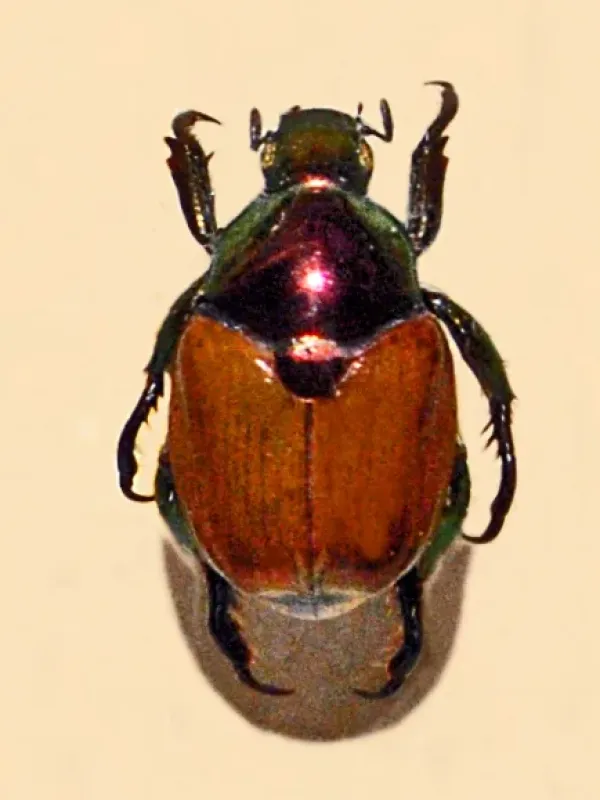
Popillia hilaris is a species of scarab beetle belonging to the family Scarabaeidae. These beetles are typically 10–12 mm in length and possess a compact, oval-shaped body characteristic of the subfamily Rutelinae.
The dorsal side often displays a metallic sheen, sometimes with iridescent green or copper reflections. Key identification features include the presence of distinct white patches of hair on the posterior abdominal segments, visible beneath the elytra.
The larvae, often referred to as white grubs, have a C-shaped body, creamy-white color, and a brown head capsule. They are soil-dwelling organisms that feed on decomposing organic matter and living roots of various plants.
Adult beetles have well-developed mandibles for feeding and tarsal claws that allow them to cling tightly to foliage. Identification in the field often requires microscopic examination of the male genitalia to distinguish this species from similar relatives.
The life cycle involves complete metamorphosis (egg, larva, pupa, and adult), with the majority of the beetle's life spent underground in the larval stage, making them hidden yet persistent pests.
What it damages
Adult beetles are highly active folivores. They consume the leaves of a wide range of host plants, including ornamentals, fruit trees, and field crops. They often engage in skeletonizing leaves, leaving behind only the vascular network.
Larval stages are subterranean feeders that cause severe damage to the root systems of grasses and young seedlings. By severing roots, larvae interrupt water and nutrient uptake, leading to rapid wilting.
In lawns and turf, the feeding activity of larvae creates patches of dead or yellowing grass that can be easily pulled back, revealing damaged or absent root systems beneath the surface.
Fruits and flowers are also susceptible to direct feeding by adults, which reduces the marketability and yield of harvested crops. Severe infestations can lead to complete plant collapse in sensitive cultivars.
The combined effect of leaf consumption by adults and root pruning by larvae puts significant stress on the plants, making them more susceptible to drought, heat stress, and secondary fungal infections.
When it appears
The life cycle of Popillia hilaris typically spans one year, though environmental conditions can cause variations in development time. Larvae overwinter deep in the soil profile to avoid freezing temperatures.
During the spring, as soil temperatures rise, larvae migrate towards the root zone to feed. This is followed by a period of pupation in an earthen cell, where the transformation into an adult takes place.
Adult emergence usually correlates with the blooming season of preferred host plants. During this time, beetles are highly active, feeding and mating to ensure the survival of the next generation.
Eggs are deposited in moist, organic-rich soil, where larvae hatch and begin their feeding cycle. The timing of egg-laying is critical for the success of the new generation before winter sets in.
Autumn marks a period of intensive feeding for larvae as they accumulate fat reserves to survive the coming winter. Soil moisture and temperature are the main drivers of larval development speed during this phase.
Signs of infestation
Visual confirmation of adults is often the first sign of an infestation. Beetles are frequently seen congregating in large numbers on the foliage of host plants during warm, sunny days.
Leaf skeletonization is a primary symptom. When leaves show a lace-like appearance where only the veins remain, it is a strong indicator of adult feeding activity by scarab beetles.
In turf and lawns, the presence of localized brown patches that easily detach from the ground is a classic sign of high larval density, as these grubs have consumed the roots supporting the grass.
Digging into the top few centimeters of the soil can confirm the presence of C-shaped larvae. This remains the most reliable method for detecting an infestation before significant plant damage becomes visible.
Increased activity of birds, skunks, or moles digging into the soil surface is often a sign that there is a significant population of soil-dwelling larvae present beneath the ground.
Control measures
Mechanical control includes manual removal of beetles in the early morning when they are sluggish. Shaking branches over a container of soapy water is a common and effective method for home gardens.
Cultural practices are essential for managing larval populations. Deep soil cultivation or plowing during the pupation stage can mechanically damage larvae and expose them to natural predators like birds.
Chemical control focuses on the use of systemic insecticides or contact sprays during the peak adult flight period. It is crucial to follow local regulations to minimize impact on non-target pollinators.
Biological control methods involve applying entomopathogenic nematodes (Heterorhabditis or Steinernema) which target larvae in the soil, effectively reducing the population in an environmentally friendly manner.
- Use of pheromone-based traps for population monitoring.
- Selection of resistant plant varieties where available.
- Proper irrigation management to prevent soil from becoming an ideal egg-laying site.
- Application of microbial insecticides based on Beauveria bassiana.
Taxonomy
- Latin name
- Popillia hilaris
- Order
- Coleoptera (beetles)
- Family
- Scarabaeidae
- EPPO code
- POPIHI
Discussion
No discussions yet — be the first.