
Persimmon thrips
Ponticulothrips
Description
How to identify
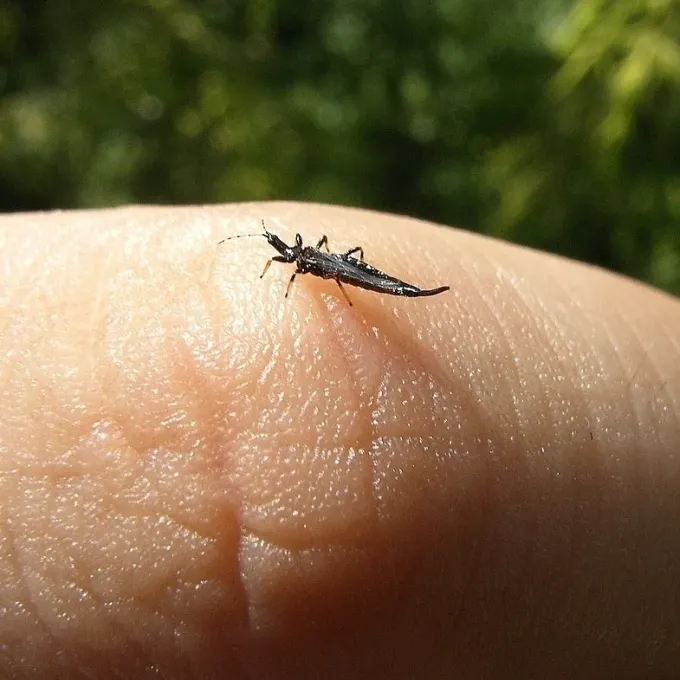
Ponticulothrips diospyrosi, commonly known as persimmon thrips, is a member of the Phlaeothripidae family within the Thysanoptera order.
The adult insect is characterized by a dark, slender body, while the nymphs are typically lighter in color and are found on the undersides of leaves.
The lifecycle includes several stages, with the insect overwintering as adults in protected niches such as bark crevices or dry leaf litter.
This species is a specialized feeder that targets specific host plants, primarily within the Diospyros genus.
Due to their tiny size, they are often difficult to detect until significant damage to the foliage has already occurred in the orchard.
What it damages
Persimmon trees are the primary targets for this pest, which feeds on the juices of young, tender leaves and developing shoots.
Feeding activities cause the leaves to curl and deform, which disrupts the tree's photosynthesis and stunts its overall growth.
In severe cases, the infestation leads to premature leaf drop, resulting in reduced fruit yield and significant physiological stress to the tree.
The damage creates entry points for secondary pathogens, making the tree more susceptible to fungal and bacterial infections.
Continued infestation over multiple seasons can lead to the decline of younger trees and a general reduction in orchard productivity.
When it appears
The activity of persimmon thrips begins in the early spring, coinciding with the first flush of young growth on the trees.
As temperatures rise during late spring and summer, the population can increase rapidly, leading to multiple overlapping generations.
Peak infestation levels typically occur during the most active growth phases of the host plant, when foliage is most succulent.
Environmental conditions such as high humidity and stable warm temperatures are major drivers of population growth during the season.
As the season progresses towards autumn, activity decreases as the insects prepare for their winter diapause period.
Signs of infestation
The most prominent sign of an infestation is the curling and distortion of young leaves, which often roll up to protect the insects inside.
Leaves affected by feeding show chlorotic spots or patches that may eventually turn necrotic as tissue dies off.
Small dark specks, which are the fecal droppings of the thrips, are frequently visible on the undersides of the leaves within the curled sections.
Growth of terminal shoots is significantly retarded, and the trees may show signs of general unthriftiness or lack of vigor.
Visual inspection of the canopy often reveals clusters of infested leaves that stand out due to their abnormal shape and discoloration.
Control measures
Management of Ponticulothrips diospyrosi requires a combination of chemical and mechanical control strategies for best results.
Systemic insecticides are generally the most effective, as they reach the insects hidden within the curled leaf tissue.
- Sanitary pruning of infested shoots to remove concentrated pest populations.
- Monitoring population levels using yellow sticky traps in the spring.
- Promoting natural predators and beneficial insects within the orchard ecosystem.
Applications of pesticides should be timed carefully to catch the vulnerable early larval stages before leaves fully roll up.
Implementing a regular nutritional and irrigation program helps the trees withstand the stress caused by the feeding of the thrips.
Taxonomy
- Latin name
- Ponticulothrips
- Order
- Thrips
- Family
- Phlaeothripidae
- EPPO code
- PONLSP
Discussion
No discussions yet — be the first.