
Wormwood head aphid
Pleotrichophorus glandulosus
Description
How to identify
The wormwood head aphid (scientific name: Pleotrichophorus glandulosus) belongs to the Hemiptera order and the Aphididae family. It is a specialized pest primarily found on various Artemisia species throughout its geographical range.
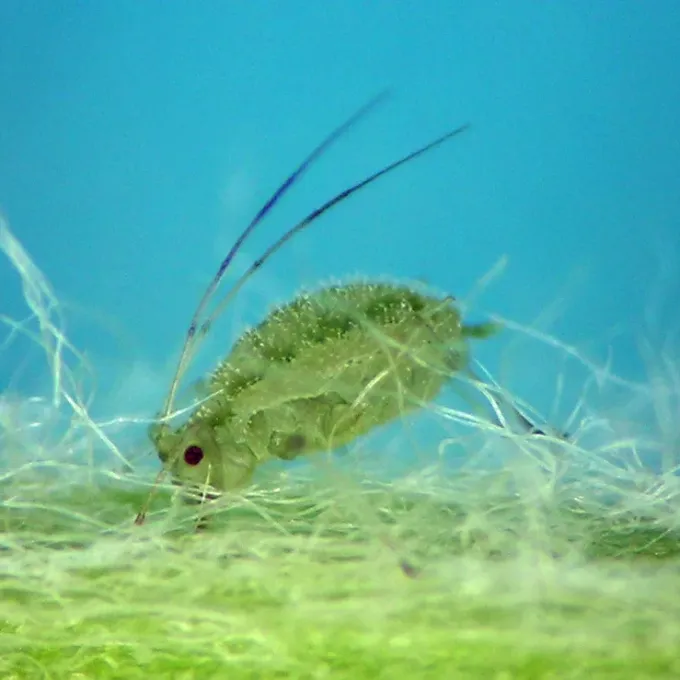
These aphids are characterized by their unique glandular hairs (capitate setae) on their bodies, which is a key diagnostic feature for the genus Pleotrichophorus. Adults typically measure between 1.5 and 2.5 mm in length.
Their coloration is adapted to the host plant, usually appearing in shades of pale green or yellowish-brown. This crypsis makes them difficult to spot without close inspection of the underside of leaves or terminal buds.
The life cycle involves both winged and wingless morphs. Winged forms develop primarily to colonize new host plants during periods of overcrowding or when the host quality declines.
Reproduction follows a typical aphid pattern, with eggs overwintering on the stems or root crowns of perennial wormwood plants, ensuring survival through harsh weather conditions.
What it damages
The primary hosts of this species are members of the Asteraceae family, particularly the genus Artemisia. They feed by extracting phloem sap, which is nutrient-rich and essential for the plant's development.
Direct damage includes the wilting and curling of leaves, stunted shoot growth, and general loss of vigor. The depletion of nutrients by large colonies can severely weaken the plant's immune system.
Pleotrichophorus glandulosus acts as a vector for various plant viruses. Viral transmission often causes systemic diseases that lead to chlorosis, mosaic patterns, and significantly reduced growth rates.
The production of honeydew is a significant secondary issue. This sticky substance coats the leaves, providing an ideal substrate for sooty mold fungi, which reduce the photosynthetic capacity of the plant.
Severe infestations can lead to the death of young shoots or even the entire plant if the infestation is prolonged and the host plant is already under stress from other environmental factors.
Signs of infestation
The most reliable sign of an infestation is the presence of aphid colonies hidden in the leaf axils or on the underside of young, unfolding leaves at the top of the plant.
The accumulation of honeydew—a shiny, sticky secretion on the leaf surface—is a clear indication of high aphid activity. This substance often attracts ants, which protect the aphids from predators.
Visible curling, crinkling, or discoloration (yellowing) of new leaves suggests that the plant's vascular tissue is being damaged by the aphid's probing stylets.
The appearance of a black, powdery substance on leaves indicates the growth of sooty mold, which grows on the honeydew produced by the aphids.
Frequent shedding of white, translucent skins (exuviae) on the leaves or stems confirms that the aphid population is currently active and in a rapid growth phase.
Control measures
Cultural management is essential, starting with the removal of weeds and alternative host plants in the vicinity that could harbor the aphids during their life cycle.
Biological control agents, such as lady beetles (Coccinellidae), green lacewings (Chrysopidae), and hoverfly larvae, should be encouraged by avoiding broad-spectrum pesticide use.
When chemical intervention is necessary due to excessive population density, systemic insecticides are generally the most effective way to reach aphids hidden inside curled leaves.
It is vital to monitor the population threshold and apply treatments before the aphids have significantly damaged the growth tips or transmitted viral infections.
Integrated Pest Management (IPM) strategies, including rotating products with different modes of action, help maintain effective control while reducing the risk of insecticide resistance.
Taxonomy
- Latin name
- Pleotrichophorus glandulosus
- Order
- Hemiptera (bugs, aphids, leafhoppers)
- Family
- Aphididae
- EPPO code
- PLETGL
Discussion
No discussions yet — be the first.