
Pleocoma crinita
Pleocoma crinita
Description
How to identify
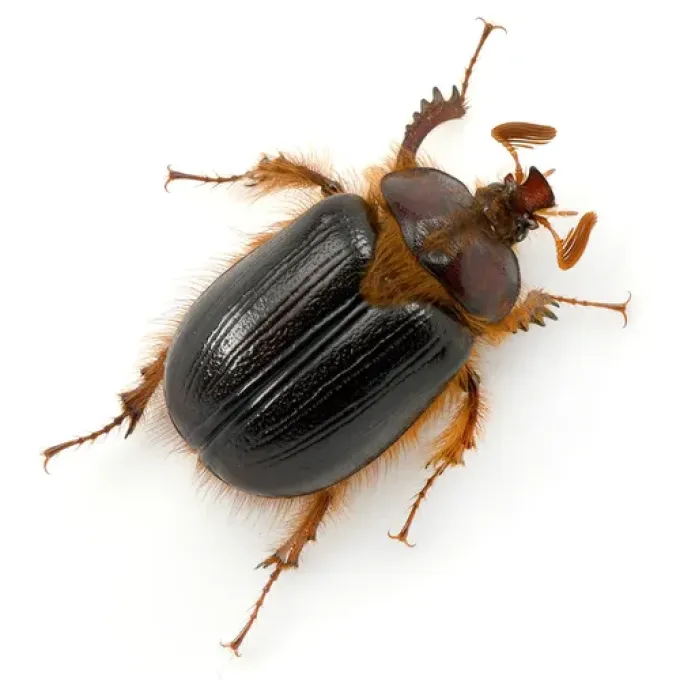
Pleocoma crinita, commonly known as a type of hairy fungus beetle, belongs to the family Pleocomidae. These insects are unique due to their specialized lifecycle and subterranean behavior.
Adult males are characterized by dense hair covering their bodies and are capable of flight, while females are flightless and spend their entire lives underground.
The larval stage is the most prolonged phase, where the insects live as soil-dwelling grubs, similar in appearance to common scarab beetle larvae.
Identification often relies on observing the males during their short emergence period, which typically happens after the first autumn rains.
The taxonomic classification places them within a distinct group of beetles that have adapted to live almost exclusively in forest and mountain soils.
What it damages
The primary economic damage is caused by the larval stage, which feeds exclusively on the root systems of various tree species and shrubs.
By consuming roots of varying diameters, the larvae interrupt the transport of water and nutrients, leading to a decline in plant vigor.
In forest nurseries and orchards, this damage is particularly severe, often resulting in the death of young seedlings that cannot regenerate root mass quickly enough.
Heavy infestations can lead to stunted growth, yellowing foliage, and structural instability of the affected trees due to compromised root systems.
The intensity of the damage is cumulative, as the larvae remain in the root zone for multiple years, constantly feeding on the host plant.
When it appears
The lifecycle of Pleocoma crinita is notably long, often spanning several years to complete a single generation from egg to adult.
Adult emergence occurs strictly in the autumn, triggered by environmental cues such as rainfall, when males search for sedentary females in the soil.
Larvae remain active throughout the year in the soil profile, though their feeding intensity may fluctuate with temperature and seasonal variations in root growth.
During the winter, larvae retreat to deeper soil layers to avoid freezing temperatures, only to return to the root zone as spring temperatures rise.
The long developmental period means that a single area can harbor multiple generations of larvae at different stages of growth simultaneously.
Signs of infestation
One of the earliest signs of an infestation is the unexplainable wilting of plants, which remains unaffected by regular irrigation practices.
Trees may exhibit a gradual loss of crown density and poor growth performance compared to healthy individuals in the same plot.
Excavation around the base of the plant often reveals the presence of white, C-shaped grubs and significant damage to the lateral root structures.
The soil surface may sometimes appear disturbed or show small holes, indicating the emergence points of male beetles during the breeding season.
- yellowing and early leaf drop on trees;
- presence of large white grubs in root zones;
- wilting of seedlings despite adequate soil moisture.
Control measures
Mechanical cultivation of soil, such as deep plowing, is a traditional method that disrupts the larvae and increases their vulnerability to predators.
Chemical control involves applying granular soil insecticides around the root zone, particularly during the establishment of new orchard plantings.
Integrated pest management suggests conducting thorough soil site assessments before planting to determine larval density and prevent high mortality in young trees.
Biological control methods, specifically the use of entomopathogenic nematodes, are showing promise in reducing larval populations in an environmentally friendly manner.
Promoting a healthy ecosystem that includes natural predators and minimizing excessive chemical usage can help maintain long-term balance against these soil-dwelling pests.
Taxonomy
- Latin name
- Pleocoma crinita
- Order
- Coleoptera (beetles)
- Family
- Scarabaeidae
- EPPO code
- PLCACR
Discussion
No discussions yet — be the first.