
Platygaster nitida
Platygaster nitida
Description
How to identify
Platygaster nitida is a species of parasitic wasp belonging to the family Platygastridae within the order Hymenoptera. It is recognized primarily for its role as a natural regulator of specific cereal pests.
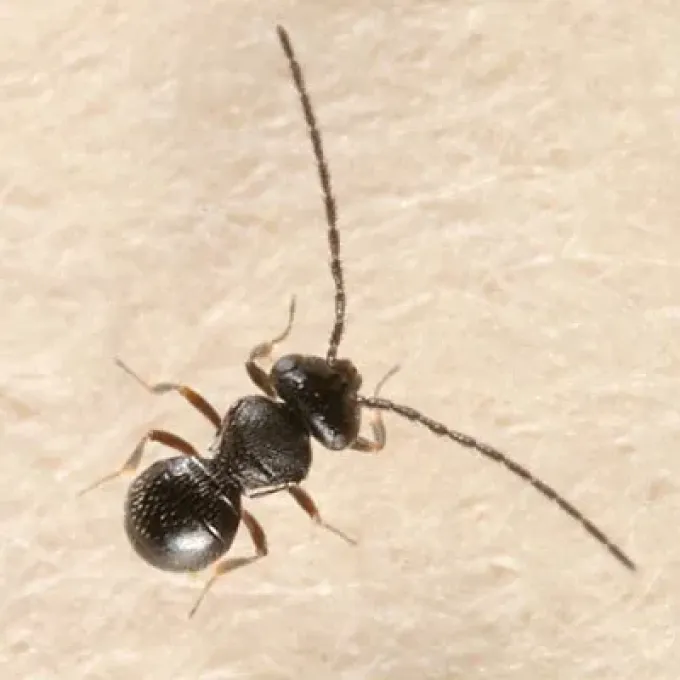
The adults are extremely small, often measuring between 1 and 2 millimeters in length. They typically possess a shiny black body, which is a hallmark of this species, making them difficult to identify in field conditions.
The larval stage is highly specialized, adapted for endoparasitism. These larvae develop entirely within the bodies of their host insects, specifically targeting gall midges that infest cereal crops.
The biology of Platygaster nitida is intrinsically linked to the life cycle of its host, particularly the Hessian fly (Mayetiola destructor). This synchronization is vital for the wasp's reproductive success.
As a specialized parasitoid, this insect exhibits remarkable efficiency in locating hosts in complex agricultural environments, contributing to the natural control of pest outbreaks.
What it damages
The primary crops affected by the presence of this wasp are cereals, particularly wheat. The damage is indirect, as the wasp interacts with the population of direct pests like gall midges.
While the wasp itself does not feed on plant tissues, it is found in fields where wheat is suffering from gall midge infestations. These infestations cause stem distortion and yield loss.
The detrimental impact of gall midges includes weakening the plant stems, which leads to lodging and reduced grain filling, affecting the overall quality and quantity of the harvest.
By parasitizing the larvae of the gall midges, Platygaster nitida significantly reduces the population pressure on wheat crops, acting as a crucial biocontrol agent.
Therefore, its presence is generally considered beneficial for the agroecosystem, as it mitigates the destructive potential of the pests that directly consume plant resources.
When it appears
The activity of adult wasps is concentrated during the spring and summer months, coinciding with the emergence of the first generation of gall midge larvae in cereal fields.
The timing of emergence is critical; the wasps must be present when the host larvae are at the appropriate developmental stage for parasitism to be successful.
Overwintering occurs at the pupal stage, protected inside the puparia of the host insect, typically found within the stubble or at the base of the crop plants after harvest.
Climatic factors, such as temperature and humidity during the early growing season, significantly influence the synchronization between the parasite and the host.
Variations in weather patterns can shift the emergence cycle, which is a key factor monitored by agronomists to assess the effectiveness of natural biological control agents.
Signs of infestation
Symptoms of infestation are identified by observing the impact of the primary host (gall midges) on the plants, such as stunted growth, curled leaves, and brittle stems.
Direct identification of Platygaster nitida requires professional entomological analysis, involving the dissection of host puparia to detect the presence of the wasp's larvae inside.
A reduction in the number of healthy host larvae in a field that showed initial signs of infestation often indicates the successful activity of the parasitoid population.
Regular field scouting using magnifying tools helps identify early signs of gall midge larvae, which serves as a proxy to predict the presence of the wasp.
Documentation of plant deformities and subsequent host mortality provides agronomists with data on the efficacy of natural control occurring within the specific field.
Control measures
The management of fields containing these wasps relies on preserving their natural populations by minimizing the use of broad-spectrum insecticides during peak activity periods.
Integrated Pest Management (IPM) practices focus on maintaining ecological balance to allow these parasitoids to thrive and effectively control potential outbreaks.
Agronomic techniques, such as crop rotation and balanced soil management, help disrupt the life cycle of the primary pests, thereby stabilizing the population of their natural enemies.
- Selection of resistant cereal varieties.
- Monitoring pest populations to justify chemical interventions.
- Safe usage of pesticides that are less harmful to Hymenoptera species.
- Strategic tillage to manage overwintering sites without destroying beneficial insects.
Long-term sustainability in crop production is achieved by integrating these biological insights into standard farming practices, ensuring that natural control is not disrupted.
Taxonomy
- Latin name
- Platygaster nitida
- Order
- Hymenoptera
- Family
- Platygastridae
- EPPO code
- PLAENT
Discussion
No discussions yet — be the first.