
Amitus
Amitus
Description
How to identify
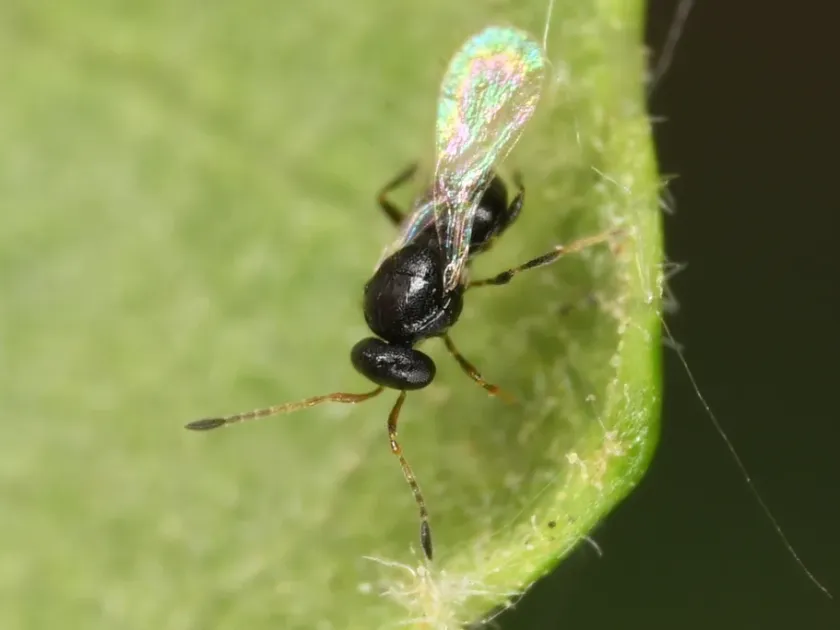
Amitus (genus Amitus) belongs to the Platygastridae family within the order Hymenoptera. These are tiny parasitic wasps known for their high specialization in attacking whitefly larvae.
Adult specimens are typically less than 1 mm in length. Their bodies are dark, often black, which makes them inconspicuous when they are searching for hosts on the undersides of leaves.
These insects are highly valued in agriculture for their exceptional host-searching efficiency, allowing them to locate whitefly populations in dense crop canopies.
The biology of Amitus is intrinsically linked to the developmental stages of whiteflies. A female wasp lays her eggs inside the host larvae, where the parasite larvae consume the whitefly from within.
As a biological control agent, Amitus is recognized for its high reproductive rate and stability, making it a reliable partner in integrated pest management programs.
What it damages
It is crucial to clarify that Amitus is not a pest but a beneficial entomophagous insect. It specifically targets the greenhouse whitefly (Trialeurodes vaporariorum) and the tobacco whitefly (Bemisia tabaci).
Whiteflies are significant agricultural pests that damage a wide variety of crops including tomatoes, cucumbers, peppers, and various ornamental greenhouse plants.
The feeding activity of whiteflies extracts sap from the phloem, causing stunted growth, chlorosis (yellowing), and overall weakness in the infested plants.
The honeydew secreted by whiteflies promotes the growth of sooty mold, which blocks sunlight, severely hindering photosynthesis and reducing crop quality.
By parasitizing whitefly larvae, Amitus effectively prevents these symptoms, reducing the need for chemical interventions and protecting the health of the host plants.
When it appears
In greenhouse environments, Amitus remains active throughout the year, provided that climatic conditions are managed to support their lifecycle.
The optimal temperature range for the activity and development of this parasitic wasp is between 20°C and 28°C with moderate relative humidity levels.
Because greenhouse environments provide a controlled climate, the population of Amitus can be sustained regardless of outside seasonal shifts.
The wasp's development cycle allows it to quickly adapt to the whitefly population dynamics, which is vital for maintaining sustained pest control.
Agronomists are advised to introduce Amitus colonies early in the season or upon the first observation of whitefly presence to ensure early-stage population regulation.
Signs of infestation
Monitoring the effectiveness of Amitus involves inspecting whitefly larvae on the underside of plant leaves for specific developmental changes.
Parasitized whitefly larvae undergo a physical transformation, often becoming darker or slightly bloated compared to healthy, transparent whitefly nymphs.
- Presence of tiny circular exit holes in the host larval shells, indicating the emergence of an adult Amitus wasp.
- A consistent decrease in the number of whitefly adults captured by sticky yellow traps.
- A noticeable reduction in the sticky honeydew accumulation on leaf surfaces.
- Visual improvement of plant vigor and leaf color as the whitefly burden is reduced.
Using a hand lens is recommended for frequent checks to verify the percentage of parasitized larvae and determine the overall success of the bio-control program.
Control measures
The integration of Amitus into crop management is a cornerstone of environmentally friendly and sustainable agricultural practices.
The success of an Amitus program strictly depends on avoiding the use of broad-spectrum systemic insecticides that are toxic to parasitic wasps.
When pest pressure requires additional management, choose only selective pesticides that are proven to be compatible with beneficial insect populations.
The introduction of the wasp is typically performed by distributing mummy-infested leaves or cards containing ready-to-emerge adult wasps.
Regular scouting and precise monitoring of whitefly numbers allow for targeted releases of Amitus, ensuring efficient and long-term pest management outcomes.
Taxonomy
- Latin name
- Amitus
- Order
- Hymenoptera
- Family
- Platygastridae
- EPPO code
- AMIUSP
Discussion
No discussions yet — be the first.