
Allotropa burrelli
Allotropa burrelli
Description
How to identify
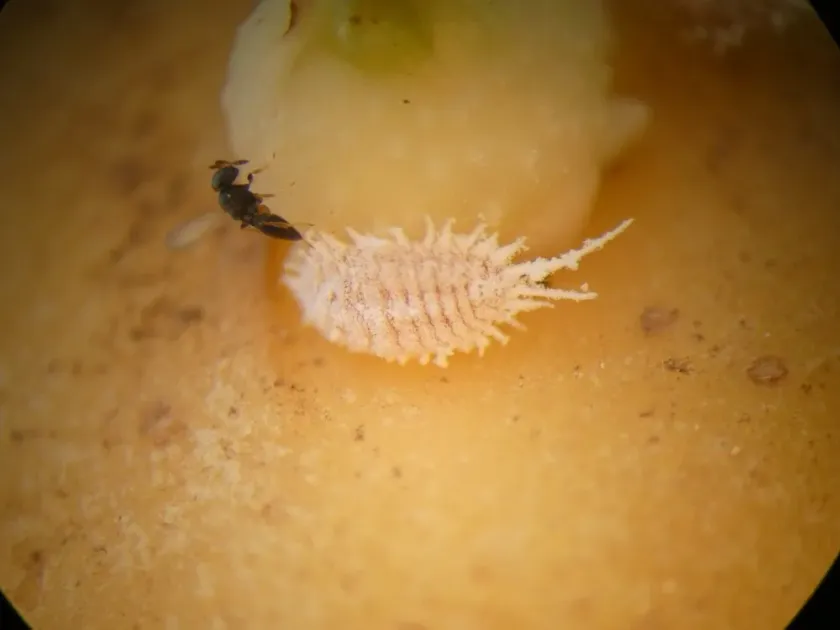
Allotropa burrelli is a small parasitic wasp belonging to the order Hymenoptera and the family Platygastridae.
This species is highly specialized as an endoparasitoid, meaning it completes its developmental stages inside the body of its host.
Adult specimens are microscopic and possess a dark coloration, which makes them quite difficult to observe during standard field monitoring activities.
The insect’s morphology is adapted for locating and infesting specific target pests, primarily those belonging to the mealybug family.
Professional identification usually requires microscopic analysis of the host remains or specialized laboratory rearing techniques.
What it damages
Allotropa burrelli is considered a beneficial organism rather than a pest, as it actively suppresses populations of harmful mealybugs.
It specializes in parasitizing members of the Pseudococcidae family, which are significant pests of vineyards, orchards, and greenhouse crops.
By infecting these pests, the wasp prevents significant sap-sucking damage and reduces the spread of secondary viral infections in plants.
The ecological role of this species is essential for maintaining a healthy balance in orchards and reducing the need for chemical intervention.
Therefore, its presence is a clear indicator of successful natural pest regulation within the local agricultural ecosystem.
When it appears
The activity period of Allotropa burrelli is synchronized with the life cycle and population density of its primary mealybug host.
In temperate climates, the insects are most active during the warm months when host populations are expanding on foliage and stems.
The first generation of adults typically emerges in late spring, coinciding with the early developmental stages of the mealybug pests.
Multiple generations can occur throughout the summer, provided that the availability of host insects remains sufficient for reproduction.
The insect typically overwinters inside the mummified remains of its host, allowing it to withstand harsh seasonal changes effectively.
Signs of infestation
The most visible sign of Allotropa burrelli presence is the discovery of mummified mealybug carcasses attached to the plant surface.
Small, circular exit holes on the bodies of dead mealybugs are definitive evidence that an adult parasitoid has successfully emerged.
A noticeable decrease in the sticky honeydew residues on plants often points to the effective suppression of mealybug colonies by this wasp.
Field scouts often collect suspicious mealybug samples to incubate them in controlled conditions to confirm parasitoid emergence.
The absence of active colonies despite favorable environmental conditions may suggest a high level of parasitoid activity in the area.
Control measures
To support populations of Allotropa burrelli, it is essential to minimize the use of broad-spectrum insecticides that kill beneficial wasps.
Integrated Pest Management (IPM) strategies should prioritize selective pesticides that target mealybugs while sparing natural enemies.
Planting flowering borders around orchards provides necessary nectar sources for adult parasitoids, increasing their lifespan and fertility.
Avoid scheduling pesticide applications during periods of peak wasp activity to ensure the survival of the next generation of beneficial insects.
Consistent monitoring and informed decision-making are key to preserving this valuable biological ally in your agricultural operations.
Taxonomy
- Latin name
- Allotropa burrelli
- Order
- Hymenoptera
- Family
- Platygastridae
- EPPO code
- ALLPBU
Discussion
No discussions yet — be the first.