
Hessian fly
Platygaster herricki
Description
How to identify
The Hessian fly, scientifically known as Mayetiola destructor, is a small dipteran insect belonging to the Cecidomyiidae family. Adult flies are approximately 3 mm long, with a dark, mosquito-like appearance and delicate wings.
The larval stage is the most critical for crop damage. Larvae are legless, spindle-shaped, and creamy-white in color, often found huddled at the base of the leaf sheath, completely immobile.
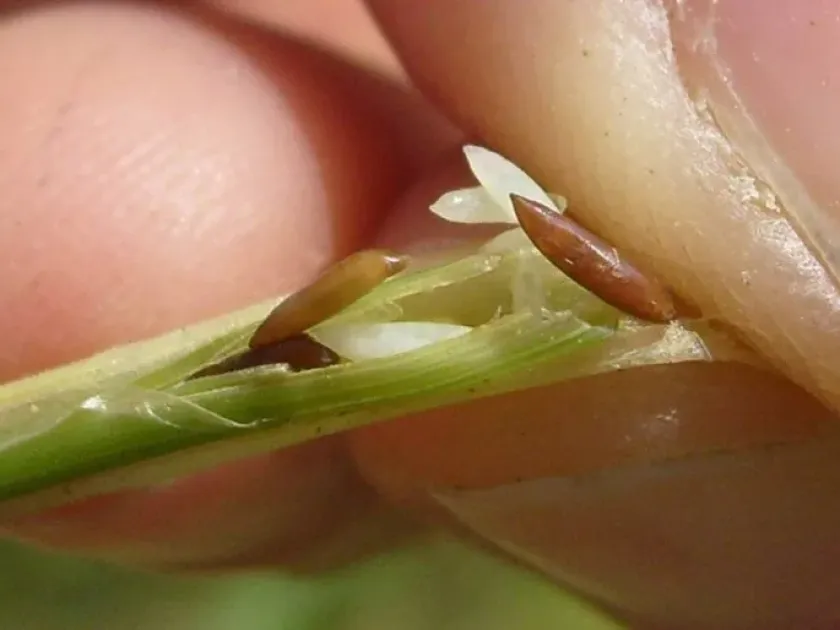
The life cycle consists of four distinct stages: egg, larva, puparium, and adult. The puparium is reddish-brown and resembles a small flax seed, which allows the pest to remain undetected on wheat stubble.
The insect typically overwinters as a puparium in the soil or on plant debris. When spring temperatures rise, adults emerge to mate and lay eggs on the upper side of the leaves of young wheat plants.
Depending on environmental conditions, the Hessian fly can produce several generations per year. Warm and humid weather significantly accelerates its development, leading to outbreaks during the growing season.
What it damages
The Hessian fly is a specialized pest that primarily targets cereal crops. Wheat is the most susceptible host, and heavy infestations can cause devastating losses to the overall grain yield.
Barley is also highly susceptible to larval feeding, while rye is occasionally affected. Oats are considered resistant and rarely support the development of Hessian fly larvae in the field.
Wild grasses, such as quackgrass, act as alternative hosts for the pest. These weeds allow the Hessian fly population to survive and reproduce during periods when primary crops are not available.
Larvae feed by sucking plant sap from the stems. This feeding disrupts the vascular system, preventing nutrients from reaching the upper parts of the plant, which results in stunted growth.
The damage is most severe in the early stages of plant growth, often leading to the death of young tillers or the inability of the plant to produce a productive head at harvest time.
Signs of infestation
Stunted growth is the most common early sign of infestation. Plants appear darker green, become prostrate, and fail to develop properly compared to healthy plants in the same field.
By pulling back the leaf sheath at the base of the stem, one can observe the white larvae or brown puparia. The stems themselves may appear deformed or thickened at the point of infestation.
In later stages, the most prominent sign is lodging. Since the larvae weaken the structural integrity of the stem, the plants often bend over or break, making them difficult to harvest mechanically.
Infested plants usually have fewer tillers and may fail to produce grain. The heads, if formed, are often small, empty, or contain shriveled, low-quality grain that is unsuitable for marketing.
Patches of dead or yellowing plants in the field are common symptoms of a severe infestation, especially when the pest density reaches critical levels during the fall or spring.
Control measures
Cultural control is the most effective management strategy. Practicing crop rotation, specifically avoiding planting wheat back-to-back in the same field, helps break the life cycle of the pest.
Tillage practices, including the destruction of volunteer wheat and thorough plowing of stubble, are essential. Burying the crop residue deep in the soil prevents the emergence of adult flies in the spring.
Adhering to recommended planting dates is crucial for prevention. Planting winter wheat after the "fly-free date" ensures that the crop is not emerged when the adult flies are laying eggs.
The use of resistant wheat varieties is highly recommended as a sustainable way to manage the Hessian fly. These cultivars have built-in defenses that prevent larvae from feeding effectively.
If economic thresholds are exceeded, systemic insecticide seed treatments can provide protection for the young seedlings. Foliar applications are rarely effective once the larvae are established under leaf sheaths.
Taxonomy
- Latin name
- Platygaster herricki
- Order
- Hymenoptera
- Family
- Platygastridae
- EPPO code
- PLAEHE
Discussion
No discussions yet — be the first.