
Platygaster
Platygaster ater
Description
How to identify
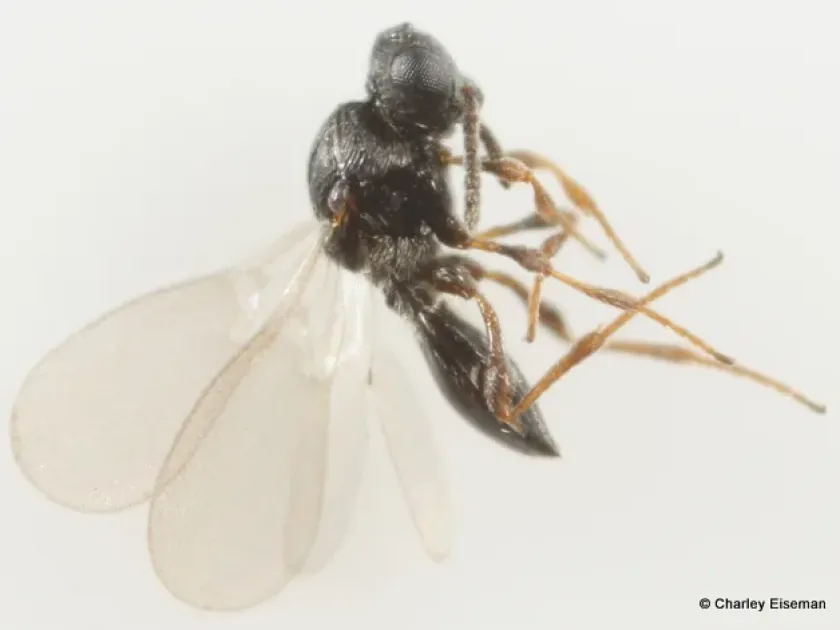
Platygaster (Latin: Platygaster ater) is a member of the Hymenoptera order, specifically the Platygastridae family. These are minute insects that play complex roles in agricultural ecosystems.
The adult insect is tiny, typically measuring between 2 and 3 millimeters in length. Its body color is usually black or dark brown, which helps it camouflage within the field environment.
The wings are clear with specific venation patterns that are characteristic of the species. These features are best observed using professional laboratory equipment like a stereomicroscope.
The larvae are whitish and remain hidden within the plant tissues or their insect hosts, making them extremely difficult to detect during standard field surveys.
For accurate identification, agronomists rely on yellow sticky traps or sweep netting followed by microscopic examination to confirm the species presence in the crop field.
What it damages
Platygaster species are often associated with cereal crops, including wheat and barley. Their damage is frequently linked to the population dynamics of other gall-forming pests.
The pest interferes with the plant's vascular system, causing stunted growth and nutrient deficiency, which prevents the crop from reaching its full potential.
Infected stalks often become brittle and deformed. This structural weakness makes the plants highly susceptible to lodging, especially during heavy rains or high winds.
Heavy infestations result in a decrease in grain quality and yield loss, as the plant directs energy toward repairing tissues rather than filling the grain heads.
The overall crop canopy appears uneven, with patches of stunted plants that clearly show the impact of the pest activity on the physiological development of the crop.
When it appears
The insects become active in early spring when the soil temperature rises enough for the adults to emerge from their overwintering sites in the soil or crop debris.
A second peak of activity typically occurs mid-summer, coinciding with the rapid growth phase of cereals and the formation of the ears, which is critical for grain yield.
As autumn approaches and temperatures drop, the insects enter a diapause phase, seeking shelter in the soil or protected plant debris to survive the winter months.
Optimal environmental conditions for their lifecycle include temperatures ranging from 18 to 25 degrees Celsius, combined with appropriate humidity levels in the field.
Agronomists should monitor weather patterns closely, as abnormally warm springs can lead to early emergence and potentially higher pest pressure on young crop seedlings.
Signs of infestation
The most distinctive signs of an infestation include atypical swelling or thickening of the cereal stems, which often look like abnormal nodes.
Yellowing and premature wilting of the upper leaves without evidence of common fungal diseases should trigger an investigation into potential internal insect damage.
One can often spot tiny exit holes on the stalks where adults have emerged, indicating that the insect's development cycle within the plant has been completed.
Stunted plants that fall behind in development compared to the rest of the field are a major visual indicator of localized insect presence and damage.
- Lodging of stalks in isolated areas of the field.
- Deformation of stem joints in wheat and barley.
- Noticeable reduction in grain fill in affected patches of the field.
Control measures
Crop rotation is the most effective preventative measure, as it breaks the lifecycle of the pest and prevents it from building up in the soil over several years.
Deep plowing after the harvest is essential for burying crop residues, effectively destroying the overwintering sites and reducing the population density for the next season.
Integrated pest management strategies encourage the use of biological control agents that naturally prey on these insects without disrupting the local ecosystem.
Chemical intervention should be considered only as a last resort, strictly based on the economic threshold determined by field inspections to avoid unnecessary environmental damage.
Selecting robust, resistant cereal varieties that have high vitality can help the crop withstand pest pressure and minimize the impact on overall farm productivity.
Taxonomy
- Latin name
- Platygaster ater
- Order
- Hymenoptera
- Family
- Platygastridae
- EPPO code
- PLAEAT
Discussion
No discussions yet — be the first.