
Ambush bug
Phymata monstrosa
Description
How to identify
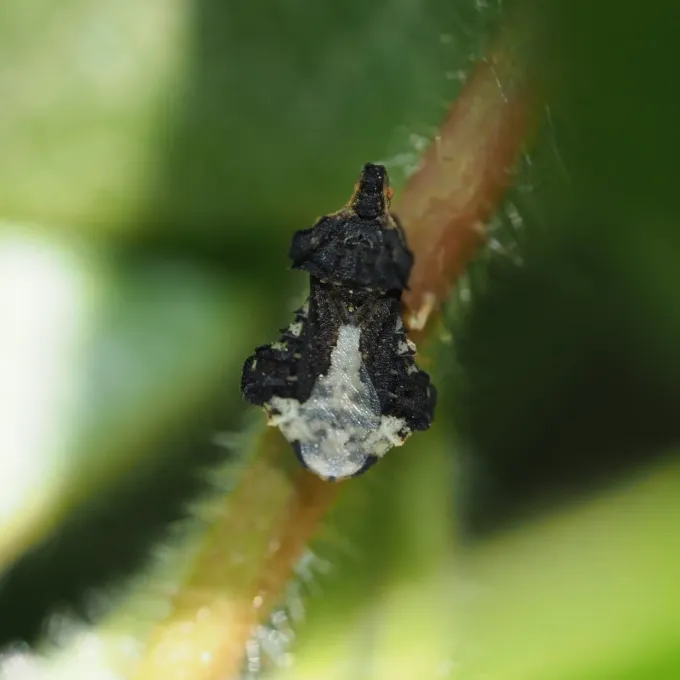
The ambush bug (lat. Phymata monstrosa) belongs to the family Phymatidae, within the order Hemiptera. These insects are easily identified by their stout, squat bodies and thickened, raptorial forelegs that resemble those of a praying mantis, designed to seize prey.
Adults typically measure 10–12 mm in length. Their coloration varies from greenish-yellow to dark brown, providing excellent camouflage among flower petals, where they wait motionless for unsuspecting prey to arrive.
The head features a short, robust rostrum used for piercing the exoskeletons of other insects. While primarily predatory, these bugs may incidentally damage plant tissues during their hunting activities or when prey is scarce.
The life cycle includes egg, nymph, and adult stages. Females lay eggs on stems or foliage, where they overwinter in protective cases, ensuring the survival of the population even during harsh weather conditions.
Populations develop in one or two generations per season depending on the climate. Nymphs lead a secretive lifestyle, feeding on various small arthropods while occasionally causing minor damage to the plant structures they inhabit.
What it damages
The primary damage caused by the ambush bug occurs when they pierce the reproductive organs of plants. During their search for prey, they may puncture buds, flowers, and young fruit ovaries, leading to significant physiological stress for the plant.
A wide range of ornamental and vegetable crops is susceptible to their activity. Puncture wounds can prevent normal pollination, leading to deformed flowers or the premature shedding of buds and developing fruits.
These puncture sites also serve as entry points for various phytopathogens, including fungi and bacteria, which can trigger secondary infections that cause necrosis or decay in stems and floral structures.
In cases of severe infestation, the cumulative damage can significantly reduce the overall productivity and aesthetic quality of the crop, making it a concern for nursery growers and farmers alike.
Marketable produce affected by these insects often exhibits asymmetry or necrotic spotting, which decreases its commercial value and results in economic losses for agricultural enterprises.
Signs of infestation
Initial signs of an infestation include the wilting of individual flowers or the appearance of discolored spots on petals. A close inspection of the flower centers often reveals the ambush bug sitting in wait.
Stems and young shoots may show small necrotic puncture wounds. In some instances, sap exudation can be observed around these sites, which can attract secondary pests such as ants or wasps.
Delayed growth or malformation of fruit, resulting from vascular damage during the fruit-set phase, is a characteristic sign of a prolonged presence of the pest within the planting area.
During the evening, these bugs become more active. They are easily spotted during routine night patrols using a flashlight, especially on plants known to be attractive to them.
The accumulation of excrement on leaves directly beneath affected flower clusters is a reliable indicator of a high population density that requires immediate management attention.
Control measures
Managing the ambush bug requires an integrated approach that combines cultural practices with targeted insecticide applications during critical plant development stages to minimize harm.
The most effective cultural practice is the removal of weeds, particularly flowering weeds that serve as natural reservoirs and breeding grounds for the bugs throughout the growing season.
During the budding phase, the use of biological insecticides is recommended. These products are generally safer for beneficial pollinators while effectively suppressing the nymphal stages of the ambush bug.
- Regular monitoring of fields to identify early outbreaks.
- Applying contact insecticides in the early morning or late evening.
- Encouraging natural predators such as parasitic wasps and predatory birds.
If population densities exceed economic thresholds, systemic insecticides may be necessary. Always ensure strict adherence to the pre-harvest interval (PHI) as specified by the product label.
Taxonomy
- Latin name
- Phymata monstrosa
- Order
- Hemiptera (bugs, aphids, leafhoppers)
- Family
- Phymatidae
- EPPO code
- PYMAMO
Discussion
No discussions yet — be the first.