
Phyllophaga crinita
Phyllophaga crinita
Description
How to identify
Phyllophaga crinita is a beetle belonging to the order Coleoptera and the family Scarabaeidae. This species is commonly known as a white grub, native to North America.
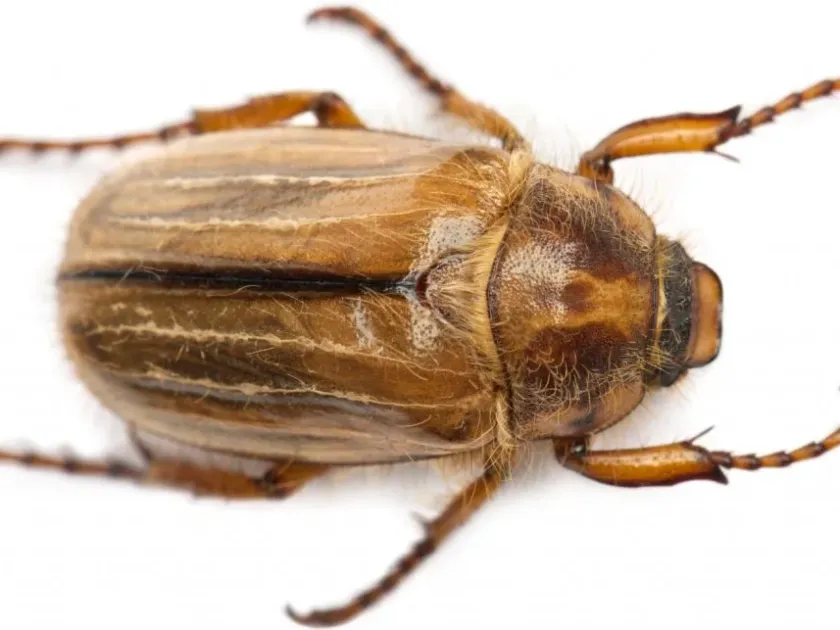
Adult beetles are moderate in size, typically displaying a reddish-brown coloration. Their bodies are covered in fine, hair-like setae, which is a distinctive feature of the species.
The larval stage, or white grub, is the most destructive phase. They feature a C-shaped body, a creamy-white color, and a dark brown head capsule with well-developed legs.
The life cycle of this beetle usually spans one to two years, during which the larvae spend most of their time underground, feeding on plant roots.
Their subterranean lifestyle makes them cryptic and difficult to detect until significant damage to the crop has already occurred in the field.
What it damages
The larvae are polyphagous, causing significant damage to the roots of a wide range of crops, including turfgrass, corn, sorghum, and small grains.
Damage occurs when larvae chew through primary and secondary roots, effectively cutting off the plant's nutrient and water uptake mechanisms.
Severe infestations often result in stunted plant growth, chlorosis, and the eventual death of young seedlings, leading to thin and uneven crop stands.
While adults may feed on the foliage of various trees, the primary economic concern for farmers remains the root destruction caused by the subterranean grubs.
Field losses are often localized, showing patches where plants fail to thrive or are easily pulled from the soil due to the lack of a functional root system.
Signs of infestation
Wilting of plants during the hottest part of the day, despite adequate soil moisture, is one of the primary visible symptoms of grub activity.
Upon examination, the root system will show clear signs of pruning, with missing root hairs and often a severed main taproot at the crown level.
Excavating the soil around symptomatic plants will usually reveal the presence of C-shaped grubs at depths ranging from a few centimeters to deeper levels.
Plants affected by the feeding appear loose in the soil and can be lifted out with minimal effort, as the roots are unable to anchor them properly.
The presence of large numbers of adult beetles near outdoor lights at night serves as a biological indicator of high population density for the upcoming season.
Control measures
Effective management includes the use of soil-applied insecticides or seed treatments containing systemic active ingredients to protect developing roots.
Cultural practices, such as deep tillage or plowing, can physically destroy larvae and expose them to avian predators and desiccation by sunlight.
Crop rotation helps break the life cycle by removing preferred hosts during the stages when the adult beetles are seeking sites for egg-laying.
Biological control options, such as the application of entomopathogenic nematodes or specific fungal pathogens, are useful for reducing larval populations sustainably.
Regular field scouting and monitoring with light traps are essential to determine the timing of insecticide applications and maximize the efficacy of control programs.
Taxonomy
- Latin name
- Phyllophaga crinita
- Order
- Coleoptera (beetles)
- Family
- Scarabaeidae
- EPPO code
- PHYGCR
Discussion
No discussions yet — be the first.