
Smoky cereal fly
Phorbia fumigata
Description
How to identify
The smoky cereal fly (Phorbia fumigata) belongs to the Anthomyiidae family within the order Diptera. These insects are recognized as specialized pests of various cereal crops, causing damage during their larval stage.
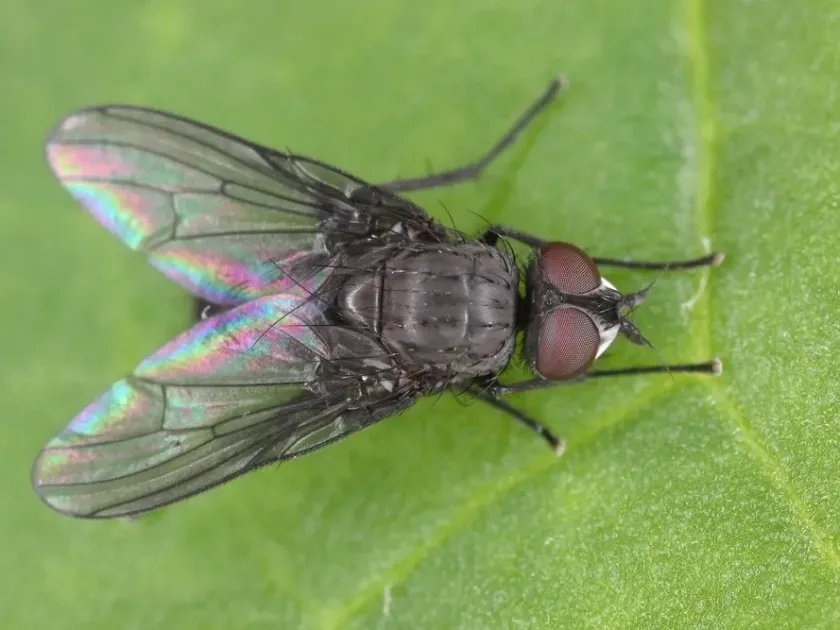
Adult flies typically measure 4–6 mm in length and possess a dark, smoky-grey coloration, which helps them blend into the field environment during their flight periods.
The larvae are white to yellowish, legless, and cylindrical in shape, growing up to 7 mm. They are equipped with mouthparts specialized for feeding on the internal tissues of cereal stalks.
The life cycle consists of complete metamorphosis. Phorbia fumigata primarily overwinters as pupae in the soil, which protects them from harsh winter conditions until early spring.
This species is highly adapted to cereal-dominated habitats, where adults thrive in the microclimate created by early-season vegetation.
What it damages
The primary host crops for Phorbia fumigata larvae include winter wheat, rye, and barley. These crops are most vulnerable during the early spring growth stages.
Wild grasses, including couch grass, often serve as alternative hosts, allowing the population to persist even when cultural crops are not in the susceptible phenophase.
Larvae penetrate the stem base and feed on the growing point of the plant, which essentially kills the main tiller and arrests the plant's development.
The economic damage is particularly severe when plants are already stressed by unfavorable weather or poor soil conditions, preventing them from producing enough side tillers.
In severe infestation scenarios, the loss of the primary tiller can result in a significant decrease in crop yield, necessitating proactive monitoring and control measures.
When it appears
The activity of the smoky cereal fly begins in early spring, once soil temperatures exceed 5–8 degrees Celsius, signaling the start of the winter cereal growth season.
Peak flight and oviposition occur during the tillering stage of winter cereals, making this period the highest risk window for farmers.
The developmental cycle from egg to pupa takes approximately 30 to 45 days. In many regions, the species completes one or two generations per agricultural season.
Late-planted autumn crops are also at risk, as they may be colonized by late-emerging generations before the winter dormancy period begins.
Environmental factors such as high humidity and cool temperatures generally favor the survival and reproductive success of the fly populations.
Signs of infestation
The most distinctive sign of infestation is the yellowing and wilting of the central leaf, which eventually dies back while the outer leaves may remain green for a time.
If you pull on the wilted central leaf, it usually detaches easily from the leaf sheath because the larva has severed it at the base.
Dissecting the stem reveals the presence of the larva or galleries inside the stem, accompanied by frass (larval excrement), confirming the source of damage.
Infested fields often show patchy development, where affected plants appear stunted compared to healthy neighboring crops, leading to an irregular stand.
Increased, non-productive tillering can also be an indicator of previous larval feeding damage as the plant attempts to compensate for the lost main shoot.
Control measures
Effective management begins with agronomic practices, such as choosing optimal planting dates to ensure crops reach the tillering stage before peak fly activity.
Deep plowing of stubble after harvest is essential to destroy overwintering pupae in the soil, significantly reducing the pest pressure for the following season.
The use of systemic insecticide seed treatments provides excellent early-season protection, safeguarding seedlings against initial larval colonization.
If economic thresholds are met during the tillering phase, foliar application of systemic insecticides is recommended to suppress the larval population.
Regular field scouting and the use of monitoring traps are critical tools for determining the exact timing for insecticide applications, ensuring cost-effective pest control.
Taxonomy
- Latin name
- Phorbia fumigata
- Order
- Diptera (flies)
- Family
- Anthomyiidae
- EPPO code
- HYLESC
Discussion
No discussions yet — be the first.