
Weevil Phaenomerus foveipennis
Phaenomerus foveipennis
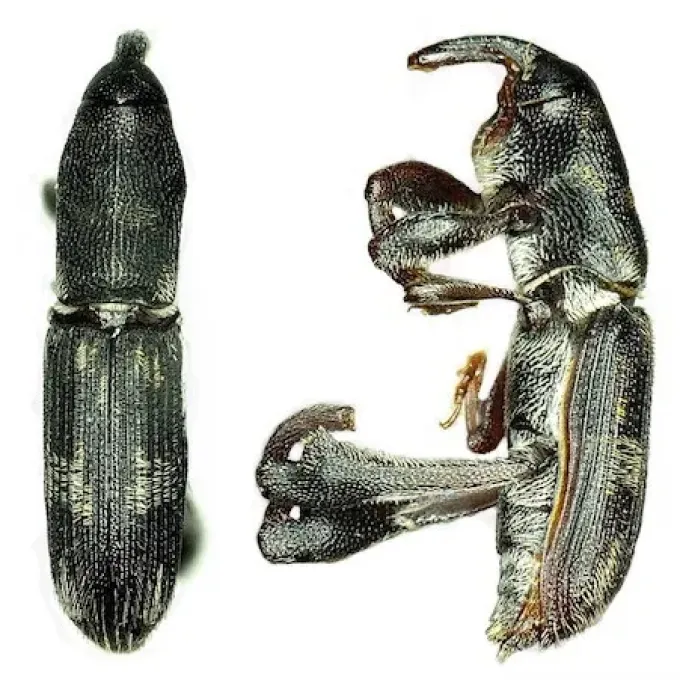
Description
How to identify
The Phaenomerus foveipennis is a member of the Curculionidae family, commonly known as true weevils, recognized by their elongated snouts or rostra used for feeding and egg-laying.
These insects are generally small in size, with a robust exoskeleton that provides protection. Their coloration is often cryptic, blending in with the bark or foliage of their host plants.
The life cycle follows a complete metamorphosis pattern: egg, larva, pupa, and adult. The larval stage is typically legless and develops within plant tissues, making detection difficult.
The species is specialized in its habitat requirements and is typically found in tropical or subtropical environments, where it feeds on specific tree or shrub species.
Taxonomic identification relies on minute morphological details, such as the arrangement of pits on the elytra, as hinted by the species name foveipennis.
What it damages
The damage caused by Phaenomerus foveipennis is primarily linked to its feeding habits, which can negatively impact the host plant's vigor and survival.
Larvae are internal feeders that bore galleries into the wood or cambium layer, effectively disrupting the vascular system and preventing the transport of nutrients and water.
Adult weevils feed on the exterior parts of the plant, including leaves and buds, creating small holes or notches that reduce the leaf surface area available for photosynthesis.
Heavy infestations can lead to the dieback of branches, reduced fruit set, and in severe cases, the complete death of the plant due to compromised structural integrity.
- Interruption of sap flow
- Increased susceptibility to secondary fungal infections
- Leaf deformity and premature abscission
- Reduced plant growth and overall development
When it appears
The activity of Phaenomerus foveipennis is strongly dictated by seasonal patterns, particularly temperature fluctuations and moisture levels in the environment.
Adult emergence typically coincides with the beginning of the plant's active growing season, when succulent shoots provide the most nutritional value for the insects.
Multiple generations may occur throughout the year in tropical climates, whereas in more temperate zones, life cycle timing is more strictly synchronized with plant phenology.
The insects are primarily nocturnal, showing higher activity during the night, while they spend daylight hours resting in crevices or under the protection of the plant canopy.
Environmental factors such as high humidity are often critical for the survival of the early larval stages, influencing the overall population density for the year.
Signs of infestation
Visible signs of infestation often begin with characteristic leaf-feeding damage, such as small, circular or irregular holes appearing on the foliage.
Frass (larval excrement) or wood shavings found at the base of branches are key indicators of internal wood-boring activity by the larvae.
Terminal wilting or yellowing of the branches is a severe symptom, indicating that the vascular tissues have been extensively damaged by internal feeding.
Small entry or exit holes on the bark, sometimes accompanied by sap exudation (gummosis), serve as evidence of the adult weevils' activity or larval development.
A general lack of vigor in the crop, slow growth rates, and decreased fruit yield are clear indicators that the plant is struggling with a long-term infestation.
Control measures
Cultural control is a primary defense, involving the pruning and immediate destruction of infested branches to reduce the resident population of larvae.
Chemical control strategies should focus on the use of systemic insecticides, which can reach the larvae hidden inside the plant tissues, applied during peak adult activity.
Biological control, using specific parasitoids or predatory insects, can be highly effective in maintaining the weevil population below the economic threshold level.
Regular monitoring using pheromone traps or visual inspections helps in timely detection, allowing for targeted interventions rather than widespread chemical use.
Maintaining optimal plant health through balanced irrigation and proper nutrient management strengthens the plant's ability to resist and recover from pest attacks.
Taxonomy
- Latin name
- Phaenomerus foveipennis
- Order
- Coleoptera (beetles)
- Family
- Curculionidae
- EPPO code
- PHNOFO
Discussion
No discussions yet — be the first.