
Banana aphid
Pentalonia nigronervosa
Description
How to identify
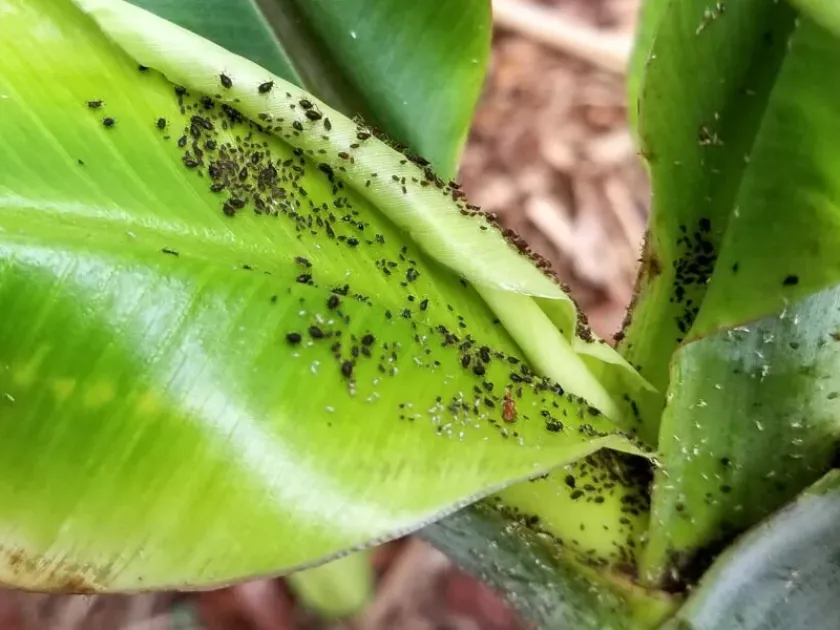
The banana aphid, Pentalonia nigronervosa, belongs to the family Aphididae. It is a small insect, typically measuring 1 to 1.5 mm in length, characterized by its dark reddish-brown to black appearance and shiny body.
The name nigronervosa is derived from the distinct dark veins present on its wings, which is a key identification feature. The nymphs resemble miniature versions of the adults and develop into reproductive forms without a winged stage being strictly necessary for reproduction.
This species reproduces parthenogenetically, which allows for extremely rapid population growth. In favorable tropical conditions, generations overlap continuously, enabling a single colony to cover a large surface area within a short period.
These aphids prefer sheltered environments and are commonly found deep within the pseudostem, between the leaf sheaths, or beneath the bracts of banana bunches. Their cryptic behavior makes early detection challenging.
They maintain a mutualistic relationship with ants, which protect the aphid colonies from predators and parasites in exchange for honeydew, a sugary substance secreted by the aphids during feeding.
What it damages
The primary hosts for Pentalonia nigronervosa are species of the genus Musa (bananas and plantains). They use their piercing-sucking mouthparts to extract sap from the succulent tissues of young leaves and flower buds.
Beyond banana plants, the aphid colonizes various ornamental plants including those in the Araceae, Zingiberaceae, and Heliconiaceae families. This host range facilitates the movement of the pest between different habitats.
While direct feeding damage can cause leaf curling and minor stunting, the most severe impact is the transmission of the Banana bunchy top virus (BBTV). This virus is the most destructive disease affecting banana production globally.
Once a plant is infected with BBTV, it ceases to be productive. The virus disrupts the vascular system, resulting in severe stunting, narrow leaves, and the characteristic "bunchy" appearance of the canopy.
The presence of aphids and their associated honeydew also promotes the growth of sooty mold, which covers the leaf surface and hinders the plant's photosynthetic capacity, further reducing overall yield.
Signs of infestation
Presence of dark clusters of aphids in the leaf axils or hidden within the pseudostem of the banana plant is the most direct sign of infestation. Manual inspection often requires peeling back outer leaf layers.
Deformed or stunted leaves, especially those emerging from the center of the crown, are major indicators. If the plant shows the "bunchy top" symptom, it is likely already infected with the virus transmitted by these aphids.
The development of a black, powdery layer known as sooty mold on the foliage is a secondary sign. This fungus grows on the honeydew excreted by the aphids, signaling their prolonged presence.
Aggressive ant activity on the stems and leaves is a classic behavioral sign of a protected aphid colony. Where there are many ants patrolling, there is almost certainly a thriving colony of aphids nearby.
Poor plant vigor, despite adequate fertilization and irrigation, suggests that sap-sucking pests like the banana aphid may be draining the plant's resources silently.
Control measures
The most crucial control strategy is strict phytosanitary management. Only using certified, virus-free planting material prevents the introduction of both the pest and the deadly BBTV virus into a new area.
Chemical control involves the application of systemic insecticides that are absorbed by the plant and kill aphids upon ingestion. Applications must be thorough to reach hidden colonies within the pseudostem.
Biological control agents, such as ladybird beetles (e.g., Coccinellidae) and parasitic wasps, can significantly suppress aphid populations if the ecosystem is maintained without excessive broad-spectrum pesticides.
Good agricultural practices, such as removing weeds that host the aphid and maintaining proper plant spacing, help reduce the spread. Controlling ant populations can also expose aphids to natural enemies.
- Strict quarantine measures for incoming plant materials.
- Regular field scouting and destruction of symptomatic plants.
- Use of mineral oils for contact control of small colonies.
- Integration of natural biological controls to manage numbers.
- Continuous monitoring using yellow sticky cards for early detection.
Taxonomy
- Latin name
- Pentalonia nigronervosa
- Order
- Hemiptera (bugs, aphids, leafhoppers)
- Family
- Aphididae
- EPPO code
- PENLNI
Discussion
No discussions yet — be the first.