
Pancalia schwarzella
Pancalia schwarzella
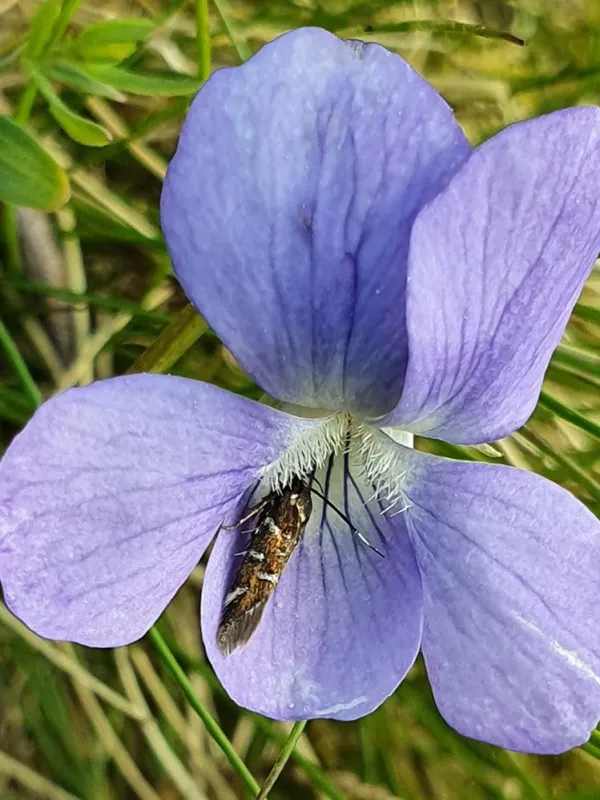
Description
How to identify
Pancalia schwarzella is a species of moth belonging to the family Cosmopterigidae (cosmet moths). These small insects are characterized by their subtle appearance, often featuring intricate patterns on their wings that help them camouflage perfectly on their host plants.
The life cycle of this species encompasses four stages: egg, larva (caterpillar), pupa, and adult (imago). The larvae are specialized endophages, meaning they spend the majority of their developmental time inside the tissues of host plants within the Violaceae family.
Identifying this pest is challenging because the adult moths are primarily nocturnal. Growers rarely spot the adults during the day, so monitoring usually relies on detecting the indirect signs of larval activity within the plant stalks or leaves.
Biological development rates in this species are highly sensitive to ambient temperature and humidity. In controlled greenhouse environments, the moth can complete multiple generations in a single season, potentially leading to rapid population outbreaks.
Research suggests that Pancalia schwarzella utilizes specific biochemical cues to locate host plants. Understanding these behaviors is crucial for designing effective integrated pest management strategies that can mitigate the risk of damage to violet collections.
What it damages
The primary hosts for this species are members of the Viola genus, including popular garden violets and pansies. Both professional nurseries and amateur gardeners may encounter this pest, particularly in regions where violets are widely grown.
The larvae are the primary cause of damage. They burrow into stems and leaves, creating tunnels or "mines." This internal feeding disrupts the plant's vascular system, hindering the transport of water and nutrients throughout the foliage and flowers.
When larvae target young shoots or developing buds, the impact on plant vitality is significant. Affected plants often exhibit stunted growth, wilting, and a total loss of the ability to produce flowers, which drastically reduces their ornamental value.
Secondary infections are a frequent consequence of the mechanical damage caused by the larvae. Open wounds within the plant tissues become entry points for various pathogens, leading to stem rots that can quickly kill the entire plant.
Economic damage in commercial settings is characterized by losses in marketable crops and the need for intensive chemical interventions to protect the remaining stock from infestation and potential quarantine issues.
When it appears
The activity season typically begins in late spring, coinciding with the warming of the environment. Adult moths emerge from their overwintering sites, signaling the start of the breeding period and the beginning of the primary generation.
During the summer months, larval feeding is at its peak. This is the period when the most visible damage occurs, and it is crucial to maintain high vigilance to prevent the larvae from causing irreversible harm to the plant structure.
As temperatures begin to drop in the autumn, the larvae prepare for pupation. They generally overwinter in the soil or within old, dried-out plant stems, entering a period of diapause until conditions become favorable again in the following year.
In greenhouses or indoor cultivation, the natural seasonality of Pancalia schwarzella can be disrupted. Steady temperatures allow the moths to continue breeding throughout the year, making it a persistent threat that requires constant management.
Understanding these phenological stages helps growers determine the best timing for preventive measures, ensuring that treatments are applied before the larvae can penetrate deep into the plant tissues where they become inaccessible.
Signs of infestation
The appearance of irregular mines or tunnels on the leaves is a primary symptom of infestation. These spots often start as pale, translucent patches before turning brown and necrotic as the larvae exhaust the internal nutrients.
Sudden wilting of specific stems or branches, despite adequate hydration, is a classic sign. This suggests that the larva has severed the vascular tissues internally, cutting off the supply of water and nutrients to that section of the plant.
Visible entry holes at the base of leaves or along the stem are key identifiers. These holes are often surrounded by "frass" (larval excrement), which appears as fine, sawdust-like particles, indicating that a larva has recently entered or exited the tissue.
Deformed, shriveled, or dry buds that fail to open are strong indicators of larval damage. If a bud remains closed and shows signs of browning, it is often because a larva has consumed the reproductive structures inside, preventing the flower from blooming.
General lack of vigor or stunted foliage, when no other pests (such as aphids or mites) are present, should always trigger an inspection for stem-boring insects. Carefully slicing an affected stem can often confirm the presence of a larva.
Control measures
The most effective strategy starts with sanitation. Removing and destroying all infected plant material, especially during the fall clean-up, is essential to reduce the overwintering population of the moth.
Monitoring using yellow sticky traps can help detect the presence of adult moths. These traps provide an early warning system, allowing growers to initiate defensive actions before the next generation of larvae begins to feed.
Chemical control must utilize systemic insecticides. Because the larvae spend their time inside the plant, contact sprays are ineffective. Systemic products are absorbed by the plant and kill the larvae as they feed on the internal tissues.
Integrated biological control, such as the application of entomopathogenic nematodes or bacteria, can be an excellent alternative for indoor or greenhouse violet cultivation, offering a safer approach for the environment and the user.
- Sanitize growing areas by removing debris.
- Deploy yellow sticky traps for adult moth monitoring.
- Use systemic insecticides for larval control.
- Maintain optimal growing conditions to boost plant vigor.
Taxonomy
- Latin name
- Pancalia schwarzella
- Order
- Lepidoptera (butterflies)
- Family
- Cosmopterigidae
- EPPO code
- PNCASC
Discussion
No discussions yet — be the first.