
Pancalia
Pancalia
Description
How to identify
Pancalia is a genus of moths belonging to the family Cosmopterigidae. Among its members, Pancalia leuwenhoekella is recognized as a specific pest for certain plant families.
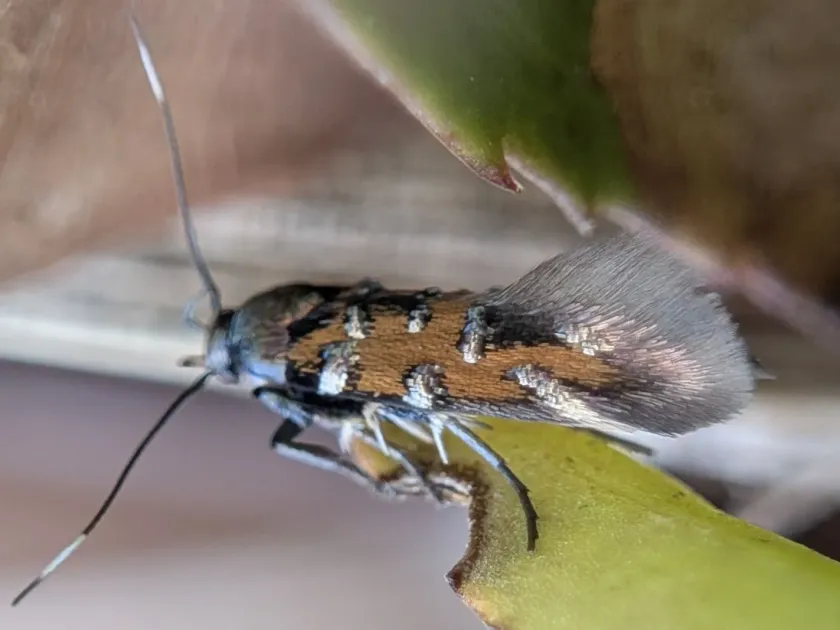
These moths are relatively small, with a wingspan ranging from 10 to 14 mm. Their appearance is distinct due to the dark, metallic-looking background and golden-colored patterns on their forewings.
The larvae, or caterpillars, possess a light-colored body with a dark head. They are primarily endophagous or semi-concealed feeders, which is why they are often overlooked until damage becomes visible.
The development cycle follows the holometabolous pattern: egg, larva, pupa, and adult. The pupal stage is often spent in the soil or protected crevices of plant matter.
Adults are diurnal insects, meaning they are active during the day. This behavior allows gardeners and agronomists to identify them by observing flower beds during sunny weather.
What it damages
The primary hosts for Pancalia caterpillars are plants belonging to the family Violaceae, particularly various species of violets. They exhibit a high level of host specificity.
The larvae feed on the reproductive parts of the plants, causing significant damage to buds and developing flowers before they can even reach the blooming stage.
When feeding on the stems or leaves, the caterpillars cause physiological stress to the plant, which may lead to stunted growth and reduced vigor throughout the season.
Damage caused by this pest is often the primary cause for subsequent infection by opportunistic fungal pathogens, leading to premature wilting or decaying of the flowers.
In ornamental horticulture, the presence of Pancalia can lead to significant economic losses due to the destruction of marketable flowers and the decreased aesthetic value of the plants.
When it appears
The emergence of adult moths typically occurs in the spring, aligning with the peak flowering period of violets. This is the optimal time for mating and oviposition.
Larval development takes place during the late spring to early summer months, which is when the host plants are most vulnerable to feeding damage.
The species usually completes one generation per year. However, environmental factors and localized climate variations can influence the specific timing of the cycle.
Wintering occurs during the pupal stage, where the insect remains dormant in the soil or leaf litter, protected from cold temperatures and desiccation.
Monitoring the spring population is crucial for effective management. Agronomists should focus their efforts on the period just before the first buds start to open.
Signs of infestation
The most common sign of infestation is the presence of small, irregular holes or "chewed" areas on the surface of unopened violet buds, indicating larval feeding.
Gardeners may observe fine webbing around the base of the flowers or in the leaf axils, which often serves as a shelter for the developing larvae.
Prematurely browned or withered buds that fail to open are another strong indicator of an active pest population residing within the floral tissues.
Visible frass (insect excrement) near the damaged areas is a clear diagnostic feature confirming the presence of caterpillars rather than disease-related symptoms.
- Holes in unopened buds
- Deformed petals on opening flowers
- Presence of fine silk webbing
- Stunted floral development
Control measures
Effective management begins with good sanitation. Removing debris and weeds from flower beds in late autumn is essential to destroy overwintering pupae.
Manual removal of infected buds in small-scale gardens is a highly effective, non-toxic method for reducing the pest population early in the season.
If chemical control is necessary, select insecticides that are systemic or have contact action, ensuring they are labeled for use on ornamental flowering plants.
Biological control options, such as using preparations based on Bacillus thuringiensis, can be very effective against young larvae without disrupting the local ecosystem.
Maintaining strong plant health through proper fertilization and watering helps plants recover more quickly from potential damage and makes them more resilient to pests.
Taxonomy
- Latin name
- Pancalia
- Order
- Lepidoptera (butterflies)
- Family
- Cosmopterigidae
- EPPO code
- PNCASP
Discussion
No discussions yet — be the first.