
Pachysquamus subcostulatus
Pachysquamus subcostulatus
Description
How to identify
Pachysquamus subcostulatus belongs to the order Coleoptera and the family Tenebrionidae. These beetles are typically found in stored grain environments or in soils where they feed on organic plant matter, making them potential pests in agricultural settings.
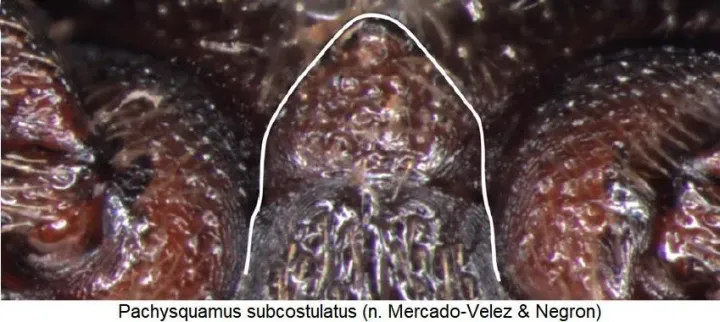
The adult beetle possesses a robust, dark-colored exoskeleton. A distinctive morphological feature of this species is the presence of subcostal grooves on the elytra, which is the defining characteristic for its identification in entomological studies.
The life cycle follows a complete metamorphosis: egg, larva, pupa, and adult. The larval stage is responsible for the majority of the damage, as they feed on dry organic substances, including the grain kernels themselves, within the grain mass.
Due to their size and cryptic behavior, identifying Pachysquamus subcostulatus often requires specialized equipment. Agronomists look for specific structural details in the head and pronotum to distinguish them from other flour beetles.
They exhibit high resilience to environmental fluctuations, which allows them to thrive in varied climates. Their ability to persist in debris and cracks makes them a challenging species to eradicate once established in a storage facility.
What it damages
The primary concern regarding Pachysquamus subcostulatus is its impact on stored cereals, including wheat, barley, and maize. The larvae actively consume the germ portion of the grain, rendering it useless for both processing and sowing.
As the insects feed, they contaminate the grain with feces and cast skins. This biological contamination lowers the hygiene standards of the harvest, making it unsuitable for human consumption or high-grade flour production.
Their activity often creates conditions conducive to mold growth. By damaging the grain pericarp, they provide entry points for various fungal pathogens, which can lead to significant spoilage of the stored product.
Mass infestations lead to grain heating. The metabolic activity of a large colony of beetles raises the temperature within the storage bins, potentially causing the grain mass to lose quality and germination viability rapidly.
While field damage is generally less severe than in storage, the pest can persist in harvest residues and weeds, creating a pathway for re-infestation of new grain as soon as it is brought into storage facilities.
Control measures
Management of Pachysquamus subcostulatus centers on strict sanitation and environmental control. Keeping storage areas clean and free of leftover grain and dust is the most effective preventative measure.
Chemical control via fumigation is standard for large-scale infestations. Using approved phosphine-based products allows for deep penetration into the grain mass to eliminate larvae and adults hiding in the depths of the storehouse.
Regular monitoring using grain probes is essential for early detection. Detecting a population at low density allows for localized interventions, preventing the need for massive treatments and saving the entire batch of grain.
Maintaining low moisture levels (typically below 14%) in stored grain is crucial. Dry grain is significantly more resistant to the reproductive cycle of Tenebrionidae, effectively slowing down their potential population growth.
- Sanitize storage facilities thoroughly before the harvest season.
- Ensure silos are properly sealed to prevent pest migration.
- Employ aeration systems to manage grain temperature and moisture.
Taxonomy
- Latin name
- Pachysquamus subcostulatus
- Order
- Coleoptera (beetles)
- Family
- Curculionidae
- EPPO code
- HYLUSU
Discussion
No discussions yet — be the first.