
Dock sawfly
Pachynematus rumicis
Description
How to identify
The dock sawfly (Pachynematus rumicis) is a member of the Hymenoptera order, specifically the Tenthredinidae family. Adults are small, dark-colored wasps that are often overlooked in the garden environment.
The larval stage, often referred to as a false caterpillar, is the most recognizable phase of the insect. These larvae are typically light green or yellowish, allowing them to blend into the foliage of their host plants.
The life cycle includes a complete metamorphosis consisting of an egg, larva, pupa, and adult stage. They generally overwinter as larvae or pupae inside a cocoon located within the top layers of the soil.
Adult sawflies emerge in the spring, coinciding with the first new growth of their primary host plants, such as sorrel and dock species. Females insert their eggs into the leaf tissue, ensuring protection for the developing larvae.
Multiple generations can occur throughout the growing season, meaning the presence of larvae can be a persistent issue for gardeners from late spring through late summer.
What it damages
The dock sawfly feeds primarily on plants within the Rumex genus, with common sorrel being a frequent target. The damage is exclusively caused by the feeding activity of the larvae.
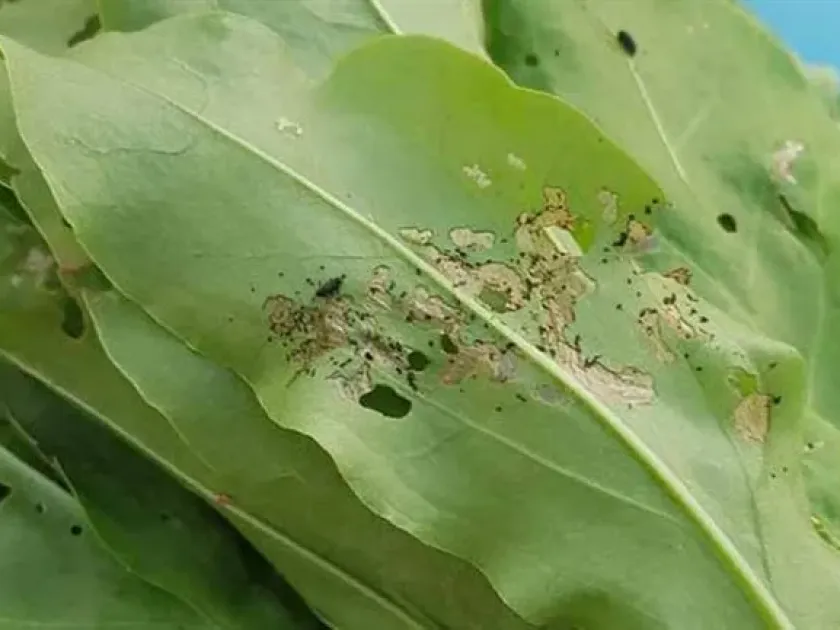
Larvae consume the leaf blade, creating holes of varying sizes. As they grow, their appetite increases, often leading to extensive skeletonization where only the leaf veins remain intact.
When infestation levels are high, the growth of the sorrel plant is significantly stunted, leading to a major reduction in both the quality and quantity of the harvestable leaves.
The loss of photosynthetic area severely weakens the plant, making it less resilient to environmental stresses and secondary pathogens that may enter through the damaged leaf tissue.
Economic damage is most critical early in the season when the first harvest of leaves is intended for market or consumption, as unsightly holes render the produce unmarketable.
Signs of infestation
The first indicator of an infestation is the appearance of small, irregular holes on the young leaves, often located near the margins or the center of the leaf blade.
Upon closer inspection, particularly on the underside of the leaves, one can observe the green larvae. They often display a defensive reaction by curling into a C-shape when disturbed.
The presence of dark, granular frass (excrement) scattered on the leaves is a clear diagnostic sign of active larval feeding in the immediate vicinity.
In cases of severe infestation, the leaves may appear transparent or lacy, as the larvae consume the soft parenchyma tissue while leaving the epidermis and major veins undisturbed.
Yellowing of the edges of damaged leaves and overall plant wilting can be observed if the larval density is high enough to significantly impede the plant's physiological processes.
Control measures
Hand-picking is the most effective and safe method for small-scale gardens. Collecting larvae during the early morning or evening hours is highly recommended as they are most active.
Cultural control is essential; maintaining a weed-free environment by removing wild sorrel and other dock species prevents the pest from building up its population on your plot.
Cultivating or digging the soil around the base of the plants in late autumn or early spring can disrupt the overwintering pupae, significantly reducing the next season's infestation.
- Utilizing biological control agents, such as insecticidal soaps or Bacillus thuringiensis based products, which are safe for edible crops.
- Implementing sticky traps or pheromone monitors if available to track the flight of adult sawflies.
- Encouraging natural predators such as parasitic wasps or birds that consume sawfly larvae.
Chemical intervention should be a last resort, strictly adhering to pre-harvest intervals to ensure that the produce remains safe for human consumption after treatment.
Taxonomy
- Latin name
- Pachynematus rumicis
- Order
- Hymenoptera
- Family
- Tenthredinidae
- EPPO code
- PCNERU
Discussion
No discussions yet — be the first.