
Rough strawberry root weevil
Otiorhynchus rugosostriatus
Description
How to identify
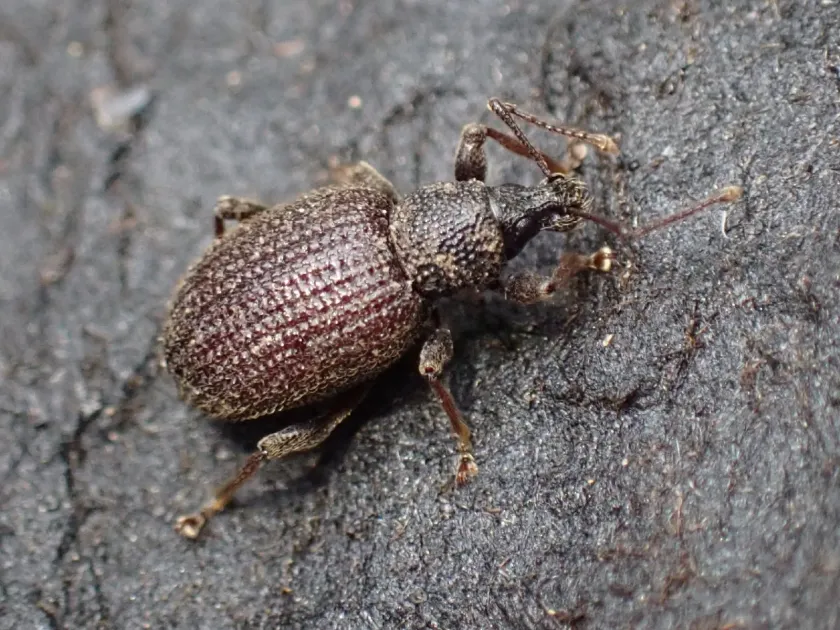
The rough strawberry root weevil (Otiorhynchus rugosostriatus) belongs to the Curculionidae family. Adults typically measure between 6 and 8 mm in length, possessing a dark brown or blackish color with a matte texture.
The name stems from the rough, wrinkled appearance of their elytra, which feature distinct longitudinal ridges. Their snout is short and broad, distinguishing them from other, more elongated weevil species.
The larvae are legless, C-shaped, and creamy-white with a brown head capsule. They live exclusively underground, feeding on the root systems of various plant species throughout their developmental stages.
These insects are nocturnal. During the day, they remain hidden in soil crevices, underneath garden mulch, or beneath decaying leaves to avoid predators and environmental stressors.
The life cycle varies based on regional climate but generally involves a prolonged larval stage within the soil. Adult weevils are flightless, meaning infestations spread slowly but become very intense locally.
What it damages
Adult weevils cause damage to the foliage of many plants by feeding on leaf margins. This creates a signature symptom known as "notching," where the edges of leaves appear irregularly scalloped or bitten.
The most severe damage is caused by the larvae, which feed on both fine and primary roots. A heavy infestation can effectively prune the entire root system, leading to the collapse and death of host plants.
This pest is highly polyphagous, attacking a wide range of hosts including strawberries, raspberries, rhododendrons, yews, and various garden perennials. It is a significant threat to nursery-grown crops.
In cases of severe infestation, the host plant may lose its anchor in the soil, allowing it to be easily lifted out, revealing a decimated root system devoid of feeder roots.
- Irregular scalloped leaf margins caused by adult feeding.
- Unexplained wilting or stunted growth during the summer.
- Presence of C-shaped white larvae in the root zone.
- Easy uprooting of the plant due to lack of healthy roots.
- Gradual thinning of foliage followed by plant death.
When it appears
Adult weevils emerge in late spring as temperatures rise. Their peak activity, including mating and egg-laying, typically occurs throughout the summer months of June and July.
Larval activity begins in mid-summer and continues as they grow and overwinter in the soil. They are capable of surviving harsh winters at various larval instars, resuming feeding when the soil warms up again.
Control measures
Biological control using entomopathogenic nematodes (such as Heterorhabditis bacteriophora) is highly effective. These microscopic worms seek out and infect larvae in the soil.
Chemical control against adult weevils should be applied in the evening, as they feed at night. Contact insecticides applied to the foliage or soil surface can help reduce the adult population significantly.
Cultural management includes frequent soil cultivation around host plants. Disturbing the soil can destroy larval chambers and expose them to natural predators like birds or ground beetles.
Maintaining a clean garden by removing debris and weeds helps minimize hiding spots for adult weevils, making the environment less favorable for them to remain and reproduce.
Using physical barriers or trapping (such as boards laid on the ground overnight) allows for the manual collection and destruction of adults, which is a simple but effective technique for small gardens.
Taxonomy
- Latin name
- Otiorhynchus rugosostriatus
- Order
- Coleoptera (beetles)
- Family
- Curculionidae
- EPPO code
- OTIORS
Discussion
No discussions yet — be the first.