
Plain chachalaca
Ortalis vetula
Description
How to identify
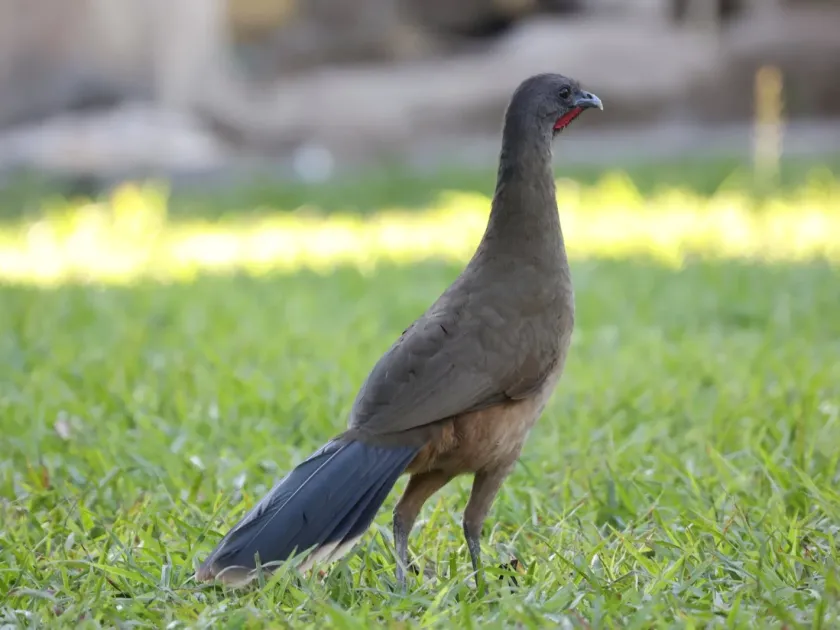
The plain chachalaca (Ortalis vetula) is a medium-sized bird belonging to the Cracidae family within the order Galliformes. It features a long tail and a patch of bare skin on the throat, which turns vibrant red during the breeding season.
Its plumage is primarily olive-brown, providing excellent camouflage within foliage. Adult birds typically measure between 50 and 60 centimeters in length, with little sexual dimorphism in terms of appearance and body size.
These birds are known for their loud, distinctive calls that sound like "cha-cha-laca," from which they derive their common name. These calls are frequently used by flock members to communicate, particularly during dawn and dusk.
While they are primarily arboreal, they frequently descend to ground level to forage for food. This behavior brings them into direct contact with agricultural fields, where they can cause significant damage to newly planted crops and developing produce.
They typically live in small groups or social pairs. This gregarious behavior allows them to forage more efficiently and detect potential threats quickly, making them a persistent challenge for farmers working in their native range.
What it damages
The primary agricultural damage caused by the plain chachalaca involves consuming young plant shoots and developing fruits. Crops such as corn, beans, tomatoes, and various peppers are particularly susceptible to their foraging activities.
During the early growth stages, the birds dig up seeds or consume tender sprouts, leading to uneven crop emergence and requiring costly replanting. This reduces overall yield potential and delays the development cycle of the entire field.
Physical damage to stems often occurs as flocks move through the crops. They can break young, delicate plants while landing or walking between rows, leading to stunted growth or total plant loss, especially in the most vulnerable early development phases.
When vegetables enter the ripening stage, chachalacas target the fruits. They peck at tomatoes and peppers, causing significant quality degradation that makes the produce unmarketable and susceptible to subsequent bacterial or fungal infections.
In dry years, when wild food sources are scarce, the economic impact of chachalacas on farms increases dramatically. The birds become bolder and more aggressive in their attempts to reach irrigated fields, where moisture and food are more readily available.
When it appears
Plain chachalacas are sedentary birds and reside in their habitats throughout the year. However, the intensity of their impact on agricultural systems fluctuates based on the specific crop growth stage and seasonal availability of alternative food sources.
Spring is a high-risk period, as emerging sprouts are highly attractive and easy to access. This time requires the most intensive pest management strategies to ensure that the initial crop establishment is not compromised by feeding pressure.
During the summer and early autumn, when fruits and grains are maturing, the birds concentrate on fields with high nutrient availability. This period demands constant monitoring, particularly during the early morning and late afternoon hours.
Fledglings joining the flocks in late summer can increase the pressure on crops. Juvenile birds are often less cautious and exhibit more sporadic foraging behavior, leading to more extensive mechanical damage across localized areas of the field.
Climatic variability, such as prolonged droughts, can force chachalacas to shift their foraging grounds. This may lead to unexpected infestations in areas that previously suffered little to no damage, requiring farmers to stay prepared for sudden bird activity.
Signs of infestation
The most reliable sign of chachalaca presence is the specific damage pattern on fruits, characterized by ragged, torn edges and deep pecking marks, which differ significantly from the clean or small-scale damage caused by insects.
Bare patches in a field where sprouts are missing or broken are clear indicators of bird activity. Close inspection often reveals bird tracks in the soil and distinct droppings near the damaged plants, confirming the presence of the pest.
Broken or trampled stems on taller crops like corn indicate that the birds have used the plants for support or moved through them as a group. This often correlates with compacted soil surrounding the main feeding sites.
Loud, vocalized calls emanating from nearby shrubbery are a primary alert. If a farmer hears these distinctive sounds, it is a clear signal that a flock is present and likely targeting the crop, requiring immediate protective action.
Remnants of plant material scattered away from the feeding site—such as shredded leaves or discarded fruit skins—confirm that the birds are not just feeding, but causing extensive mechanical waste, significantly lowering the commercial value of the crop.
Control measures
Effective management requires an integrated approach. Visual deterrents, such as reflective tapes, holographic devices, and predator silhouettes, provide temporary relief but must be moved regularly to prevent the birds from habituating to them.
The use of bird-exclusion netting is the most reliable method for protecting high-value crops on small to medium-sized plots. This physical barrier prevents access entirely and is highly effective when properly installed.
Taste-based repellents can be applied to crops to make them unpalatable to birds, though these require frequent reapplication after rain. It is crucial to choose formulas that are certified as safe for food crops to maintain marketability.
Cultural control, such as clearing brush and tall vegetation from the edges of fields, reduces the birds' ability to find safe cover. By removing these resting sites, the field becomes less attractive for foraging expeditions.
Active acoustic deterrents, which play back predator calls or distress sounds, can be used to disrupt flock coordination. Rotating the types of sounds and using variable frequencies is essential to keep the birds from becoming accustomed to the deterrent system.
Taxonomy
- Latin name
- Ortalis vetula
- Family
- Cracidae
- EPPO code
- OTLSVE
Discussion
No discussions yet — be the first.