
Asian rice gall midge
Orseolia oryzivora
Description
How to identify
The Asian rice gall midge (Orseolia oryzivora) is a significant dipteran pest belonging to the family Cecidomyiidae. It is one of the most destructive insects affecting rice production in various humid tropical and subtropical regions.
Adult insects are small, mosquito-like flies with fragile bodies measuring roughly 3 to 4 mm in length. They are primarily nocturnal, showing significant activity during the evening hours when mating and oviposition occur.
The larval stage is the most critical for farmers to understand, as the larvae are responsible for the damage. They are pale, elongated, and typically hide deep within the leaf sheaths, making them difficult to detect with casual observation.
The life cycle encompasses four stages: egg, larva, pupa, and adult. The entire development process is heavily dependent on environmental humidity and temperature, which often correlate with the rice growing season.
The gall midge undergoes complete metamorphosis. Depending on the local climate and rice varieties planted, this pest can complete multiple overlapping generations during a single cropping season, exacerbating the infestation level.
What it damages
The primary host of Orseolia oryzivora is the cultivated rice plant (Oryza sativa). Young rice plants at the tillering stage are the most susceptible to larval feeding, which can devastate an entire crop.
In addition to rice, this midge species is known to infest various wild grass species that grow near irrigation canals or within the paddy environment, allowing the pest to persist even after the harvest.
As the larvae feed, they inject substances into the plant tissue, inducing the formation of a tubular gall. This feeding destroys the apical meristem, or the plant's growing point, which prevents the development of a normal panicle.
The economic impact of the gall midge can be extreme, with yield losses ranging from 20% to over 80% in heavy infestation zones. The plants are unable to produce grain, leading to severe financial losses for producers.
Plants attacked by the gall midge display a compensatory response, producing numerous side tillers. However, these tillers are usually stunted, unproductive, and cannot compensate for the loss of the main stalk.
Signs of infestation
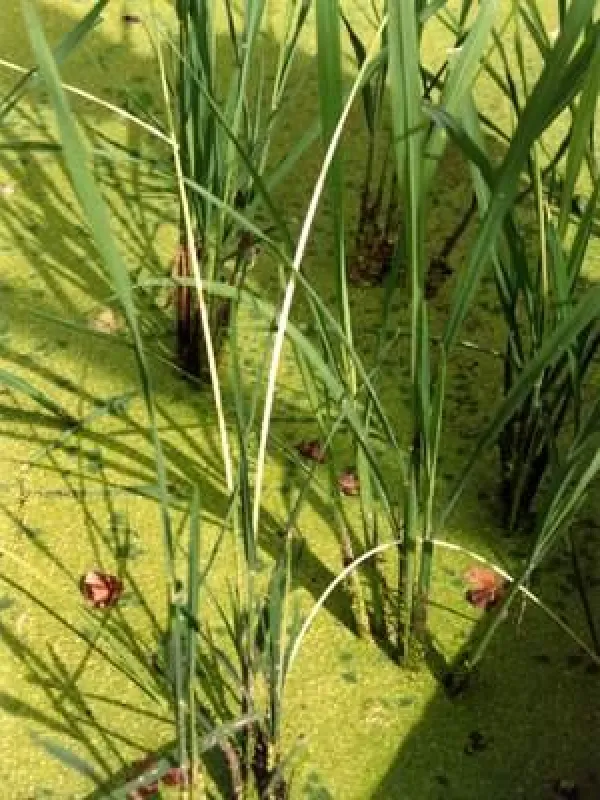
The most distinctive symptom of infestation is the appearance of "silver shoots" or "onion leaves." These are hollow, tubular galls that rise from the center of the rice plant instead of the expected productive culm.
Infected fields show uneven growth patterns. Instead of uniform stands, the field appears stunted with distinct patches of bushy, dark green plants that fail to produce panicles during the flowering stage.
Upon physical inspection of the silver shoot, a small larva or pupa can often be found inside. The structure is physically distinct from normal leaf growth and is the primary diagnostic sign for this pest.
Adult midges may be observed near the field during the night, especially near artificial light sources. Their presence in high numbers is a clear warning sign that an infestation is likely to occur in the coming days.
Overall plant vitality is significantly reduced; affected leaves may appear twisted or deformed. During the reproductive phase, the lack of heading is the final and most devastating indicator of gall midge presence.
Control measures
Integrated Pest Management (IPM) is the standard approach to control this pest. Cultural practices, such as optimizing sowing dates to avoid peak pest activity, are highly recommended to prevent large-scale infestations.
Maintaining proper water management in the paddies can influence larval survival rates, as consistent water levels can sometimes hinder the development or the movement of the larvae within the plant.
Biological control plays a vital role, as various parasitoid wasps, such as Platygaster oryzae, naturally prey on the larvae. Protecting these natural enemies through judicious insecticide use is crucial for long-term suppression.
Chemical control should be strictly timed with the adult migration. Systemic insecticides are most effective when applied at the early stages of infestation to prevent the larvae from successfully forming the gall structure.
The development and adoption of gall midge-resistant rice varieties remain the most sustainable and efficient strategy. Resistant cultivars significantly decrease the reliance on chemical inputs while ensuring stable production.
Taxonomy
- Latin name
- Orseolia oryzivora
- Order
- Diptera (flies)
- Family
- Cecidomyiidae
- EPPO code
- ORSEOV
Discussion
No discussions yet — be the first.