
Rice gall midge
Orseolia caulicola
Description
How to identify
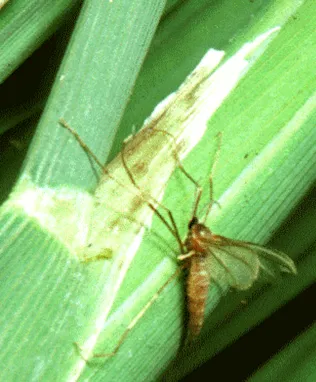
The Rice gall midge (Orseolia caulicola) is a notorious pest belonging to the Cecidomyiidae family, order Diptera. These small, fly-like insects are significant threats to rice cultivation, particularly in subtropical and tropical regions.
The lifecycle of the gall midge consists of four stages: egg, larva, pupa, and adult. The adults are nocturnal and short-lived, with the primary objective of mating and oviposition on the surface of young rice leaves.
After hatching, the larvae migrate toward the leaf sheath and penetrate the growing point of the rice tiller. Once inside, they feed on the plant tissues, stimulating the formation of the characteristic gall.
Pupation occurs within this gall, and before the adult emerges, the pupa moves upward, partially protruding from the exit hole. This empty pupal skin is a clear diagnostic indicator of a midge infestation.
Multiple generations can occur within a single cropping season, making the pest highly dangerous if weather conditions, such as high humidity and rainfall, favor its rapid population growth.
What it damages
The pest specifically targets rice plants. The primary damage occurs during the vegetative stage, preventing the formation of the panicle and causing severe yield losses by hindering the plant's normal growth architecture.
Signs of infestation
The most distinctive symptom is the formation of a silver, hollow, tubular gall, often referred to as an "onion shoot" or "silver shoot". These shoots are distinct from normal leaves and stalks.
Infested tillers cease to grow and produce no grain. The plant often tries to compensate by producing excessive tillers, but these secondary shoots are typically weak and often sterile.
Field monitoring reveals localized patches of stunted plants with elongated, tube-like growths. This visual evidence makes it possible to assess the severity of the infestation across the field.
If you split open a gall, you can typically find the larvae or the remnants of their feeding. Early identification is crucial to preventing the pest from spreading across the entire plantation.
Without proper management, severe infestations can lead to significant economic losses, as the percentage of "silver shoots" directly correlates with the reduction in harvest yield.
Control measures
Integrated Pest Management (IPM) is essential for controlling the Rice gall midge. The use of resistant rice cultivars remains the most sustainable and cost-effective approach for farmers.
Cultural practices, such as adjusting planting dates, can effectively break the synchronization between the midge's peak flight activity and the rice plant's most susceptible developmental stages.
Chemical control is applied when economic thresholds are reached. Systemic insecticides are preferred as they are effective against the larvae protected inside the plant stems.
Encouraging natural biological control agents, such as parasitoid wasps, is highly effective, as they naturally regulate midge populations in sustainable farming ecosystems.
- Regular field scouting to monitor pest density.
- Using light traps for early detection of adult populations.
- Maintaining field hygiene by removing alternative host grasses.
- Balanced nitrogen application to prevent overly succulent plant growth.
Taxonomy
- Latin name
- Orseolia caulicola
- Order
- Diptera (flies)
- Family
- Cecidomyiidae
- EPPO code
- PLLDJA
Discussion
No discussions yet — be the first.