
Orchid weevil
Orchidophilus curvirostris
Description
How to identify
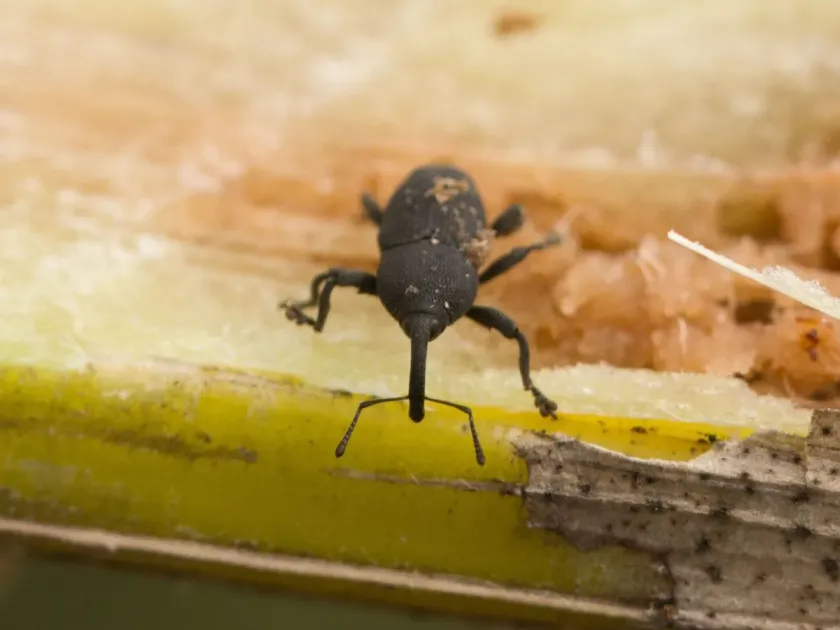
The orchid weevil (Orchidophilus curvirostris) is a small but highly destructive beetle belonging to the Curculionidae family. It is characterized by a distinctive elongated snout (rostrum) used for feeding and laying eggs inside plant tissues.
The adult beetle is typically 3–5 mm in length and possesses a dark brown or black coloration. This camouflage allows it to blend perfectly with the bark or substrate, making visual detection difficult for orchid owners.
Larvae are legless, white to cream-colored grubs that are completely hidden within the host plant's pseudobulbs, roots, or stems. They complete their entire development cycle inside the plant, which makes them invisible during the early stages of infestation.
The eggs are laid singly by the female inside small punctures made in the orchid tissue. This behavior is typical for the species and ensures that offspring are protected within a nutrient-rich environment.
The life cycle is continuous in indoor greenhouse environments. Because temperatures remain relatively constant, the orchid weevil can produce multiple overlapping generations throughout the year.
What it damages
Orchid weevils primarily attack various genera of orchids, with a strong preference for Dendrobium, Phalaenopsis, and Vanda. Both larvae and adults contribute to the destruction of the host plant.
Larvae are the most damaging stage; they tunnel through succulent tissues, disrupting nutrient and water transport. Severe larval infestations can cause total plant collapse or the death of individual pseudobulbs.
Adult beetles feed on leaves, roots, and pseudobulbs, creating small exit or entry holes. While less damaging than the internal feeding of the larvae, these wounds serve as entry points for secondary pathogens.
Bacterial soft rot and various fungal infections often follow a weevil attack. The plant becomes stressed, its vigor declines, and if not treated, it will eventually succumb to these secondary diseases.
In collections, the pest can spread rapidly. Once established, it can move between plants, potentially ruining an entire orchid collection if immediate quarantine and control measures are not implemented.
Signs of infestation
The earliest signs of infestation are tiny, needle-like holes on the surface of the pseudobulbs or leaves. These are feeding punctures left by the adult weevils.
If an orchid shows signs of dehydration or stunted growth despite regular watering, it is a red flag. Internal tunneling by larvae often compromises the plant's ability to maintain turgor pressure.
Small piles of frass, which look like sawdust or fine wood shavings, are a diagnostic sign. These are pushed out by the larvae as they tunnel through the plant tissue.
Blackened or softening areas on the stems or pseudobulbs often indicate where the larvae are active inside. If you press these areas, they may feel hollow or mushy, confirming internal damage.
Because the adults are nocturnal, they are rarely seen during the day. However, a late-night inspection with a flashlight can reveal the beetles moving along the stems or hiding in leaf axils.
Control measures
The first and most critical step in managing an infestation is to isolate the affected plants immediately. This prevents the adults from moving to healthy orchids in the collection.
Systemic insecticides are the most effective way to control orchid weevils. These chemicals are absorbed by the plant and kill the larvae feeding internally. Regular applications are necessary to break the life cycle.
Recommended control practices include:
- Quarantining all new orchid arrivals for at least one month.
- Mechanically removing and destroying severely infested plant parts.
- Repotting the orchid in fresh substrate and sterilizing the pot.
- Applying systemic insecticides as a root drench or foliar spray (follow labels).
- Performing nocturnal checks to manually remove adults.
Prevention is key in professional and home orchid care. Maintaining a clean growing environment, removing dead plant material, and inspecting plants regularly will significantly reduce the risk of infestation.
Be aware that chemicals should be used carefully; orchids can be sensitive to certain carriers or solvents. Always test on a small area if unsure, and ensure the growing area has adequate ventilation.
Taxonomy
- Latin name
- Orchidophilus curvirostris
- Order
- Coleoptera (beetles)
- Family
- Curculionidae
- EPPO code
- ORCHCU
Discussion
No discussions yet — be the first.