
Omophoita aequinoctialis
Omophoita aequinoctialis
Description
How to identify
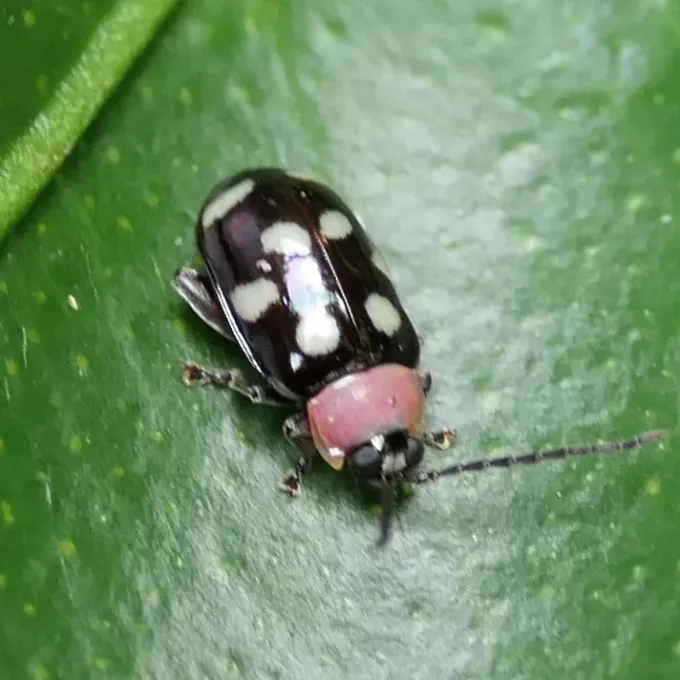
Omophoita aequinoctialis is a species of beetle within the leaf beetle family (Chrysomelidae), specifically belonging to the Alticinae subfamily, commonly known as flea beetles.
Adult specimens feature a striking coloration, often exhibiting contrasting patterns of black and yellow or reddish hues on the elytra, which serves as a warning signal to predators.
The beetle possesses an oval body shape and is equipped with enlarged hind femora, allowing it to jump effectively, a signature trait of the tribe Alticini.
The biology of this species is closely linked to tropical and subtropical environments, where the insect reproduces rapidly throughout the majority of the growing season.
Its life cycle follows a complete metamorphosis: egg, larva, pupa, and adult, with larvae often exhibiting cryptic behavior by residing in the soil or within plant tissues.
What it damages
This pest is known for causing damage to a variety of agricultural crops, with a particular affinity for members of the Solanaceae family and certain ornamental plants.
Larvae primarily feed on the root systems or the underground portions of stems, which weakens the plant and disrupts nutrient and water uptake from the soil.
Adults prefer the foliage, creating characteristic small holes in the leaves, which significantly reduces the leaf surface area available for photosynthesis.
In cases of severe infestation, this pest can destroy young seedlings entirely, leading to substantial economic losses for agricultural enterprises.
Beyond physical tissue damage, the intense feeding activity of the adults often facilitates the transmission of secondary infections, including various fungal and bacterial pathogens.
Signs of infestation
The earliest indicator of infestation is the presence of numerous small holes in leaf blades, which may eventually coalesce into larger necrotic areas.
Inspecting the root zone often reveals larvae feeding on tender root tissues, which manifests as wilting of the plants during peak sunlight hours.
Early signs in crop development include stunted growth, chlorosis, and deformity of young leaves that have been subjected to insect feeding.
During the evening or on cloudy days, beetles can be observed hiding on the undersides of leaves to avoid direct sunlight.
The accumulation of frass on the leaves and signs of partial skeletonization of the leaf surface serve as clear evidence of an active and feeding population.
Control measures
Effective management against this flea beetle involves the application of broad-spectrum insecticides, which are most potent during the active adult migration phase.
Agronomic practices, such as deep plowing after harvest, are crucial for destroying larvae and pupae overwintering in the upper layers of the soil.
Adhering to strict crop rotation schedules is essential, as avoiding monocultures on the same field for consecutive years limits the availability of food sources for the pest.
The deployment of yellow sticky traps is a recommended method for monitoring adult beetle populations and making data-driven decisions regarding pesticide intervention.
- Regular scouting of fields during early growth stages
- Removal of weeds that serve as alternative hosts for the pest
- Integration of biological control agents, such as entomopathogenic fungi
Taxonomy
- Latin name
- Omophoita aequinoctialis
- Order
- Coleoptera (beetles)
- Family
- Chrysomelidae
- EPPO code
- OMOHAE
Discussion
No discussions yet — be the first.