
Date palm hopper
Ommatissus lybicus
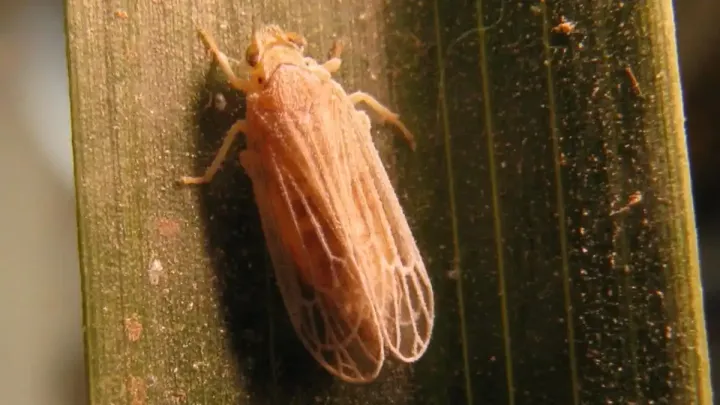
Description
How to identify
The date palm hopper (Ommatissus lybicus) is a small insect belonging to the order Hemiptera and the family Tropiduchidae. Adults typically measure about 5 to 6 millimeters in length and have a characteristic wedge-shaped body.
Adults possess clear, transparent wings with prominent veining, which they fold roof-like over their bodies when resting. Their coloration ranges from pale green to light yellow, providing excellent camouflage on green foliage.
The nymphs resemble the adults but are smaller and wingless. They are highly mobile and are usually found feeding on the underside of leaves and near the base of palm fronds.
A distinctive feature of this species is the presence of white waxy filaments secreted by the nymphs during feeding. These filaments are easily visible to the naked eye and serve as a primary indicator of an infestation.
The life cycle undergoes incomplete metamorphosis, consisting of the egg, five nymphal instars, and the adult stage. Eggs are typically laid within the plant tissue, protecting them until hatching.
What it damages
The primary host of Ommatissus lybicus is the date palm (Phoenix dactylifera), where it can cause significant agricultural and economic losses. It is also known to infest various species of oak trees.
As a phloem-feeding insect, the hopper extracts sap directly from the plant's vascular system. This constant removal of nutrients leads to general plant weakness, reduced photosynthesis, and metabolic stress.
Heavy infestations can drastically reduce fruit yield. Dates may become undersized, shriveled, and lose their market quality, or the tree may drop its fruit prematurely due to extreme nutritional stress.
Secondary damage occurs through the excretion of honeydew, a sticky substance that promotes the growth of sooty mold. This black mold covers the leaves, blocking sunlight and interfering with the tree's gas exchange.
Prolonged heavy infestation weakens the tree's structural integrity and lowers its overall vitality, making it more susceptible to secondary fungal and bacterial infections.
When it appears
The activity of the date palm hopper is closely linked to the growing season of its host plants. Nymphs typically hatch in early spring from eggs that have overwintered in the plant tissue.
Populations tend to reach their peak in mid-summer, when favorable temperatures support the development of multiple generations. In arid, warm climates, the hopper can complete several cycles within a single year.
The period of greatest harm occurs during active shoot growth and fruit development. During these phases, the insects put maximum physiological pressure on the host plant through intense sap consumption.
As autumn approaches, activity gradually declines. The insects shift their behavior towards mating and egg-laying, ensuring the survival of the species through the winter period.
Effective management requires early spring monitoring to detect the first instar nymphs, allowing for intervention before the population reaches an uncontrollable level during the peak summer months.
Signs of infestation
The most immediate sign of infestation is the presence of sticky honeydew on the leaves and fruit. Ants are often seen crawling on the palm, attracted by this sweet secretion.
A secondary symptom is the development of black sooty mold on the honeydew-coated surfaces. The leaves and stems take on a dark, dirty appearance, which is a clear warning sign of a severe pest presence.
During inspection, one can find white cast skins (exuviae) of the nymphs, which are left behind after each molt. These are often concentrated along the midribs of the fronds.
The foliage begins to show chlorosis, yellowing, and eventually premature drying. The overall tree health declines, and new growth may appear stunted or malformed.
Fruit damage includes poor development, uneven ripening, and premature drop. In severely infested groves, the trees lose their vibrant green color and appear thin and sickly.
Control measures
Cultural control measures involve regular pruning and sanitation. Removing infested fronds and debris during the dormant season helps significantly reduce the overwintering population of eggs.
Biological control is highly effective, involving the use of natural enemies like egg parasitoid wasps. These beneficial insects help keep hopper populations in check without the use of harsh chemicals.
Chemical control should rely on the application of systemic insecticides that are absorbed by the plant. These are most effective at targeting the phloem-feeding adults and nymphs.
It is crucial to rotate insecticides with different modes of action to prevent the development of resistance. Application must be timed carefully to coincide with the most vulnerable life stages.
The use of insecticidal soaps or horticultural oils can help wash away honeydew and manage small local infestations. These treatments are particularly useful in sensitive areas or integrated organic farming systems.
Taxonomy
- Latin name
- Ommatissus lybicus
- Order
- Hemiptera (bugs, aphids, leafhoppers)
- Family
- Tropiduchidae
- EPPO code
- OMMABL
Discussion
No discussions yet — be the first.