
Palm leafhopper
Ommatissus binotatus
Description
How to identify
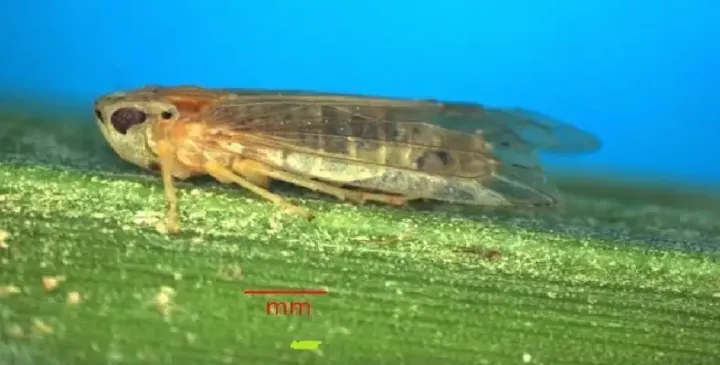
The palm leafhopper (Ommatissus binotatus) belongs to the order Hemiptera and the family Tropiduchidae. Adults are small insects, typically measuring 6–8 mm in length, with a distinctive wedge-shaped body.
Their coloration ranges from green to yellowish-brown, which provides excellent camouflage against the foliage of host plants. The forewings often feature dark spots, serving as a key diagnostic feature for species identification.
Nymphs resemble the adults but are smaller and lack fully developed wings. They are highly active and tend to congregate on the undersides of leaves, protected by the dense plant structure.
The life cycle encompasses an egg stage, five nymphal instars, and the adult stage. Females lay eggs directly into plant tissues, making them difficult to target with conventional contact-based treatments.
This pest thrives in warm climates. Optimal developmental temperatures range from 22°C to 30°C, and high humidity significantly accelerates the reproductive cycles of the population.
What it damages
The primary hosts of the palm leafhopper include various palm species, such as the date palm and European fan palm. It can also infest a variety of other ornamental plants in greenhouse or garden settings.
Both adults and nymphs feed on plant sap by piercing the leaf epidermis with their specialized piercing-sucking mouthparts. This feeding process depletes the plant's resources and disrupts vital physiological functions.
Damage is most severe during the peak growing season. Sustained feeding stunts the growth of new shoots and causes leaf deformation, which drastically reduces the aesthetic quality of the palm.
During feeding, the insect excretes "honeydew," a sugary substance that serves as a medium for the growth of sooty mold. Leaves covered in black mold cannot photosynthesize effectively, leading to further stress.
Heavy infestations often result in premature leaf drop and the overall weakening of the plant. If left unmanaged, the palm becomes susceptible to secondary infections, potentially leading to plant death.
Signs of infestation
The first indicator of an infestation is the presence of a sticky substance on the foliage, often followed by the development of black sooty mold. This residue is a clear signal that the pest population is established.
Careful inspection of the leaf undersides usually reveals clusters of insects or nymphs. When disturbed, leafhoppers are known for their ability to jump or fly away rapidly from the point of contact.
Curled, yellowing leaf tips are common signs of localized tissue damage. The puncture sites often develop into small chlorotic spots that may eventually coalesce into larger necrotic areas.
Increased ant activity on the plant is a secondary symptom. Ants are attracted to the honeydew produced by the leafhoppers and will often guard the colony against natural predators, complicating manual removal.
Loss of vigor and a lack of healthy leaf color indicate systemic damage. If not addressed, the crown of the palm may lose its density and overall structural integrity over time.
Control measures
Effective control of the palm leafhopper requires an integrated pest management approach. Regular monitoring of the foliage is essential to detect early life stages before they reach high population densities.
Mechanical removal of heavily infested leaves can help reduce the localized population. Additionally, washing the palm crown with a strong stream of water helps remove honeydew and physical debris.
Systemic insecticides are generally the most effective treatment method. These chemicals are absorbed by the plant and translocated into the sap, providing long-lasting protection against feeding nymphs and adults.
Biological control options include introducing beneficial predators, such as predatory bugs or lacewings. This strategy is highly recommended for enclosed environments like greenhouses or conservatories.
Good cultural practices, including optimal irrigation and balanced fertilization, are crucial. A well-nourished, healthy palm exhibits higher resistance to pest attacks compared to plants under stress.
Taxonomy
- Latin name
- Ommatissus binotatus
- Order
- Hemiptera (bugs, aphids, leafhoppers)
- Family
- Tropiduchidae
- EPPO code
- OMMABI
Discussion
No discussions yet — be the first.