
Brown beetle
Odontria brunnea
Description
How to identify
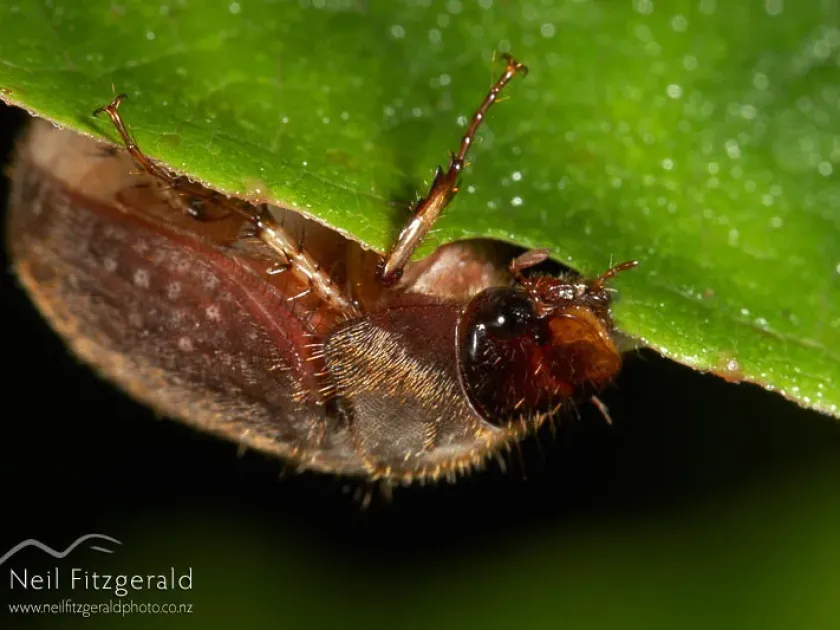
The brown beetle belongs to the Scarabaeidae family, order Coleoptera. Adult specimens are typically around 10–12 millimeters long, characterized by a shiny, chestnut-brown exoskeleton.
The larvae are classic scarab-type grubs: they are C-shaped, creamy-white in color, possess a darkened head capsule, and have three pairs of well-developed thoracic legs.
This species is endemic to New Zealand, where it has evolved within the local pasture ecosystems, making it a significant focus for agricultural research and pest management.
The life cycle is primarily subterranean, comprising egg, three larval instars, pupa, and adult stages. The larval stages are the ones causing the most noticeable ecological impact.
Adult beetles are nocturnal and are known to be strong fliers. They are frequently attracted to artificial lighting, which serves as a vital indicator for monitoring their population densities.
What it damages
The primary damage is caused by the larvae, which feed voraciously on the root systems of various grasses, effectively pruning the roots and destroying the plant's ability to uptake nutrients.
Once the root structure is severely compromised, the grass turf loses its anchorage in the soil, leading to large patches of brown, dying vegetation that can be easily pulled away.
The most susceptible crops include permanent pastures, native grasses, and ornamental turfgrass lawns, all of which can suffer extensive damage during outbreak years.
Severe infestations often result in the total destruction of the pasture sward, necessitating costly reseeding efforts and causing significant reductions in forage availability.
While adults may feed on the foliage of certain plants, their impact on crop yields is generally minimal compared to the destructive feeding habits of the larvae in the soil.
Signs of infestation
The most common sign of infestation is the appearance of brown, dead patches of grass that feel spongy and can be lifted like a carpet due to the destroyed root system.
Soil sampling at a depth of 5–10 centimeters in affected areas will reveal the presence of larvae, confirming the cause of the turf damage is indeed the brown beetle.
The presence of flocking birds, such as gulls or starlings, digging into the turf is a secondary indicator of high larval density, as they seek these grubs for food.
The sudden thinning of the grass cover creates gaps that are quickly colonized by opportunistic weed species, leading to a loss of the uniform pasture or lawn structure.
During the flight season, observing increased numbers of beetles around external lights at night acts as an early warning sign for potential future larval infestations.
Control measures
Biological control methods, such as the application of entomopathogenic fungi or nematodes, provide environmentally friendly ways to manage larval populations in the soil.
Good pasture management, including maintaining vigorous growth through appropriate fertilization and grazing rotation, can help plants withstand moderate levels of root damage.
Chemical control should be used sparingly and only when monitoring indicates that larval populations have exceeded the economic threshold for the specific pasture or crop.
Cultivation practices that disturb the soil surface can disrupt the larval development cycle, effectively reducing the survival rate of the grubs before they pupate.
Integrated Pest Management (IPM) programs emphasize the use of light traps to track beetle flight, ensuring that control measures are timed for maximum efficacy against larvae.
Taxonomy
- Latin name
- Odontria brunnea
- Order
- Coleoptera (beetles)
- Family
- Scarabaeidae
- EPPO code
- ODORBR
Discussion
No discussions yet — be the first.