
Lantana leaf-mining beetle
Octotoma scabripennis
Description
How to identify
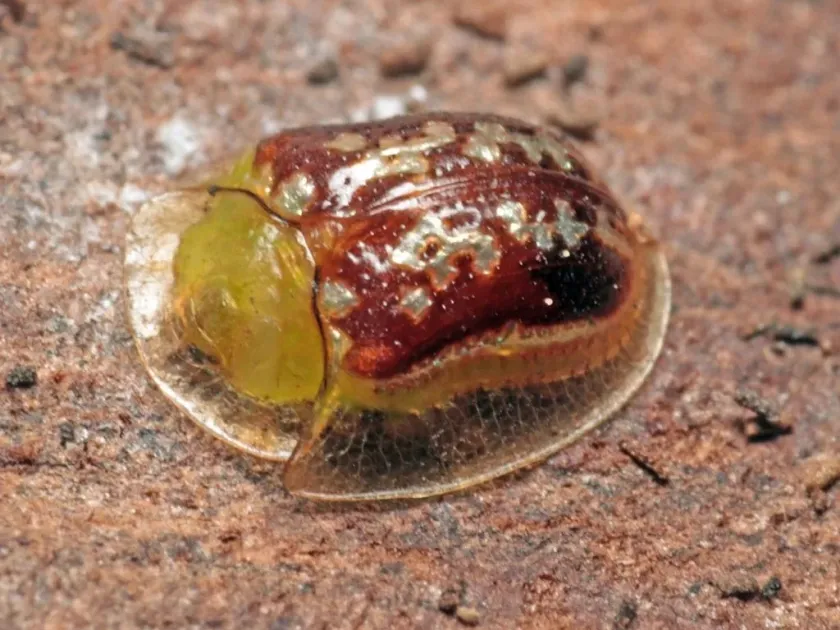
Octotoma scabripennis is a species of leaf beetle belonging to the family Chrysomelidae and the subfamily Cassidinae, commonly known for its rough, textured elytra.
Adult beetles are relatively small, typically dark brown or black, and possess a flattened body structure designed to reside on the surface of leaves.
The life cycle of this insect involves a complete metamorphosis, including egg, larva, pupa, and adult stages, with the larvae living exclusively inside leaves.
This beetle is recognized globally, often introduced as a biological control agent to manage invasive populations of Lantana camara.
Their physical characteristics allow them to blend into the foliage, making them difficult to spot during routine garden or field inspections.
What it damages
The primary host plant for this beetle is Lantana camara, which is classified as a weed in many parts of the world, though the beetle can occasionally impact other Verbenaceae.
Adult beetles cause damage by feeding on the leaf surface, which manifests as small holes and irregular tissue loss across the foliage.
The most severe impact occurs during the larval stage, as the larvae tunnel through the internal leaf tissues, creating extensive mines that disrupt nutrient transport.
Heavy infestation levels can lead to significant defoliation, which reduces the plant's ability to undergo photosynthesis and store energy.
Reduced vigor in infected plants is common, often leading to stunted growth, lower flower production, and susceptibility to other environmental stressors.
When it appears
The activity of Octotoma scabripennis is closely tied to favorable climatic conditions, particularly warmth and humidity, which accelerate its development.
In tropical and subtropical regions, the beetle can complete multiple generations per year, leading to a constant threat to host plants throughout the growing season.
Adults often emerge from overwintering sites in debris or tree bark as soon as the ambient temperature rises and new plant growth begins.
The population density typically reaches its peak during the mid-to-late growing season, coinciding with the most active plant growth phase.
Seasonal patterns of damage are most noticeable following periods of rapid leaf production, providing ample food for successive generations.
Signs of infestation
The presence of narrow, winding, transparent tunnels within the leaf structure is the most characteristic sign of larval activity.
Dark granular deposits of larval waste inside these mines provide visual confirmation that the tunnels are active and occupied.
Irregular, jagged feeding marks on the leaf margins left by adults distinguish their presence from other types of environmental or fungal leaf damage.
Yellowing, curling, and early senescence of infested leaves are common physiological responses to the internal destruction caused by larvae.
In advanced cases, the premature abscission of leaves leads to thinning of the plant canopy, indicating a high population of the pest.
Control measures
Systemic insecticides are the preferred method for chemical intervention, as they are absorbed into the plant tissues where larvae are hidden.
Biological control efforts often involve the augmentation of natural parasitoids, such as small wasps, that specifically prey on the mining larvae.
Cultural management includes the selective pruning and destruction of heavily infested leaves and shoots to reduce the localized beetle population.
Strict phytosanitary protocols are essential when transporting lantana plants to prevent the spread of the beetle to areas where it is not established.
Maintaining high plant vigor through proper fertilization and watering can help plants tolerate and recover from moderate infestations more effectively.
Taxonomy
- Latin name
- Octotoma scabripennis
- Order
- Coleoptera (beetles)
- Family
- Chrysomelidae
- EPPO code
- OCTOSC
Discussion
No discussions yet — be the first.