
Ochsenheimeria
Ochsenheimeria
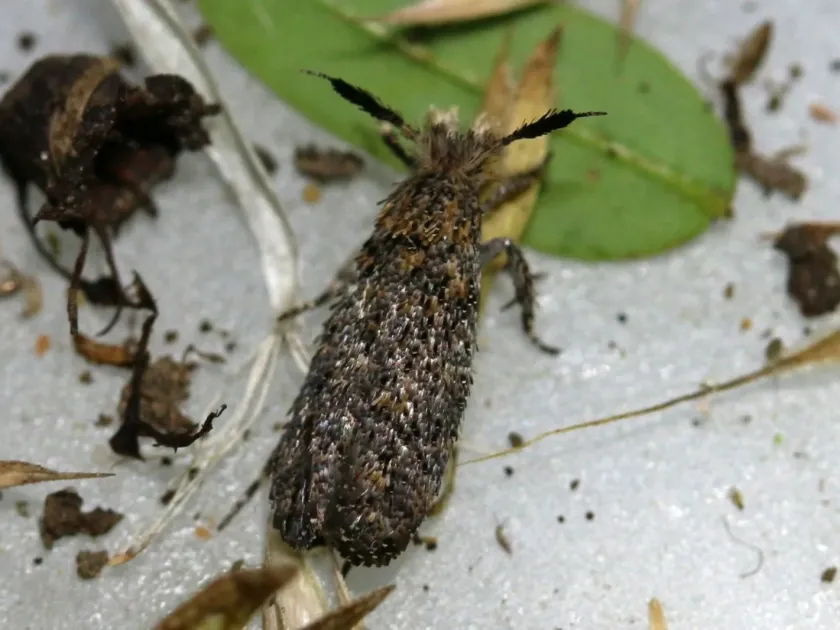
Description
How to identify
Ochsenheimeria is a genus of moths belonging to the family Ochsenheimeriidae. The adult moths are small, typically having a wingspan of 10–15 mm, with a brownish or grayish coloration that provides excellent camouflage against soil or dry vegetation.
The larvae, or caterpillars, have elongated bodies and are usually pale or greenish with a distinct dark head capsule. They are cryptic feeders, spending almost their entire larval stage boring inside the stems of host plants.
This pest typically undergoes one generation per year. Young larvae hibernate in the base of cereal stems or beneath plant debris, allowing them to survive harsh winter conditions and resume feeding early in the spring.
The flight period of the adult moths usually occurs during mid-summer. Females lay eggs on leaves or stems, and the timing of this activity is often extended, making it difficult for farmers to pinpoint the exact window for pest control.
Identifying this pest in the field can be challenging because the adults are primarily nocturnal or crepuscular, and the larval damage is hidden inside the stem, often misidentified as drought stress or other stem-boring insects.
What it damages
Ochsenheimeria primarily targets various grass species and cereal crops, including winter wheat, rye, and barley. Wild grasses in surrounding areas often act as primary reservoirs for the pest population.
The larvae feed by hollowing out the internal stem tissue, which disrupts the transport of nutrients and water to the developing ear. This causes the stem to weaken and effectively stops grain filling, leading to significant yield losses.
Damage is most critical during the tillering and stem elongation stages. Affected plants often fail to produce a viable ear, or the resulting grain is shriveled and of poor quality, which impacts overall farm productivity.
Infestations are often localized, but if left unmanaged, the population can spread rapidly across a field. Fields adjacent to uncultivated land or infested crop residues are at the highest risk for significant damage.
Furthermore, the physical injury caused by the boring larvae creates entry points for secondary pathogens. This often leads to fungal infections or bacterial rot within the stem, further weakening the plant and increasing mortality rates.
Signs of infestation
The first noticeable sign of an infestation is the wilting or curling of the central leaf during the stem elongation stage. Affected plants often appear stunted and develop a pale yellow or bleached color compared to healthy ones.
A closer inspection of the base of the plant often reveals entry holes drilled by the larvae. Inside the stem, one can find clear evidence of feeding, such as larval frass and hollowed-out internal tissues.
Externally, the plant may appear sickly, and the ear often fails to emerge properly from the leaf sheath. In severe cases, the entire plant may collapse or dry out prematurely, leaving dead patches scattered throughout the field.
When cutting open a damaged stem, you may find the larva itself or its silken cocoon used for pupation. The stem structure is compromised at the site of the damage, making it prone to lodging under light wind or mechanical stress.
An important diagnostic feature is the presence of silk webbing within the stem, which the larva produces as a stabilizing structure before it pupates inside the hollowed portion of the plant.
Control measures
Effective management begins with robust cultural practices. Eliminating weeds, especially wild grasses, around field borders is essential to reduce the pest's reservoir. Deep plowing of crop residues helps bury hibernating larvae.
Crop rotation is a vital strategy, as it disrupts the life cycle of the pest by removing its host plant from the field. Planning sowing dates to avoid peak flight activity can also help reduce the risk of initial infestation.
If economic thresholds are met, the application of systemic insecticides may be necessary. These treatments are most effective when applied early, during the larval hatching period before they bore into the stems.
Using resistant crop varieties or high-quality seed treatments can enhance plant resilience against early-stage attacks. Monitoring fields throughout the spring allows for timely intervention before the damage becomes irreversible.
- Clearance of volunteer cereals after harvest.
- Maintaining field hygiene to prevent pest migration.
- Monitoring adult flight patterns with pheromone traps.
- Integration of biological controls like entomopathogenic fungi.
Taxonomy
- Latin name
- Ochsenheimeria
- Order
- Lepidoptera (butterflies)
- Family
- Ochsenheimeriidae
- EPPO code
- OCHSSP
Discussion
No discussions yet — be the first.