
Pika
Ochotona
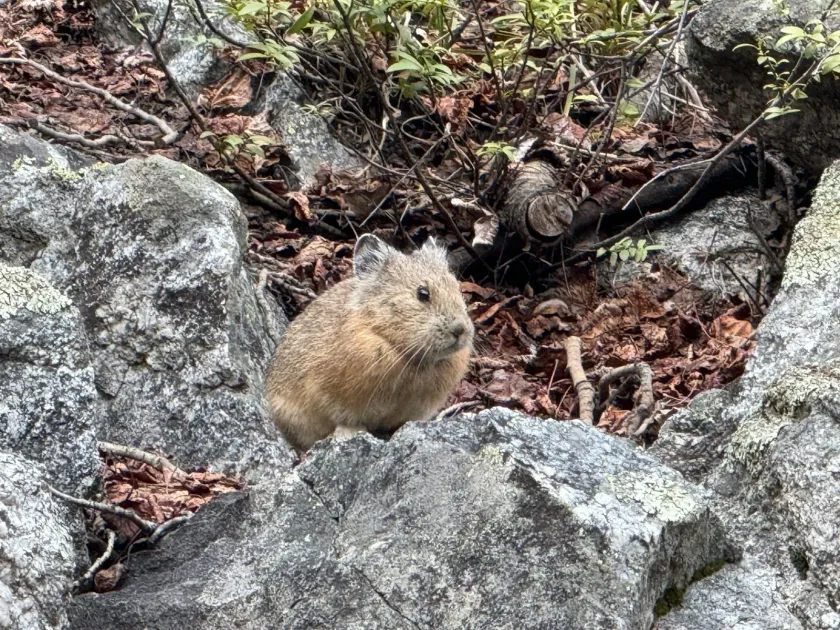
Description
How to identify
Pikas (genus Ochotona) are small mammals belonging to the order Lagomorpha, closely related to rabbits and hares. They are characterized by their rounded ears, short limbs, and compact, round bodies, typically lacking a visible tail.
These animals usually measure between 15 and 25 centimeters in length and possess thick, dense fur ranging from grayish to brown or reddish-brown colors. This coloration provides excellent camouflage against rocky terrain or dry grasses.
Pikas are highly social and communicative creatures. They are famous for their distinct, high-pitched vocalizations (whistles) used to warn their colony members of potential predators or to signal territorial boundaries.
Unlike many other small mammals, pikas do not hibernate. Their reproductive cycle is rapid during the warmer months, allowing populations to expand significantly when environmental conditions, such as food availability, are optimal.
They prefer habitats with abundant rocky crevices or stable soil where they can excavate complex burrow systems. These burrows serve as protection, housing for their hay piles, and centers for their social activity.
What it damages
Pikas are known to be significant pests in agricultural settings, particularly affecting rangelands, hayfields, and mountainous pastures. They consume large quantities of grasses and forbs, competing directly with livestock for forage.
A primary behavior that causes damage is «haying» — the process of cutting and gathering vegetation to dry for winter storage. This activity results in significant biomass loss in fields, reducing the overall yield for farmers.
In addition to direct consumption, pikas can cause mechanical damage to young crops and newly seeded pastures. Their feeding patterns often result in patchy, thin vegetation, which promotes soil erosion in fragile mountain or steppe ecosystems.
Overgrazing caused by dense pika colonies can lead to long-term degradation of pastures, forcing agricultural managers to rotate fields or seek additional land. The depletion of high-quality vegetation negatively affects the nutritional value of the pasture.
Furthermore, pikas can act as hosts or vectors for various diseases and parasites. This poses a potential health risk to livestock grazing in the same areas, complicating herd management and veterinary health protocols.
When it appears
Pika activity begins early in the spring, immediately after the snow melts and vegetation starts to emerge. This period marks the start of both their feeding and their primary reproductive season.
The summer season is the period of highest impact on agricultural productivity. During these months, pikas work tirelessly to feed and harvest as much plant material as possible to stockpile for the winter months.
In the autumn, the focus remains on securing their winter food supply. You will observe increased activity as they move harvested material into their storage areas before the temperature drops significantly.
During winter, pikas remain active within their burrow systems but rarely appear on the surface. They rely entirely on their previously gathered hay piles for sustenance, meaning the surface damage to crops is minimal during this time.
Monitoring should be conducted during late spring and early summer when the colony is most active and signs of their presence, such as hay piles and burrow entrances, are clearly visible to the scout.
Signs of infestation
The most iconic sign of a pika colony is the presence of «hay piles» — small, neat stacks of drying vegetation found in rock crevices or near burrow entrances. These piles are proof of active harvesting.
One may notice distinct, well-worn pathways or runways through the grass, leading from feeding grounds to their primary shelter. These routes are kept clear of debris by the animals over time.
The sharp, piercing whistle emitted by pikas is a clear auditory sign. If you hear a series of high-pitched «eeps» while surveying your fields, it is a strong indicator of a colony nearby.
Fresh digging, loose soil mounds, and scat (small round droppings) near rock formations or embankments are definitive indicators of an active burrow system that requires management attention.
Visual observation is effective at dawn or dusk, as pikas are often seen sitting upright on prominent rocks, scanning the surrounding area for danger or displaying sentinel behavior for their colony.
Control measures
For large-scale agricultural areas, rodenticide baits placed deep inside burrow systems are the most effective method for controlling dense populations. This targeted approach reduces risks to non-target wildlife.
Mechanical control, including habitat modification like plowing or removing rocks that serve as protective cover, can discourage pikas from establishing or maintaining colonies in high-value crop fields.
On smaller plots, live traps can be utilized, though this is labor-intensive and generally impractical for commercial farming operations. This method is better suited for small-scale gardening or hobby farms.
Encouraging natural predators, such as hawks, owls, and foxes, is a sustainable long-term strategy. Installing perching posts for raptors can significantly increase their hunting success in the area.
A proactive monitoring program is essential. By identifying early indicators of colony establishment, farm managers can implement control measures before the population reaches an uncontrollable density.
Taxonomy
- Latin name
- Ochotona
- Family
- Ochotonidae
- EPPO code
- OCHOSP
Discussion
No discussions yet — be the first.